How to Organize Discovery Documents
Why Do You Need a Legal Filing System?
A legal filing system gives your team a consistent way to organize, store, and retrieve case records. During the discovery process, that structure is essential for keeping critical documents connected to the right matter and making sure everyone can find the information they need.
Here are several specific reasons why a proper organizing system is a must:
Efficiency
A well-organized filing system helps you save time by making documents easier to locate and review. Instead of searching through scattered folders, your team can move directly to the work that supports the discovery plan.
Clear organization can also streamline workflows as attorneys and staff do basic tasks like gathering information, preparing responses, and managing production deadlines.
Compliance
Legal work depends on accurate records and secure document handling. A reliable filing system helps ensure compliance with important parameters like court rules, retention requirements, and internal policies.
It also creates a clearer record of where documents came from, who accessed them, and how they were handled throughout the case.
Accuracy
Disorganized records make it easier to rely on an outdated version or attach the wrong document. In turn, a consistent system helps reduce errors by keeping current materials easy to identify.
That accuracy becomes particularly important during discovery, where small mistakes can affect responses, productions, or later stages of the litigation process.
Client Trust
Clients expect their information to be handled carefully. Strong filing practices support better coordination within your team and show that sensitive records are being managed responsibly.
When your process is clear and dependable, clients can feel more confident in your ability to manage their case.
What Happens When You Don’t Have One?
A weak filing system affects several aspects of legal work, from day-to-day document handling to broader responsibilities during discovery.
When your team is dealing with a growing volume of records, even a small organizational gap can make the necessary information harder to find when legal proceedings move forward.
Common problems include:
Lost Documents
Without a structured system, important files can be misplaced, duplicated, or saved in the wrong location. That can leave the record incomplete and create problems during review, data collection, or production.
The consequences may be limited to a frustrating search, but they can become more serious if a missing document affects a deadline or response.
Wasted Time
Searching through disorganized paper files or digital folders takes time away from substantive casework. It can also slow down other team members who need access to the same material.
Over the course of a case, those delays add up and make the discovery process harder to manage.
Non-Compliance
Poor recordkeeping can make it difficult to follow retention rules, court requirements, or internal security policies. It may also leave your team unable to explain how certain documents were stored, shared, or produced.
That lack of control can create avoidable compliance risks during audits or litigation.
Errors and Inaccuracies
Disorganized files increase the chance of errors, such as using an outdated version or sending the wrong document. These mistakes can affect discovery responses and create confusion later in the case.
Repeated errors may also weaken client confidence, particularly when sensitive information is involved.
Are You Still Using Paper Files?
Many law firms still rely on paper files, particularly for active litigation or documents that require original signatures. Paper can work well, but it needs a consistent system to prevent misplaced records and slow searches.
Use these practices to keep physical files manageable:
- Choose one filing method: Organize files alphabetically by client name or numerically by case number, then apply the same method throughout the office.
- Create clear labels: Include the case name or number and a brief description of the contents.
- Use subfolders: Separate documents by type or stage of the case so related materials stay together.
- Add color coding: Assign colors to categories that your team needs to identify quickly.
- Maintain an index: Keep a current list showing where each file is stored.
- Review files regularly: Archive or securely destroy records according to your retention policy.
- Limit access: Store sensitive documents in locked cabinets or restricted areas.
- Create digital backups: Scan important records so you still have access if a paper copy is damaged or lost.
Keep in mind that the system does not need to be complicated. It simply needs to be clear enough that anyone authorized to use it can locate the right document quickly.
Should You Shift to a Cloud-Based Document Management System?
Paper files can still serve a purpose, but they become harder to manage as cases grow and discovery produces large volumes of material.
For many legal professionals, a cloud-based document management system offers a more practical way to support daily work and make effective use of case information.
You can expect:
Better Accessibility
Cloud storage allows authorized users to access files from different locations and devices. That can help your legal practice respond faster during the discovery phase and reduce the risk of missed deadlines.
Stronger Security
Most systems include various security measures like encryption, access controls, and automated backups. These features can help protect sensitive records while supporting legal requirements around storage and confidentiality.
Easier Collaboration
Team members can review current versions, leave updates, and coordinate work in one place. This reduces duplication and makes necessary adjustments easier to track.
Lower Administrative Costs
Digital storage can reduce spending on paper, filing cabinets, and off-site storage. Flexible subscription plans can also make costs easier to include in strategic planning.
Better Disaster Recovery
Cloud backups help preserve documents if physical files are damaged or local systems fail. Recovery is usually faster because files remain available through secure remote access.
Less Paper Use
Moving more records online can reduce waste and simplify long-term file management, while still allowing firms to retain physical originals where needed.
Best Practices When Organizing Legal Discovery Documents
Electronic files are easier to search than paper records, but they still need a clear structure. The following guidelines can help your team keep discovery materials organized as the case progresses and new information comes in.
1. Use Consistent Naming Conventions
Create one naming format and apply it to every file. Include details that help users identify the document quickly, such as the case name, document type, and date.
Before settling on a format, determine which details your team searches for most often. A practical naming system should make files easy to recognize without opening them.
2. Build a Clear Folder Structure
Organize files by matter, then use subfolders for the main stages or categories of discovery. Keep the structure simple enough that anyone working on the case can follow it.
Too many layers can make navigation slower, so add new folders only when they serve a clear purpose.
3. Schedule Regular Backups
Use automatic backups to protect files from accidental deletion, system failure, or data loss. Many firms combine cloud storage with a separate backup location for added protection.
Test the recovery process periodically so you know the files can be restored when needed.
4. Control Access and File Sharing
Limit access based on each person’s role in the matter. Use permissions, encryption, and secure portals when sharing sensitive discovery materials.
Keep access settings current as responsibilities change, and share updates with the team when permissions or procedures are revised.
5. Use Document Management Software
A legal document management system can centralize storage, improve search, and help users track file history. The right platform should support your existing workflow rather than add unnecessary steps.
Look for features that help your team organize discovery, manage access, and keep current versions easy to find.
Keep Discovery Organized From Request to Production
A good filing system gives your litigation team control over the case record. Documents are easier to locate, new information has a clear place to go, and everyone can work from the same organized set of materials as discovery develops.
The harder part is keeping that structure intact while requests, client responses, and production files continue to arrive.
Briefpoint helps reduce the manual work behind that process. You can prepare and respond to written discovery, collect client input through Bridge, and turn case files into Bates-cited responses and production packages with Autodoc.
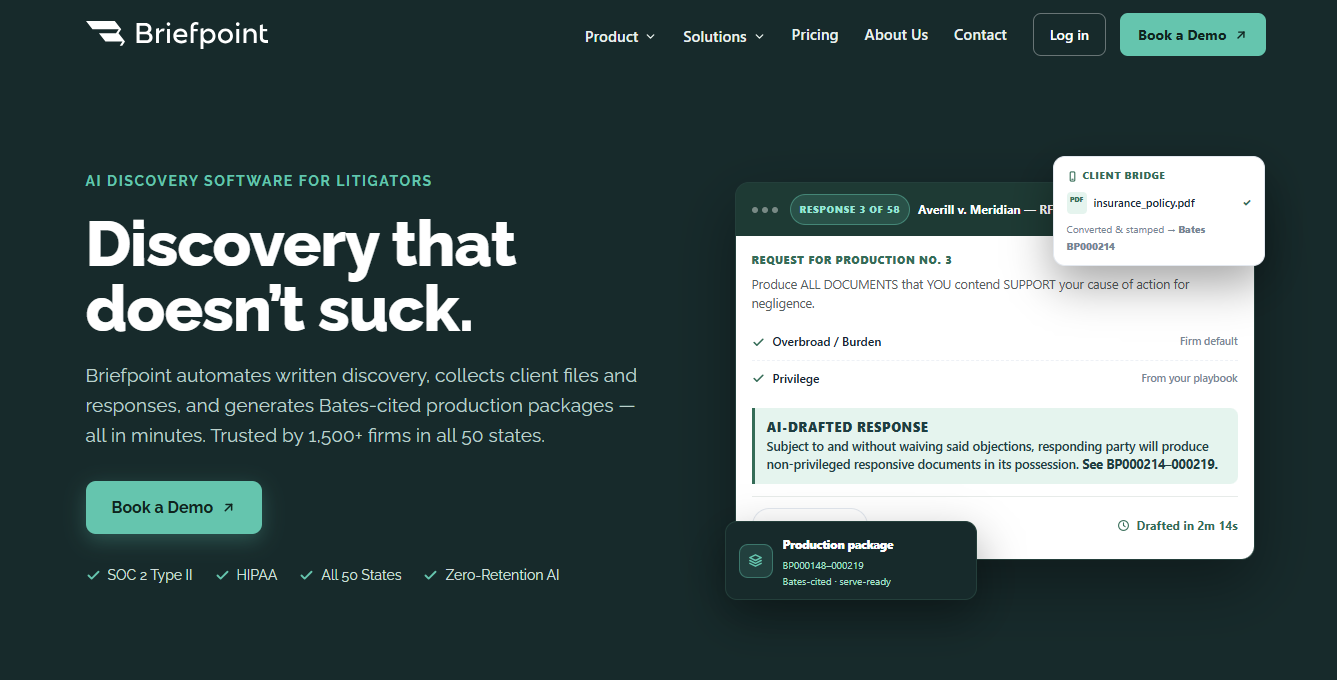
That gives your team a more direct path from incoming discovery to attorney review and final production, with fewer repetitive steps along the way.
See how Briefpoint can help bring more order to your discovery workflow. Book a demo today.
