What Happens During the Litigation Process?
Different Phases of the Litigation Process
If you’re managing an active litigation workflow, you already know how important timing and structure are. Each phase in the process brings its own requirements, from filing and discovery to trial and post-judgment steps.
Knowing what to expect and when can help you stay organized, meet deadlines, and keep your team aligned throughout the case.
1. Pre-Litigation and Case Assessment
Before a lawsuit is filed, there’s often a phase of evaluation and strategy. This stage is essential in civil litigation, especially when dealing with complex matters involving two or more parties, such as partnership disputes, contract breaches, or other forms of business conflict.
During pre-litigation, you’re:
- Gathering facts
- Reviewing litigation documents
- Assessing potential claims or defenses
It also involves determining the likelihood of resolving disputes without court involvement. This may involve internal investigations, settlement discussions, or demand letters aimed at reaching an early resolution.
A clear case assessment at this point helps reduce surprises later. You can identify risks, estimate costs, and determine whether litigation is the right path or if alternative solutions make more sense.
For companies involved in frequent legal disputes, this phase also helps prioritize which matters require immediate legal action versus those that can be managed informally.
2. Filing the Complaint
If early resolution efforts fail, the legal process formally begins when the plaintiff files a complaint in the appropriate state or federal court. This document explains the basis of the claim and usually outlines:
- The relevant facts and legal grounds
- The parties involved
- The relief or damages being requested
In business litigation, the complaint can be highly detailed because it sets the direction for the court proceedings that follow. It tells the court what happened, why the plaintiff believes the law was violated, and what outcome they are seeking.
After filing, the complaint must be properly served on the opposing party. The defendant then has a limited period to respond. In many cases, the defendant files an answer admitting or denying the allegations.
They may also submit a preliminary motion, such as a motion to dismiss, that challenges the legal sufficiency of the complaint.
For example, a company named in a breach of contract lawsuit may argue that the complaint fails to identify an enforceable agreement. A successful motion could narrow the claims or end the case before discovery begins.
Because the complaint shapes the early stages of the case, clear facts, accurate allegations, and careful drafting are essential.
3. Response and Preliminary Motions
After the complaint is filed and served, the defendant must respond, typically within 20 to 30 days, depending on the court’s rules. This response can take several forms: an answer that admits or denies each allegation, or a preliminary motion challenging the complaint itself.
One common preliminary motion is a motion to dismiss. For example, in a business litigation case, a company might argue that the plaintiff failed to state a legal claim or that the court lacks jurisdiction. If the motion succeeds, parts of the case (or the entire case) may be dismissed before discovery begins.
Filing a strong answer or motion requires analyzing the claims, identifying weaknesses, and deciding whether to contest facts, legal grounds, or both. Strategic use of preliminary motions can limit the scope of litigation early, which can save time and resources.
Even if the motion doesn’t result in dismissal, it sets up important arguments for later phases of the case.
4. Discovery Phase
This is where things get detailed. Discovery is the part of the litigation process where both sides exchange information, legal documents, and evidence related to the case.
If you’re involved in a civil procedure, this stage helps you understand what the other party knows and gives you a chance to build your argument before trial.
The discovery period can last a few weeks or stretch over several months, depending on the complexity of the case. And while it may feel slow at times, this is where the groundwork for your outcome is set.
You’ll likely encounter tools like:
- Interrogatories: Written questions that require sworn answers.
- Requests for production: Document and data requests from the other side.
- Requests for admission: Statements to confirm or dispute.
- Depositions: Sworn testimony recorded before trial.
- Expert witness disclosures: Summaries of expert opinions and qualifications.
A strong discovery process strategy helps avoid surprises and clarifies what you’re up against. The more organized and proactive you are here, the more control you’ll have later in the trial process.
5. Pre-Trial
The pre-trial phase prepares the case for the courtroom. Both sides refine their arguments, exchange final disclosures, and work to narrow the issues that remain in dispute.
This period may include:
- Settlement discussions
- Pre-trial motions
- Evidentiary hearings
- Scheduling conferences
In a civil lawsuit, this stage can determine how long the case will continue or whether it reaches trial at all. Attorneys often conduct additional legal research, review relevant case law, and confirm which applicable laws support their claims or defenses.
Pre-trial motions can significantly change the direction of the case. A party may ask the court to exclude certain evidence, dismiss a claim, or grant summary judgment when no genuine dispute exists over a material fact.
For example, in a partnership dispute, one side may argue that the documents and testimony already establish who caused the alleged harm. If the judge agrees that the key facts are undisputed, the court may resolve part or all of the case before trial.
This phase follows strict procedural rules, but it still gives both sides an opportunity to settle, reduce litigation costs, and avoid a public trial. If no agreement is reached, the decisions made here shape which evidence, claims, and legal arguments will be presented to the judge or jury.
6. Trial
If no resolution is reached during earlier stages, the case moves to trial. Trial is the most public and structured part of the litigation process. Trials follow strict federal rules or state procedures and can take anywhere from a few days to multiple years.
The trial stage is where the legal system formally hears and resolves disputes. One party presents evidence to support their claims, and the other defends against them.
In civil litigation, the burden of proof is lower than in criminal cases, and the outcome can be decided by a judge or jury.
Key aspects of the trial include:
- Opening statements from both sides
- Presentation of evidence and examination of witnesses
- Cross-examination by the opposing party
- Closing arguments summarizing each side’s position
- A final decision, either a judge’s ruling or a jury verdict
Although the trial is central to the process of resolving disputes, many civil cases never reach this point. Parties often settle or use alternative dispute resolution methods like mediation or arbitration to avoid the time, cost, and uncertainty of trial.
But when a case proceeds, trial is where each side has a formal chance to argue its case and seek a binding decision.
7. Post-Trial and Appeals
A case may continue after the judge or jury reaches a decision. Post-trial motions and appeals are common in complex business disputes, personal injury claims, and other high-stakes cases.
The losing party may ask the court to reconsider the outcome, request a new trial, or appeal to a higher court. After a jury trial, this may happen if one side believes improper instructions, excluded evidence, or another legal error affected the verdict.
Appeals generally focus on how the law was applied rather than on new evidence. The appellate court reviews the trial record and may affirm, reverse, or modify the decision.
Common post-trial steps include:
- Filing a motion to alter or set aside the judgment
- Requesting a new trial based on legal or procedural errors
- Appealing the decision to a higher court
- Enforcing the judgment or collecting money damages
For example, a plaintiff in a personal injury case may appeal if important evidence was wrongly excluded. If no appeal is filed, the prevailing party may begin enforcement or collection efforts.
Although this phase can extend the civil litigation system by months or years, it provides a formal process for correcting errors and protecting legal rights.
Simplify the Litigation Process With Briefpoint
Litigation comes with a steady flow of documents, deadlines, and strategic decisions. Discovery can take up a significant share of that workload, pulling attorneys into repetitive drafting, client follow-ups, and production review.
Briefpoint helps legal teams handle those tasks in less time. You can generate or respond to interrogatories, requests for admission, and requests for production using jurisdiction-ready formatting for all 50 states and federal district courts.
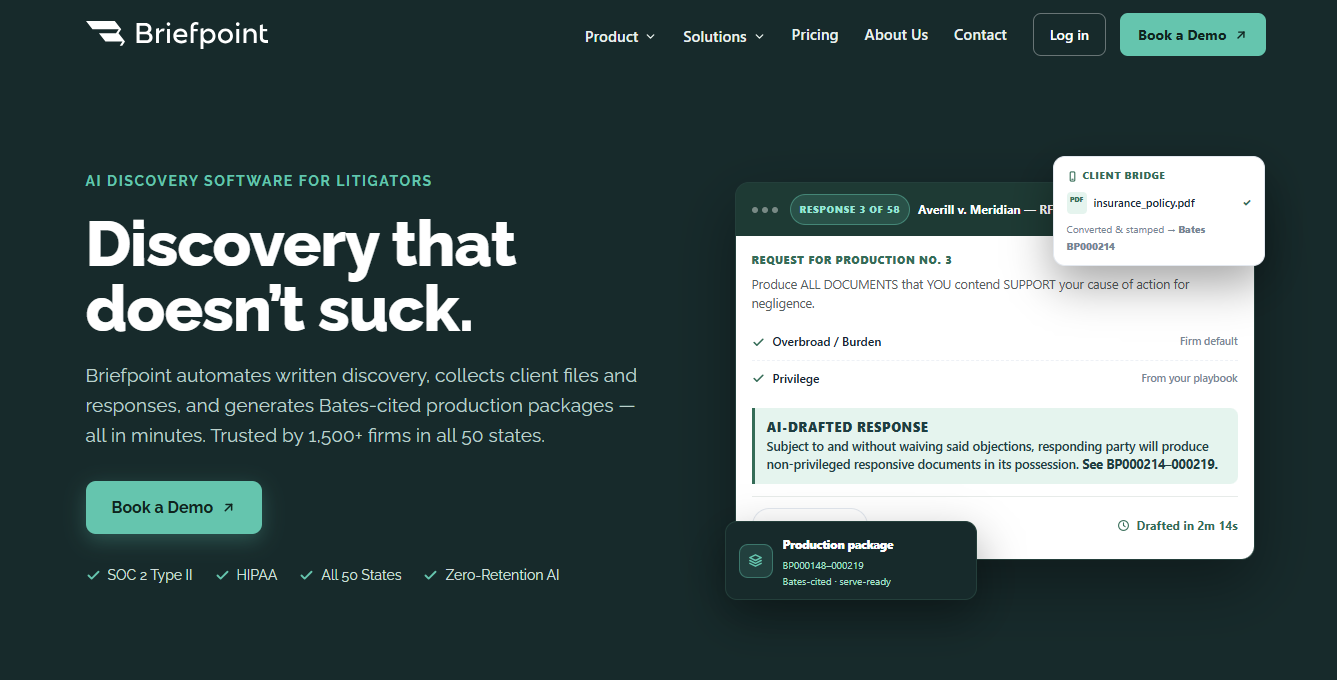
Briefpoint Bridge sends clients a secure link where they can answer questions and upload files in English or Spanish. Their responses are then organized for attorney review.
For document production, Autodoc reviews your case files, identifies responsive documents, drafts RFP responses with Bates citations, and prepares the accompanying production package.
You remain in control of the final work product while spending less time on formatting, document matching, and manual response drafting. That leaves more room for case strategy and the other decisions that require your legal judgment.
Book a demo to see how Briefpoint can fit into your litigation workflow.
