How AI Discovery Responses Work
What Are AI Discovery Responses?
AI discovery responses are draft answers and objections created with software that reviews the requests served in a case along with the documents and information you provide. They can cover written discovery such as interrogatories, requests for admission, and requests for production.
During the discovery response process, AI tools can help you work through each request, identify missing information, and prepare language for review. Some platforms can also locate responsive documents or connect client answers to the correct requests.
AI discovery software cuts down the time spent building responses from scratch. You can start with a structured draft, fill in case-specific details, confirm the objections, and make any necessary edits before serving the final version.
Which Discovery Responses Can AI Help Draft?
AI can help draft responses to the main forms of written discovery, using the requests alongside the case documents you upload.
In many cases, the software can also pull details from sources like discovery materials, medical records, deposition transcripts, and electronically stored information.
- Interrogatories: First, the software can draft narrative answers and objections based on the facts available in the case file.
- Requests for admission: It can then prepare proposed admissions, denials, or qualified responses for review.
- Requests for production: For document requests, AI can draft written responses and help connect each request to the files that may be produced.
- Document productions: Finally, some platforms can organize responsive files and pair them with the correct requests before the production is finalized.
Of course, the quality of the draft depends on the information available. If key facts are missing, the platform may flag the request so you can collect the details needed to respond fully.
How to Automate Discovery Responses With AI
The workflow will vary depending on the software and the features it includes. A drafting-focused platform may require more manual work around client input and document review, while a broader discovery tool can bring more of the response process into one place.
Even so, there is a practical sequence most teams can follow when using AI to prepare discovery responses. Here’s an example:
1. Upload the Discovery Requests
Start by uploading the discovery requests to the AI platform. Most tools accept Word documents or PDFs, though the supported file types will depend on the software.
The platform reads each request and separates it into a workable list for drafting. Review the imported text before moving forward, since formatting issues or scanned pages can affect how accurately the requests are captured.
At this stage, you may also need to identify the discovery type:
- Interrogatories
- Requests for admission
- Requests for production
- Special interrogatories
For requests for admission in particular, pay close attention to any key admissions that could affect the direction of the case. Confirm that every request appears in the correct order and that no language was omitted during upload.
2. Add Pleadings and Case Documents
Next, upload the materials the platform needs to understand the case facts. Generative AI tools produce stronger drafts when they can review the requests alongside reliable source documents.
Useful files may include:
- Complaint and answer
- Prior responses
- Medical records
- Client questionnaires
- Relevant correspondence
For example, in a personal injury case, the complaint may explain the allegations while medical records provide details about treatment and claimed injuries. The AI platform can use both sources to draft responses that reflect the record rather than relying on broad language.
Review the platform’s privacy and security controls before adding client data. You should also confirm that the documents are current and consistent with the applicable civil procedure rules.
A complete file set gives the software enough context to prepare more complete discovery responses and reduces the amount of missing information you need to fill in later.
3. Generate Draft Answers and Objections
Once the case materials are in place, the platform can prepare a first draft for each request.
Review the output request by request so the language fits the facts and the response stays consistent with traditional discovery principles.
- Draft factual answers: The software pulls relevant details from the uploaded documents and places them into a proposed response.
- Suggest objections: It may flag issues such as overbreadth, ambiguity, burden, or attorney-client privilege.
- Identify missing information: Gaps in the record can be marked for follow-up rather than filled with unsupported AI-generated data.
- Refine the draft: Clear AI prompts may help adjust the level of detail or tailor the wording to the request.
For example, if an RFP asks for all communications about an accident, the draft may state that responsive documents will be produced while raising a limited objection to an overly broad date range. The response can then be revised to reflect the actual files available and the position your team plans to take.
4. Collect Missing Information From the Client
After the first draft is ready, you will usually see requests that still need details from the client. These may involve dates, conversations, treatment history, or potential evidence that does not appear in the uploaded documents.
Send those questions to the client in plain language so they can respond without working through the original discovery wording.
Once their answers come back, the legal team can cross-reference them against the case file, resolve inconsistencies, and add the missing details to the draft.
Doing this helps improve accuracy and keeps the responses tied to information the client can confirm. It also gives your team a chance to clarify vague answers before finalizing language that needs to be legally sound.
5. Review Responsive Documents
When you see that the draft responses are taking shape, turn your attention to the files that may be produced. Review each document and confirm that it belongs with the correct request before approving it for production.
Focus your review on the following areas:
- Confirm responsiveness: Check that each file actually relates to the request and supports the proposed RFP responses.
- Remove irrelevant material: Exclude documents pulled in because of loose keyword matches or incomplete context.
- Check sensitive content: Look for privileged information, confidential client details, or material that could create unnecessary exposure.
- Assess risk: Consider how each document may affect the case before approving it for production.
For law firms handling large document sets, this step can cut down review time. Legal experts can focus on the files that need closer attention rather than sorting through every document from the beginning.
6. Finalize and Serve the Responses
Bring the approved drafts and document production into the required format for service. Check that the language matches the case record, remove unsupported AI data, and confirm that every response is complete (to name just a few steps).
Your final review may cover:
- Response numbering and formatting
- Objections and factual answers
- Verification pages and signatures
- Produced documents and Bates numbers
- Service method and deadline
A clean final package helps keep the litigation record organized and reduces the need for corrections after service.
It also gives opposing counsel a clearer set of responses to review, which can support better outcomes as the case moves forward.
What to Look for in AI Discovery Response Software
The right software should fit the way your team handles discovery and reduce work without adding a steep learning curve. Look closely at what the platform can do after the initial draft, since much of the time savings comes from the surrounding workflow.
As you compare options, pay attention to these features:
- Case-specific drafting: The platform should use pleadings, client information, and uploaded records to produce responses tied to the case.
- Objection support: Look for software that applies relevant discovery objections and lets you adjust the language before finalizing the response.
- Document identification: Strong tools can locate files that may respond to requests for production, helping your team respond faster.
- Client collaboration: A secure client-facing feature can collect missing facts without relying on long email exchanges.
- Clear source connections: AI-powered precision is easier to assess when the platform shows where factual details came from.
- Practical review controls: Your team should be able to edit drafts, remove irrelevant documents, and complete a manual review without rebuilding the work.
Always keep in mind that good AI usage should save time and make the response process easier to manage. A platform that supports the full workflow can offer a strategic advantage and contribute to better outcomes during litigation.
Turn Discovery Responses Into a More Manageable Workflow
AI can take hours out of the discovery response process, but the strongest results come from software built for the full workflow rather than drafting alone.
Briefpoint helps you prepare answers and objections, collect client responses through Client Bridge, identify responsive files, and generate Bates-cited production packages for service.
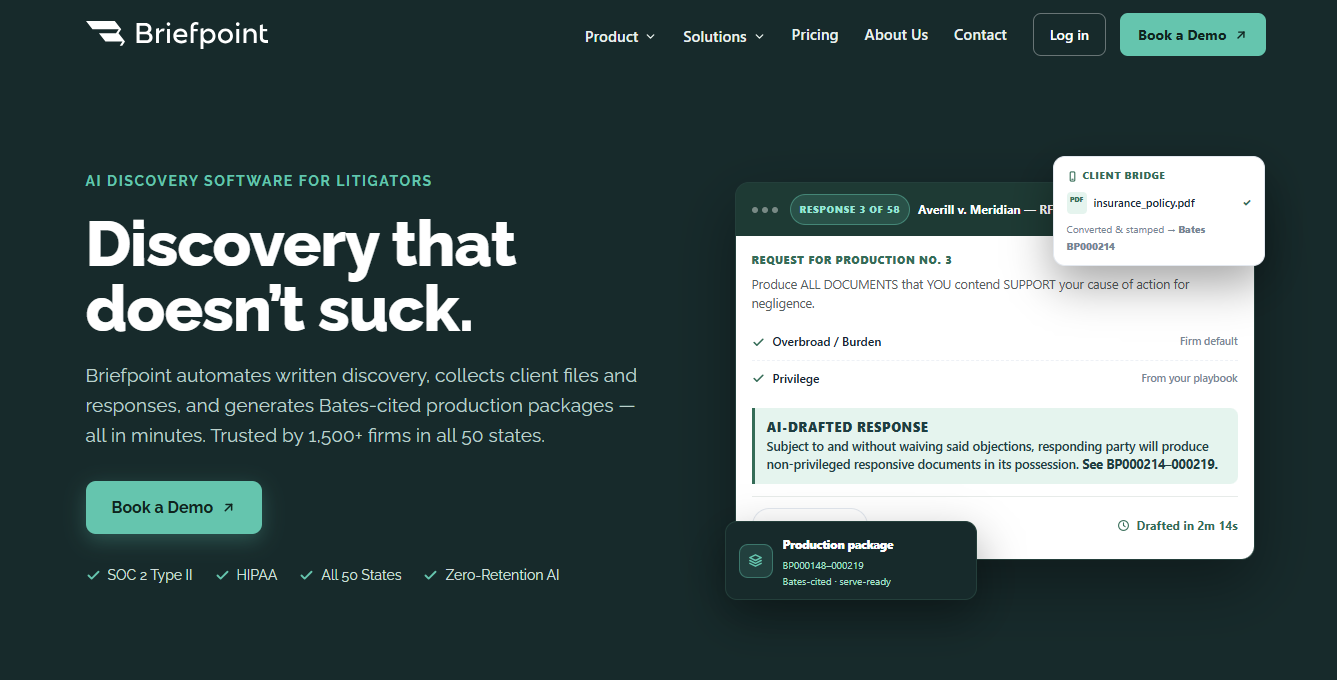
Discovery Playbooks can also apply your firm’s preferred objection and response strategy consistently from case to case.
That gives your team more room to focus on the facts of the litigation and the decisions that shape the case. You still control the final response, but far less time goes into repetitive formatting, document matching, and follow-up.
Book a demo to see how Briefpoint can make AI discovery responses easier to prepare from start to finish.
