9 Most Common Types of Legal Discovery
1. Interrogatories
Interrogatories are written questions one side sends to the other party during written discovery. They help legal teams get relevant information early, especially details that may influence the rest of the case.
Most interrogatories ask for facts, names, dates, explanations, or the basis for a claim or defense. The other party usually has to answer in writing and under oath, so the responses can be used later if their story changes.
For example, in a personal injury case, an interrogatory might ask:
“Identify everyone who witnessed the incident and describe what each person saw.”
The other party would then need to provide a written answer, usually under oath. That response can help confirm who may need to be contacted, deposed, or asked for more information later.
Interrogatories are helpful because they give you a clearer starting point. They can show what the other side knows, what they still need to support, and what you may need to follow up on through document requests, depositions, or other discovery tools.
2. Requests for Production
Requests for production ask the other side to produce documents or other evidence connected to the case. This part of the legal process helps both parties exchange information that may support a claim or challenge a defense.
These requests may cover:
- Paper records
- Digital files
- Emails
- Text messages
- Photos and videos
- Invoices and reports
- Medical records
The goal is to collect materials that help confirm facts or compare someone’s statement with the records.
For example, in a personal injury case, a request might say:
“Produce all medical records related to the injuries you claim were caused by the incident.”
The other side would then need to search for responsive records and produce the documents that fall within the request, unless they have a valid discovery objection. Those records can help show the nature of the claimed injuries and how the treatment relates to the incident.
Requests for production are especially useful when a case depends on proof that already exists in records. A document can confirm a date, support a timeline, or show what someone agreed to without relying only on memory.
3. Requests for Admissions
Requests for admissions ask the opposing party to admit or deny certain facts during the formal process of discovery. This discovery method helps the requesting party narrow the issues before trial preparation begins in full.
The request usually focuses on facts that should be clear, such as the date of an event or the authenticity of a document. If the opposing party admits the fact, both sides can treat it as settled. If they deny it, the issue may need more proof later.
For example, a request might say:
“Admit that you signed the agreement dated March 12, 2024.”
If the opposing party admits it, the requesting party usually does not need to prove that signature later. If they deny it, the issue may stay in dispute and require more evidence.
Requests for admissions can save time because they separate disputed issues from facts that no longer need argument. They also help legal teams prepare for trial with a cleaner view of what still needs to be proven.
4. Depositions
Depositions let one party question a witness under oath before trial. In civil discovery, they help legal teams collect sworn testimony, test witness statements, and learn how someone may explain the facts later in the lawsuit.
A deposition usually happens outside the courtroom, but it still carries weight. A court reporter records the testimony, and the answers can be used during trial preparation or later in the legal matter.
Common types include:
- Oral depositions: An attorney asks questions in person or through video, and the witness answers out loud under oath.
- Written depositions: The witness answers prewritten questions under oath, often used when live questioning is less practical.
- Expert depositions: An attorney questions an expert witness about their opinions and the records they reviewed.
Additionally, depositions can help with disclosure because they show how a witness remembers events. They can reveal where testimony is clear or where more follow-up may be needed.
5. Subpoenas
Subpoenas are court orders that require someone to provide records, give testimony, or appear at a specific time and place.
In the discovery process, they often come into play when important information is held by someone outside the lawsuit.
For example, a law firm may need records from a bank, employer, or medical office. Since those people or organizations are not directly involved in the case, a regular discovery request to the other side may not be enough. A subpoena gives the request legal force under civil procedure rules.
Subpoenas can also require a person to appear for testimony. If someone ignores a valid subpoena, the court may impose penalties or order them to comply.
Essentially, a subpoena gives legal teams a way to reach evidence outside either party’s direct control. It can pull in records or testimony from people and organizations with information the case may need.
6. Physical or Mental Examinations
Physical or mental examinations may be requested during the discovery period when a person’s condition is directly tied to the case. This often comes up in litigation involving injuries, medical claims, emotional distress, or questions about a person’s ability to work.
Unlike other types of discovery, this request involves an examination of a person rather than a document or statement.
However, courts usually treat it carefully because it can be personal and intrusive. The requesting side often has to show why the exam is needed and how it connects to the claims being made.
Common examples include:
- Physical examination: A medical professional evaluates an injury, limitation, or claimed physical condition.
- Mental examination: A qualified professional assesses a claimed emotional or psychological condition.
- Independent medical examination: A doctor chosen for the case reviews the person’s condition and may prepare a report.
These examinations can help clarify the extent of an injury or condition. Just as importantly, they can test whether the claimed condition lines up with the evidence already shared in discovery.
7. Electronic Discovery
Electronic discovery, often called eDiscovery, deals with electronically stored information used in a case. Since much of today’s communication happens through devices and online platforms, the eDiscovery process can involve a large volume of data.
The information requested may include:
- Emails
- Text messages
- Chat logs
- Cloud files
- Spreadsheets
- Databases
- Social media posts
- Metadata
- Audio or video files
One thing to note is that eDiscovery often needs more planning than standard document requests. Legal teams may have to preserve files, collect data in the right format, review privileged material, and decide what must be shared.
It can also raise questions about deleted files, duplicate records, search terms, or account access.
8. Expert Discovery
Expert discovery focuses on the expert witnesses who may testify in a civil case. These experts are usually brought in to explain topics that need specialized knowledge, such as medical issues or financial losses.
During expert discovery, one side may review the expert’s report and the opinions they plan to give. The other side can also question the expert through a deposition, which helps test the strength of the opinion before trial.
Expert discovery may involve:
- Expert reports: A written report that explains the expert’s opinions and the facts they relied on.
- Expert qualifications: Details about the expert’s education, training, and work experience.
- Expert depositions: Questioning under oath to examine the expert’s methods and conclusions.
- Supporting records: Documents, data, or materials the expert used to form their opinion.
For example, in a construction dispute, an engineering expert may explain why a structure failed. In a personal injury case, a medical expert may explain the extent of an injury.
9. Informal Discovery
Informal discovery is information gathering that happens outside the formal discovery process.
Here are common ways legal teams may gather information informally:
- Online research
- Public records searches
- Witness interviews
- Site visits
- Voluntary document exchanges
In comparison, formal discovery follows court rules and deadlines, especially in state courts where procedures can vary. Informal discovery gives legal teams a more flexible way to learn early facts before sending official requests or taking depositions.
In many cases, it can also be less time-consuming because it does not always require motions or court involvement.
For example, a lawyer handling a property dispute might review county records before asking the other side to produce documents. In another case, a legal team may speak with a willing witness before deciding if a subpoena is needed.
From there, the information obtained through informal discovery may help shape formal requests later. It can point legal teams toward useful records or facts that need closer review.
How These Types of Discovery Work Together
Each type of discovery gives you a different way to learn what the case really involves. You might start with written discovery, then use the answers to plan document production, prepare depositions, or decide what outside records you need.
Here’s how the pieces often connect:
- Interrogatories: You can use written questions to get names, dates, or facts that need support from records.
- Requests for production: Document production helps you collect emails, contracts, records, or other proof tied to the claims.
- Requests for admissions: You can narrow the dispute by asking the other side to admit facts they should not seriously contest.
- Depositions: You can use earlier discovery responses to question witnesses and test their sworn testimony.
- Objections and responses: You may need to object, respond, or craft responses based on federal rules, local rules, and case strategy.
The process may look different from one court to another, but the flow is practical. One response can lead to a document request, and one record can shape the next question you ask.
Simplify Your Discovery Responses With Briefpoint
Discovery responses take time because every answer needs care, support, and consistency.
Briefpoint helps legal teams draft, review, and update responses faster, while keeping the work organized from the first request through later supplements.
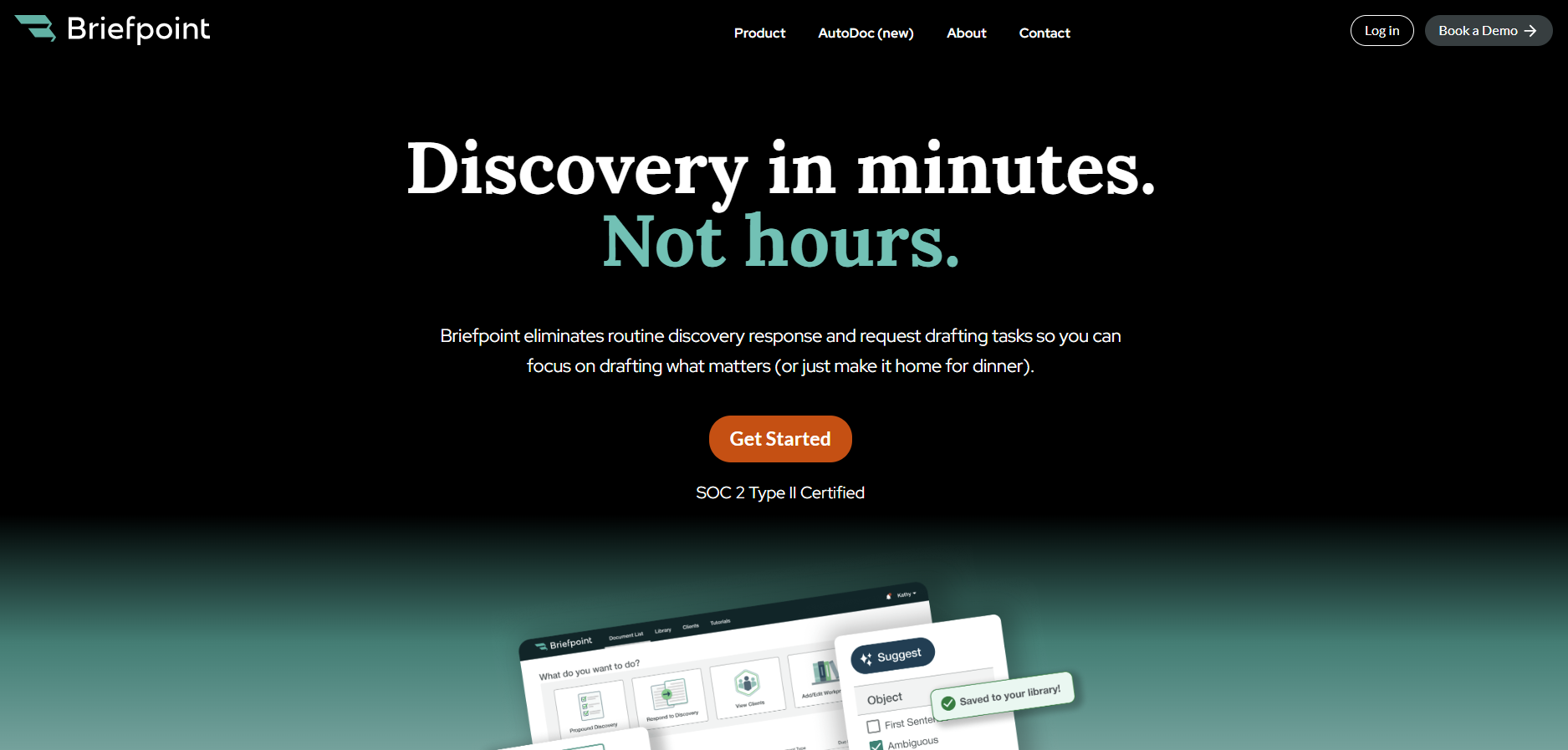
Autodoc handles the document-heavy side of discovery. It can process complaints, RFPs, productions, and case files, then generate Word responses with objections, substantive answers, Bates numbering, and page-level citations.
Your team can review the output, check the cited documents, and edit the response before service.
Briefpoint also has Supplemental Responses, which help you update discovery responses while keeping earlier answers intact and easy to reference. For active cases, that means less backtracking when new information comes in.
Client Doc Collection adds another useful layer. Clients can upload documents through Client Bridge, and those files stay connected to the right RFP items for attorney review.
Reduce manual drafting today. Book a Briefpoint demo.
