5 Best eDiscovery Software for More Defensible Discovery
What Is eDiscovery Software?
eDiscovery software (short for electronic discovery software) helps legal professionals manage electronically stored information during litigation, investigations, or regulatory reviews.
The eDiscovery process involves identifying, collecting, reviewing, and producing relevant data that may relate to a case. The central goal is to help legal teams find important electronic evidence without losing control of the data along the way.
This type of legal discovery software makes it easier to work through large volumes of information while maintaining compliance and protecting data integrity across the legal data lifecycle.
In modern practice, where much of the evidence exists in digital systems, support plays a central role. Many modern eDiscovery software companies design their platforms around speed, defensibility, and clear documentation.
Examples of electronically stored information include:
- Emails and attachments
- Chat messages and text logs
- Cloud-stored documents or files
- Social media posts or metadata
- Databases and transaction records
- Other electronic documents connected to the matter
Automation handles much of the heavy lifting. For instance, tools can filter, tag, and sort data quickly, which reduces manual review time and limits avoidable mistakes.
Moreover, built-in search features, audit trails, and structured review workflows keep the discovery process organized and defensible throughout the whole process.
What Are the Must-Have Features for eDiscovery Software?
The right eDiscovery software provider should offer tools that make the electronic discovery process faster, more accurate, and overall easier to manage.
Modern electronic discovery solutions combine legal process automation with advanced technologies like artificial intelligence and machine learning to handle large volumes of data efficiently. A fast and intuitive platform saves hours of manual work and reduces the risk of missing key evidence.
Here are the must-have features to look for:
- Data collection and processing: Collect information from multiple sources and convert it into searchable formats.
- AI and machine learning: Identify relevant documents automatically and speed up document review.
- Advanced search tools: Use filters, metadata, and keyword logic to locate important files quickly.
- Redaction and privilege tagging: Protects confidential or attorney-client data before sharing.
- Audit trails: Track every action to maintain transparency and defensibility.
- Collaboration tools: Let teams review and comment on documents in real time.
- Reporting and analytics: Provides detailed insights into review progress and costs.
Choosing the right software vendor means finding a balance between ease of use, scalability, and automation. Let’s keep that in mind as we go to the next section.
Need an alternative to expensive eDiscovery solutions? Book a demo with Briefpoint.
5 Top eDiscovery Tools for Modern Legal Teams
Now that we’ve covered the key features to look for, let’s explore some of the best eDiscovery software options available today:
1. Relativity
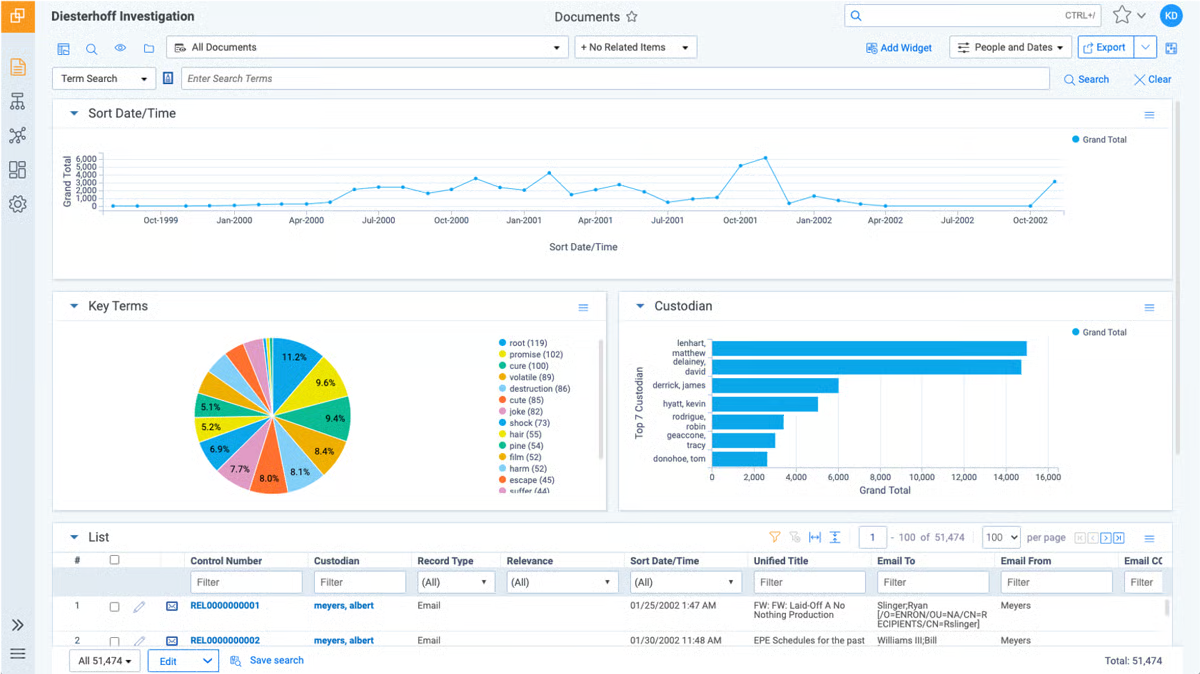
Relativity is one of the most established names in eDiscovery software, trusted by large law firms and corporations for handling complex cases and investigations.
The platform combines traditional legal discovery workflows with modern tools like generative AI to classify digital content, summarize information, and predict relevance.
Source: G2
Relativity integrates seamlessly with popular platforms like Google Workspace and Microsoft 365, so users can collect and review data directly from familiar environments.
Its robust security framework includes multi-factor authentication, access controls, encryption, and other safeguards that support data privacy throughout the discovery process.
Relativity also offers powerful search and highly configurable workflows, giving teams more control over how they review, organize, and produce case information.
While the platform has a moderate learning curve, particularly for teams new to advanced analytics, mastering its features can provide a strategic advantage in large or complex matters.
Best Features
- Generative AI capabilities: Automates classification, summarization, and relevance scoring.
- Comprehensive case preparation tools: Streamline review, tagging, and production in one platform.
- Google Workspace integration: Simplifies data collection from Gmail, Drive, and Docs.
- Custom workflows: Allows users to tailor workflows to specific review processes and compliance policies.
- Multi-factor authentication: Protects user access and sensitive data.
- Powerful search: Helps teams locate relevant digital content across large data sets.
Pros
- Strong AI and automation for large, complex cases
- Highly customizable workflows for diverse team needs
- Secure and compliant environment with full audit trails
- Broad integration support and scalable infrastructure
2. Logikcull
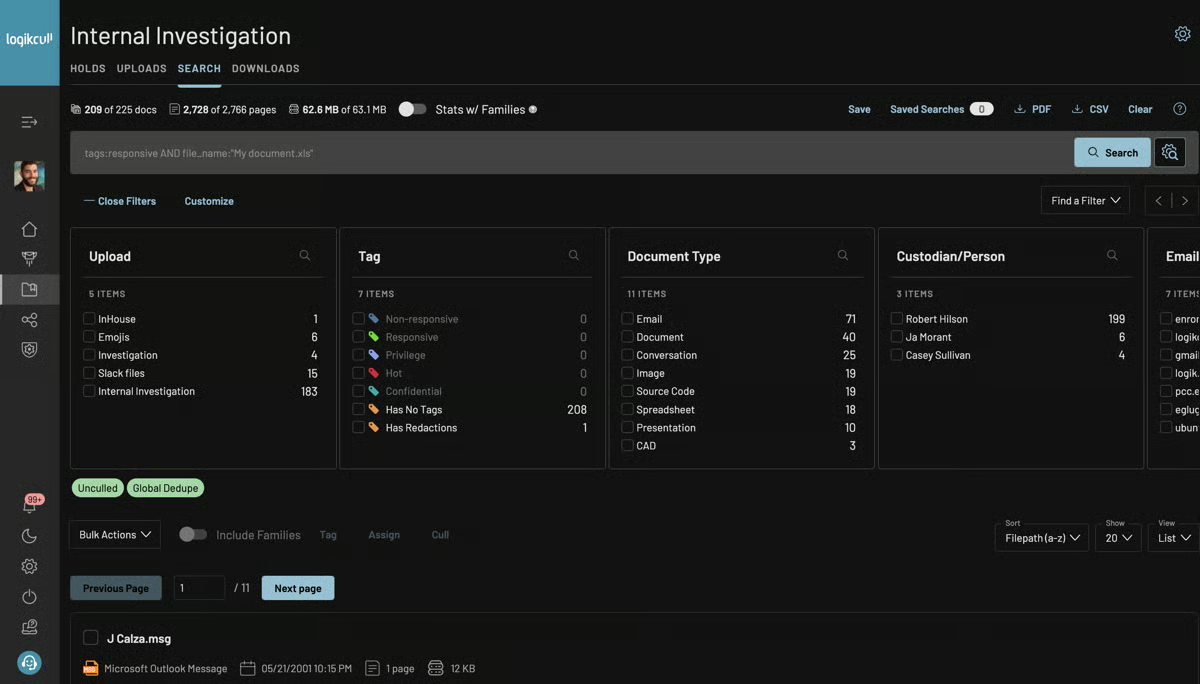
Logikcull is a trusted cloud-native eDiscovery platform that helps legal professionals simplify the entire discovery workflow, from data processing to document review.
It’s particularly useful for small and mid-sized law firms that need powerful tools without enterprise-level complexity.
Source: G2
The platform automates many steps of the electronic data handling process. Its goal is to make it easy to organize, tag, and review files without relying on IT support or external vendors.
After data is uploaded, Logikcull automatically scans, indexes, and categorizes it, which allows teams to analyze electronic data and locate relevant content faster.
It also helps maintain regulatory compliance by tracking every action within the platform, keeping a full audit trail that meets legal standards.
Best Features
- Automatic deduplication: Removes duplicate files to reduce review volume and focus on unique evidence.
- Smart filters and search: Provides strong search capabilities using metadata, keywords, and file types to locate specific records quickly.
- Built-in redaction tools: Protects confidential information and marks privileged content before production.
- Audit-ready reports: Creates detailed logs for defensibility and compliance documentation.
- Cloud integrations: Supports uploads from services like Google Drive, Slack, and Dropbox.
- Real-time collaboration: Allows multiple users to review, comment, and tag documents simultaneously through a shared collaboration platform.
Pros
- Simple interface with minimal setup time
- Transparent, predictable pricing structure
- Fast document uploads and efficient search functions
- Secure data protection with encryption and strict access controls
3. Everlaw
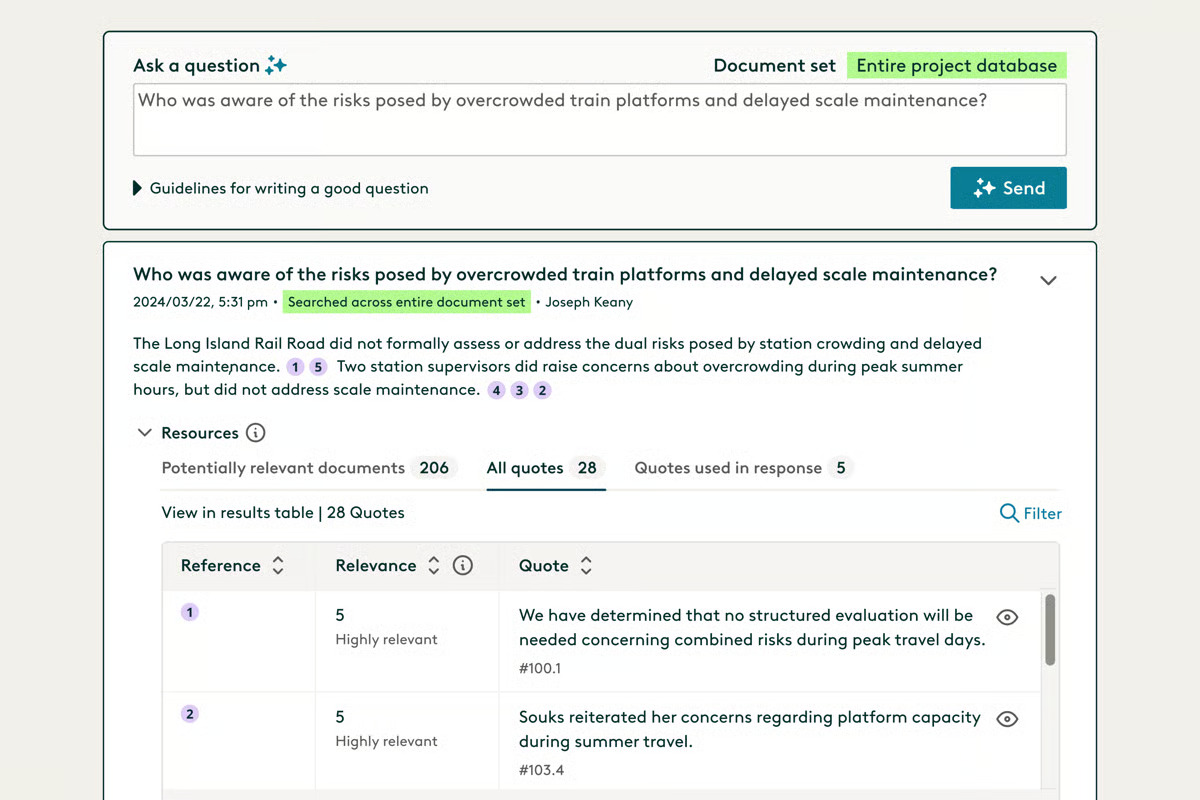
Everlaw is a cloud-based eDiscovery platform designed for large law firms, government agencies, and legal departments managing complex cases and complex data environments.
It provides a complete platform for handling the full discovery cycle, ranging from early case assessment and data processing to final review and production.
Source: G2
The software helps teams manage large volumes of digital data efficiently while keeping sensitive data secure through strict access controls and compliance standards.
Everlaw’s combination of legal automation, analytics, and collaboration tools helps streamline workflows and allows teams to quickly identify the most relevant documents in massive data sets.
Its visual interface, smart filtering, and reporting features make it easier for attorneys and investigators to understand case progress, review evidence connections, and produce electronic documents with greater control.
Best Features
- Early case assessment: Analyzes large volumes of digital data early in the litigation process to refine search strategies.
- AI-assisted document review: Uses predictive analytics to identify the most relevant documents faster.
- Efficient data management: Automatically organizes uploads for quicker navigation and review across eDiscovery processes.
- Collaboration tools: Benefit attorneys and legal departments by letting them comment on and tag documents together in real time.
- Advanced redaction and security: Protects sensitive data with audit trails and permission-based access.
- Comprehensive reporting: Delivers visual insights into case timelines, reviewer activity, and production sets.
Pros
- Smooth user experience with minimal training
- Fast review and production process for complex cases
- Strong compliance for handling confidential and regulated information effectively
4. Nextpoint
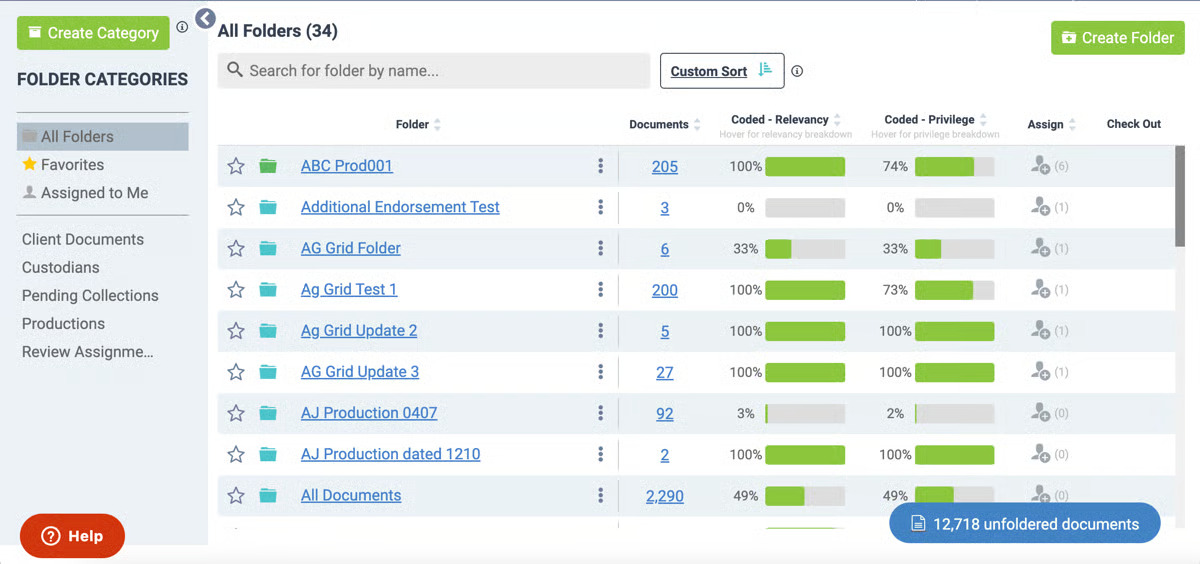
Nextpoint is a cloud-based eDiscovery platform built to manage the entire litigation workflow. Unlike some complex enterprise tools, it focuses on simplicity and speed to give legal teams a platform that’s both powerful and approachable.
Source: G2
Its intuitive interface allows attorneys, paralegals, and investigators to quickly upload, search, and organize evidence from multiple data sources.
Rapid data ingestion, keyword searches, and intuitive filters help teams move through large collections more efficiently. Nextpoint also helps firms maintain strict compliance requirements through built-in audit trails and secure storage options.
With core features such as predictive coding, legal hold notifications, and robust reporting, it supports teams through every phase of discovery while reducing the time spent on manual review and routine document review tasks.
Plus, the platform’s advanced analytics highlight key insights, which can help users find relevant information, produce documents more efficiently, and prioritize what matters most in each case.
Best Features
- Legal hold management: Improves data preservation by holding data automatically and confirming acknowledgments for compliance.
- Predictive coding: Uses AI to surface relevant information and streamline document review.
- End-to-end workflow: Handles processing, review, and production without external lawyer tools.
- Advanced analytics: Identifies patterns and key custodians to guide case strategy.
- Robust reporting: Tracks user activity, review progress, and data exports.
- Intuitive interface: Makes large-scale projects easier to manage and navigate.
Pros
- Clear, user-friendly layout suited for busy legal teams
- Good compliance features with defensible audit trails
- Fast performance when processing large volumes of data
- Comprehensive analytics that support better case preparation
5. DISCO Platform
DISCO is recognized as a market leader in efficient eDiscovery for law firms, corporations, and government agencies. Built as a fully cloud-native platform, it helps legal teams handle everything from litigation to internal investigations with speed and accuracy.
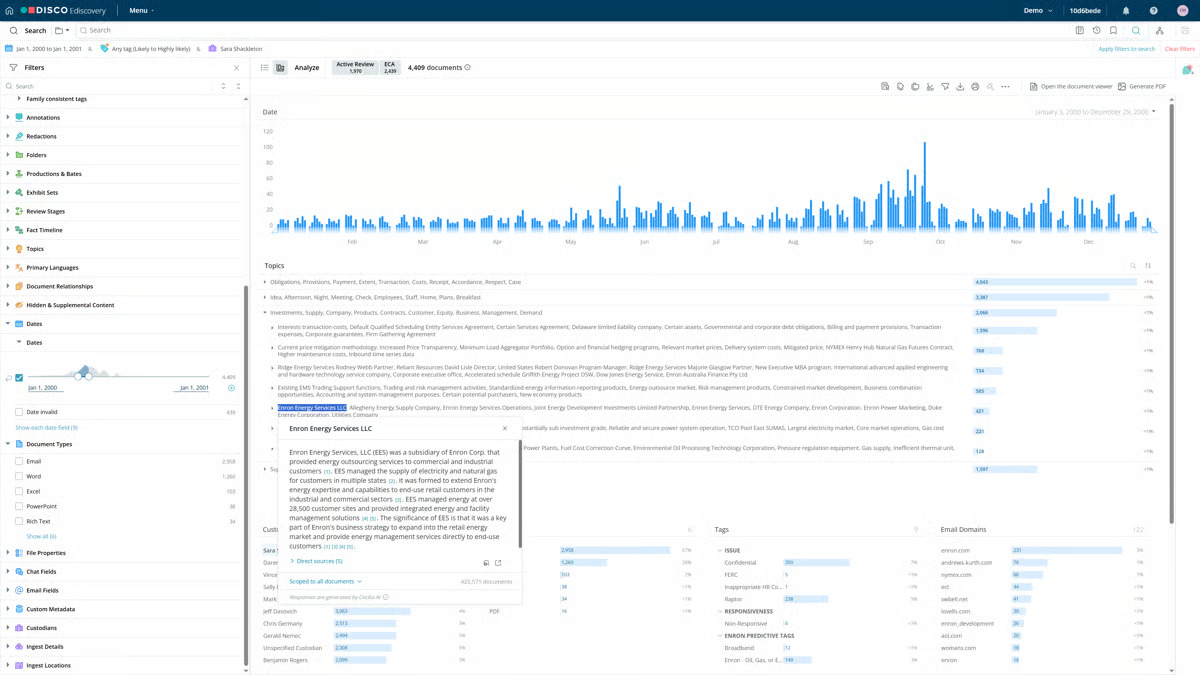
Source: G2
Its focus on legal automation and information governance makes it a strong choice for organizations that deal with large volumes of electronic information and need dependable performance.
The software facilitates AI-powered document review through an intuitive interface that allows users to locate sensitive information quickly, accelerate review, and maintain defensibility.
With scalable performance and advanced capabilities, DISCO supports both small matters and enterprise-level cases. This gives teams the flexibility to expand as data grows.
The platform also integrates with other tools, so legal professionals can connect their existing systems while staying compliant with discovery rules and mitigating risks through strong security controls.
Best Features
- AI-assisted review: Accelerates document analysis by identifying patterns and reducing manual review time.
- Information governance: Keeps electronic information organized and secure throughout the discovery lifecycle.
- Compliance management: Helps teams maintain compliance through audit trails, role-based access controls, and secure permissions.
- Scalable performance: Handles growing data volumes and multiple matters.
- Integrations with other tools: Connects with case management and productivity systems for smoother workflows.
- Sensitive information protection: Offers advanced redaction, encryption, and other security features to prevent unauthorized access.
Pros
- Fast and reliable cloud performance
- Easy-to-use interface for both attorneys and support staff
- Reliable security and compliance capabilities
- Good scalability for high-volume discovery projects
Get an Alternative to Expensive eDiscovery Solutions: Briefpoint
Choosing the best eDiscovery software depends on your organization’s data volume, budget, and workflow needs. Platforms like Logikcull, Everlaw, Nexpoint, DISCO, and Relativity all deliver strong features for document review, data processing, compliance, and everything in between.
Yet for many legal teams, the challenge isn’t just finding the right tool. It also revolves around costs and keeping workflows predictable and simple.
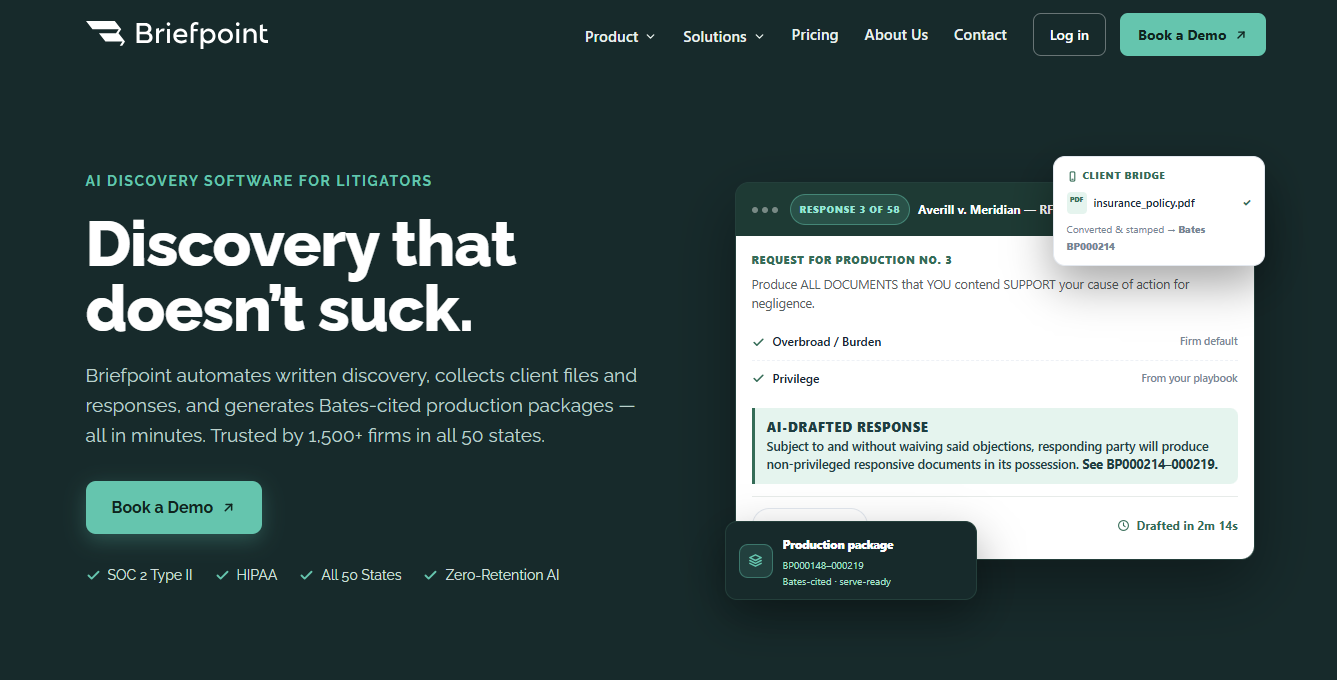
Briefpoint and its new product, Autodoc, empower litigation teams with a smarter way forward. These solutions help legal professionals handle discovery tasks faster with automation that reduces manual work and administrative costs.
Briefpoint automates discovery responses to save hours typically spent on formatting and reviewing, while Autodoc accelerates document creation and management across matters.
Together, they serve as an alternative to expensive eDiscovery solutions, offering speed, consistency, and accuracy that can adapt to increasing demand.
Are you ready to modernize your discovery process once and for all?
