What You Need to Know About Automated RFP Responses
What You Need to Know About Automated RFP Responses
Responding to a large RFP can eat up hours before your team gets to the parts that truly require original thinking. Usually, someone has to sort the questions, find approved information, pull material from past proposals, and coordinate input from different people.
Automated RFP responses cut down much of that manual effort. For example, modern automation software can find useful material from existing knowledge sources, prepare draft responses, and route questions to the right contributors.
For proposal teams handling a steady stream of sales proposals, security questionnaires, or due diligence questionnaires, those saved hours can add up quickly. Your writers get more time to focus on the buyer, sharpen the proposal, and improve response quality.
The technology has advanced considerably, too. Modern AI platforms can use artificial intelligence to interpret what a question is asking rather than relying entirely on exact keyword matches.
Let’s look at how RFP automation works and where it can make your response process easier.
What Are Automated RFP Responses?
Automated RFP responses are answers created or prepared with software during the RFP response process. The software draws from information your organization already has, such as a content library, knowledge base, previous responses, or approved answers.
Older automation tools primarily helped users search for prior responses and copy them into a new RFP document. Modern tools can do considerably more.
AI RFP software may use natural language processing, machine learning, and generative AI to understand a question and find relevant source material. Some platforms can then create a draft answer based on approved content rather than requiring a proposal manager to search manually.
For example, imagine a prospect asks how your company protects customer data. An AI RFP platform could recognize the question, locate approved security language, and create a draft for review.
Automating responses can work for standard RFPs as well as related documents like compliance questionnaires and diligence questionnaires.
Why Automate RFP Responses?
RFP response automation reduces routine tasks associated with a manual RFP process and gives contributors more time for strategic initiatives.
Common benefits include:
- Faster turnaround: RFP automation tools can retrieve relevant material and create draft responses quickly to help shorten response time.
- Less manual work: Automated workflows reduce copying, searching, and other administrative steps that take attention away from proposal strategy.
- Better consistency: A centralized knowledge management system gives writers access to current approved content, which helps maintain consistent quality from one proposal to another.
- Stronger collaboration: Built-in collaboration tools can assign questions, collect edits, and keep bid teams working from the same version.
- Potential cost savings: Reducing labor on recurring work can improve RFP automation ROI, particularly when proposal volume is high.
Higher quality responses can support stronger business proposals, too. Proposal quality still depends on good writing and careful review, but automation gives your team more room to focus on both.
How Automated RFP Response Software Works
RFP automation works a little differently from one software solution to another. Some products focus heavily on knowledge management, while others combine AI generation with project management features.
Nevertheless, most follow a similar general workflow like this:
1. Upload or Import the RFP
The process usually begins when you add an incoming RFP to the system.
Depending on the RFP software, you may upload a document, import a spreadsheet, or bring questions into the platform through an integration. RFP management software can then organize the material so your team has a clearer view of what needs a response.
Good software can reduce the setup work at this stage. Rather than manually copying hundreds of questions into a project tracker, automation technology can identify individual prompts and prepare them for assignment.
Some RFP automation software can handle other recurring documents in a similar way, including security questionnaires.
A proposal manager can then review the imported material before work begins.
Getting the source document organized early makes the rest of the entire RFP response process easier to manage, particularly when several contributors need to participate.
2. Identify Questions and Requirements
Once the RFP is imported, automation software analyzes its contents and separates the questions or requirements your team needs to address.
Modern AI-powered RFP software can use natural language processing to interpret different wording for similar questions. A buyer might ask about data retention in one RFP and information storage practices in another. The software can recognize that related approved material may answer both.
AI agents may take the process further by searching existing knowledge sources and determining which information is relevant to each question.
For example, a technical requirement could be routed to a product specialist while a customer data question goes to the appropriate security reviewer.
Accurate classification reduces the time proposal teams spend sorting large documents manually. It can also help with planning because contributors can see where their input is required earlier in the response process.
Not every tool offers the same level of automated analysis, so capabilities are worth comparing closely.
3. Generate Draft Responses
After the questions are identified, the system begins matching them with material your organization has already approved.
A strong knowledge base might contain past RFP responses, product information, policy language, and content from past proposals. AI-powered tools can search that material and prepare draft responses suited to the current question.
Generative AI can make the output feel less like copied boilerplate. Rather than returning a prior answer word for word, AI RFP technology may adapt the information to the wording and context of the new request.
For example, a question about implementation could draw on several prior responses and turn them into one focused answer.
Centralized knowledge management becomes particularly useful here. Writers can access relevant information from a shared source instead of searching folders or messaging colleagues every time a familiar question appears.
The aim is to generate accurate responses grounded in reliable company information to leave the response team with editing and customization rather than a blank page.
4. Review and Edit Answers
Automation can prepare the first draft, but a professional response still needs human judgment.
Proposal teams should check facts, make sure the answer addresses the prospect’s actual requirement, and adjust the wording where necessary.
Quality control becomes even more important when generative AI is involved because generated language can occasionally misinterpret a source or introduce unsupported details. Writers can also use the review stage to make an answer more persuasive.
Suppose an automated draft correctly describes a software feature but says little about the buyer’s underlying concern. A proposal writer can reshape the answer around the business need and add relevant proof from approved content.
Many modern tools include collaboration tools that let contributors comment, edit, or approve responses inside the platform. Version history and automated workflows can reduce confusion over which draft is current.
5. Approve and Submit the Final Response
The last stage brings approved material together into a complete RFP response.
Some RFP automation tools include approval workflows so specific answers can be reviewed before they enter the finished proposal. Sensitive topics, such as security or contractual commitments, may require approval from designated specialists.
Once reviews are complete, the software can help assemble the final document in the required structure. Formatting still deserves a check, particularly when the buyer has given strict submission instructions.
Automation can make future work easier as well. Approved answers from the completed project can be added to the content library so later RFP responses benefit from what your team learned.
A well-maintained system becomes stronger over time because prior responses remain easier to find and reuse.
The entire process still has human checkpoints, but much of the searching, routing, and repeated drafting can happen faster. Procurement teams receive a polished submission while your proposal staff spends fewer hours on administrative work.
What Is RFP Response Automation Software?
RFP response automation software is technology designed to manage and speed up the work involved in preparing proposal responses.
Traditional RFP management software often focuses on organization, including assignments, deadlines, and content storage. Newer AI RFP products add capabilities like intelligent search and automated drafting.
A typical platform may give you:
- Content management: Store approved answers, prior responses, and reusable proposal content in one searchable location.
- AI-assisted drafting: Use existing information to create relevant answers for new questions.
- Workflow management: Assign work and move responses through review or approval stages.
- Questionnaire support: Reuse approved information for documents such as compliance questionnaires.
- Reporting: Track activity and help you evaluate efficiency, workload, or win rates.
Implementing RFP automation can make sense when response volume has grown beyond what shared documents and basic project management tools can comfortably handle.
The best choice depends on the work you need to automate. Some platforms are designed for sales and bid teams, while specialized automation tools handle very different types of RFPs.
Take Repetitive RFP Work Off Your Plate
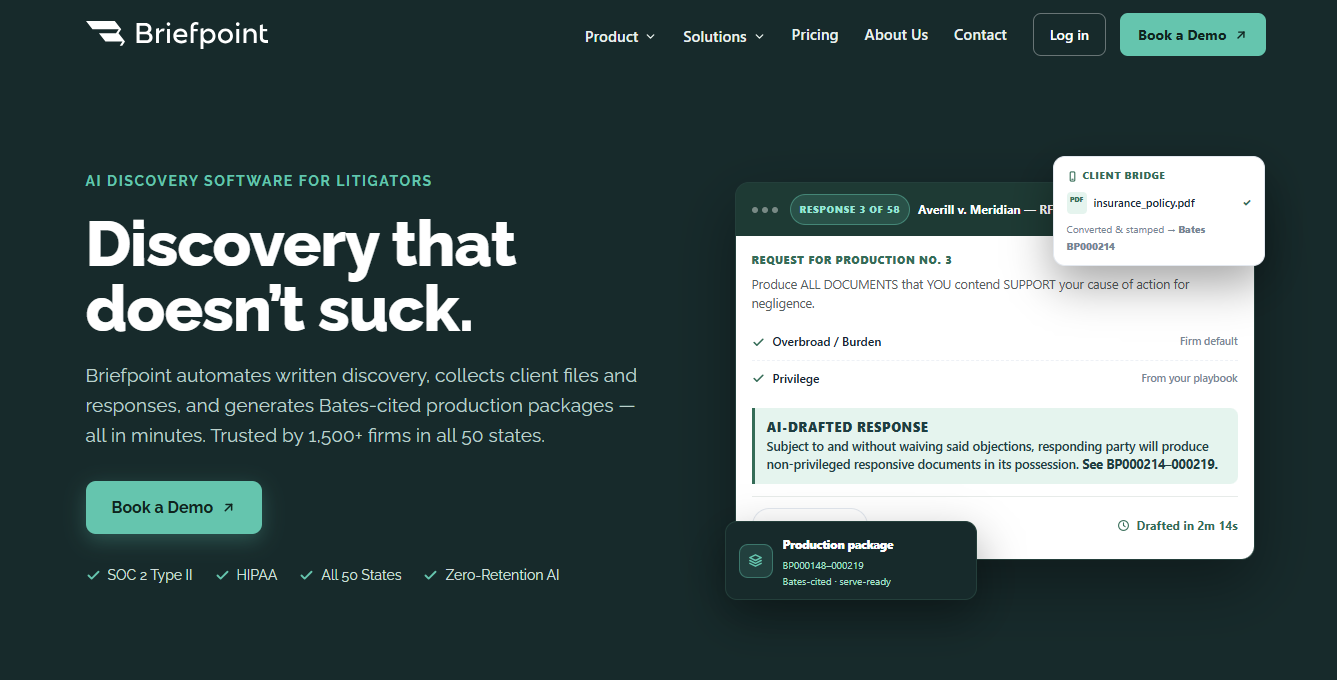
Briefpoint gives legal teams a faster way to handle requests for production without spending hours sorting documents and drafting responses manually.
Its Autodoc feature reads the requests, searches uploaded case files for responsive material, and prepares editable Word responses with page-level Bates citations.
Briefpoint can also create a Bates-numbered production package, which helps move the work from document review to a production-ready draft with fewer manual steps.
The biggest advantage is time. Repetitive discovery work can take attorneys and staff away from case strategy, client communication, and higher-value legal work. Automating the first pass helps reduce that burden while keeping the final review in your hands.
If RFPs are a recurring part of your discovery workload, Briefpoint can help you move through them faster and keep the process more organized from start to finish.
