A Practical Discovery Checklist for Litigation Teams
Discovery can take longer than expected when there’s no clear plan from the start. At first, the work may seem manageable, but the multitude of steps you have to go through during the process can quickly start competing for attention.
Luckily, a checklist can give you a practical way to keep the work more organized. From early preparation to final review, it offers a clear place to track what needs to happen next and what may need a closer look.
In this guide, you’ll find the main steps involved in the discovery process, including written discovery, client information, objections, document review, and production.
Pre-Discovery Preparation Checklist
A strong discovery process starts before the first request goes out. Thorough preparation helps you understand what you need, what deadlines apply, and how each step will support the case.
Use this checklist to build a detailed plan before formal discovery begins:
- Review the pleadings: Read the complaint, answer, counterclaims, and affirmative defenses so you know which facts need support.
- Identify key issues: Write down the claims, damages, disputed facts, and legal questions that will guide your discovery requests.
- Map out deadlines: Check court orders and local rules so your team has clear timing from the start.
- List key people and documents: Note clients, witnesses, custodians, contracts, emails, records, photos, reports, and other materials that may be essential.
- Create a discovery plan: Decide which discovery tools you’ll use and what information you need first.
- Give the client clear guidance: Explain what documents to save, what details to gather, and how quickly they should respond to questions.
Written Discovery Checklist
Written discovery gives you a clear way to request facts and records from the other side. Use the sections below to keep each request focused and tied to the discovery process:
Interrogatories
Interrogatories are written questions that the other side must answer under oath. They help you fill in facts that may not appear in documents, such as dates, timelines, explanations, and the basis for certain claims or defenses.
Before you serve them, you must prepare each question with a clear purpose. Avoid broad wording that gives opposing counsel an easy reason to object. A good interrogatory should ask for one specific piece of information or a focused explanation that adds value to the case.
They’re also useful when you need additional context for records you already have. For example, a document may show that a conversation happened, but an interrogatory can ask who participated and why the exchange was important.
Tip: Keep the questions direct, review the allowed limits, and make sure each one supports your case strategy.
Requests for Production
Requests for production ask the other side to present documents, records, and other evidence tied to the case. Use them to collect standard documents early, then request additional resources as the case becomes clearer.
For example, you can request:
- Contracts and agreements
- Emails and text messages
- Photos and videos
- Reports
- Invoices and receipts
- Medical records
- Employment records
- Financial records
- Insurance documents
- Internal policies
- Project files
- Digital files and metadata
- Communications with third parties
- Evidence that supports the claimed damages
- Evidence that disputes liability
Requests for Admission
Requests for admission ask the other side to admit or deny specific facts, documents, or legal points. They can help narrow the issues involved in the case, and it’s worth noting that each request should focus on one clear statement.
They often cover items such as:
- Basic facts about the dispute
- Dates and timelines
- Authenticity of documents
- Ownership of records
- Contract terms
- Communications between parties
- Prior payments
- Damages-related facts
- Liability-related facts
- Statements made by witnesses
- Undisputed background information
- Facts that may shorten trial preparation
Client Information Checklist
Client input can heavily influence the quality of your discovery responses. Good collaboration helps you stay informed and account for the client’s unique needs before responses are finalized.
Keep these points in mind:
- Send clear questions: Ask for facts in plain language so the client knows exactly what to provide.
- Request relevant documents: Ask for case-related emails, contracts, records, photos, and reports.
- Confirm key details: Have the client verify important names, dates, events, and deadlines.
- Ask for additional context: Give the client room to explain anything that may not be obvious from the documents.
- Flag sensitive information: Identify privileged or confidential details that need attorney review.
- Follow up on gaps: Revisit unclear answers or missing files before responses go out.
- Review final responses with the client: Make sure the client understands and confirms the information before service.
Objections and Responses Checklist
Discovery objections and responses need careful examination before they go out. Your main goal should be to keep answers accurate, preserve valid objections, and align teams so everyone understands the response strategy.
Before serving responses, go through each item with care:
- Review each request carefully: Read the full request before drafting an answer or objection.
- Check for valid objections: Flag vague, overbroad, privileged, irrelevant, or burdensome requests.
- Avoid boilerplate language: Tie each objection to the specific request so the response feels defensible.
- Answer what you can: Provide a clear factual response when information is available, even if an objection applies.
- Track missing information: Note any client details, documents, or follow-ups needed to keep progress moving.
- Assess risk: Consider the likelihood that opposing counsel may challenge the objection.
- Review before service: Confirm that responses match the documents, client input, and case strategy.
Document Review and Production Checklist
Document review helps you decide what to deliver and what to withhold. As the case facts develop, the production process should address each request with care.
Before you deliver the production set, walk through these review steps:
- Gather documents from the client and other approved sources
- Compare collected materials against each production request
- Research unclear document categories before making production decisions
- Remove duplicates where appropriate
- Review for privilege and confidentiality
- Flag documents that need attorney examination
- Redact sensitive information when allowed
- Create or update the privilege log
- Apply Bates numbers before production
- Confirm the agreed production format
- Check for missing pages or corrupted files
- Track what was produced, withheld, or redacted
- Save a clean copy of the final production set
- Deliver the production package before the deadline
Final Review Checklist
The final review is your last chance to catch issues before the discovery phase moves forward. A careful review can lead to better outcomes and give everyone access to the same clean, final version.
Conduct one last pass through these items:
- Check the deadline: Confirm the service date and any court-ordered timing requirements.
- Review every response: Make sure each answer matches the request and uses clear language.
- Confirm client input: Compare the responses against the information the client provided.
- Check objections: Make sure objections are specific and tied to the request.
- Verify signatures: Confirm that verifications, attorney signatures, and required forms are complete.
- Review exhibits: Make sure referenced documents are attached or easy to identify.
- Save final copies: Keep clean Word and PDF versions in the case file.
- Send to the right parties: Confirm the service list before anything goes out.
Common Discovery Mistakes to Avoid
Even with a solid system (or checklist) in place, discovery can still create problems if you move too quickly. Technology can help organize data, but your legal expertise and daily practice still need to guide each step.
Watch for these common pitfalls before they affect your deadlines or responses:
- Missing deadlines: Track response dates as soon as discovery is served, then add reminders well before the due date.
- Using vague objections: Define the reason for each objection so it connects clearly to the request.
- Overlooking privilege: Review documents carefully before production so protected information stays out of the production set.
- Skipping client follow-up: Ask follow-up questions when a client’s answer feels incomplete or unclear.
- Producing incomplete files: Check for missing pages, broken links, unreadable PDFs, and partial email threads.
- Ignoring format requirements: Confirm the required production format before you deliver files.
- Failing to track changes: Keep a record of revised answers, added documents, and withdrawn objections.
Turn Your Discovery Checklist Into Finished Work With Briefpoint
A discovery checklist can certainly help you stay organized, but Briefpoint can make the real work much easier.
Briefpoint helps you draft and respond to discovery in minutes, including interrogatories, requests for production, and requests for admission.
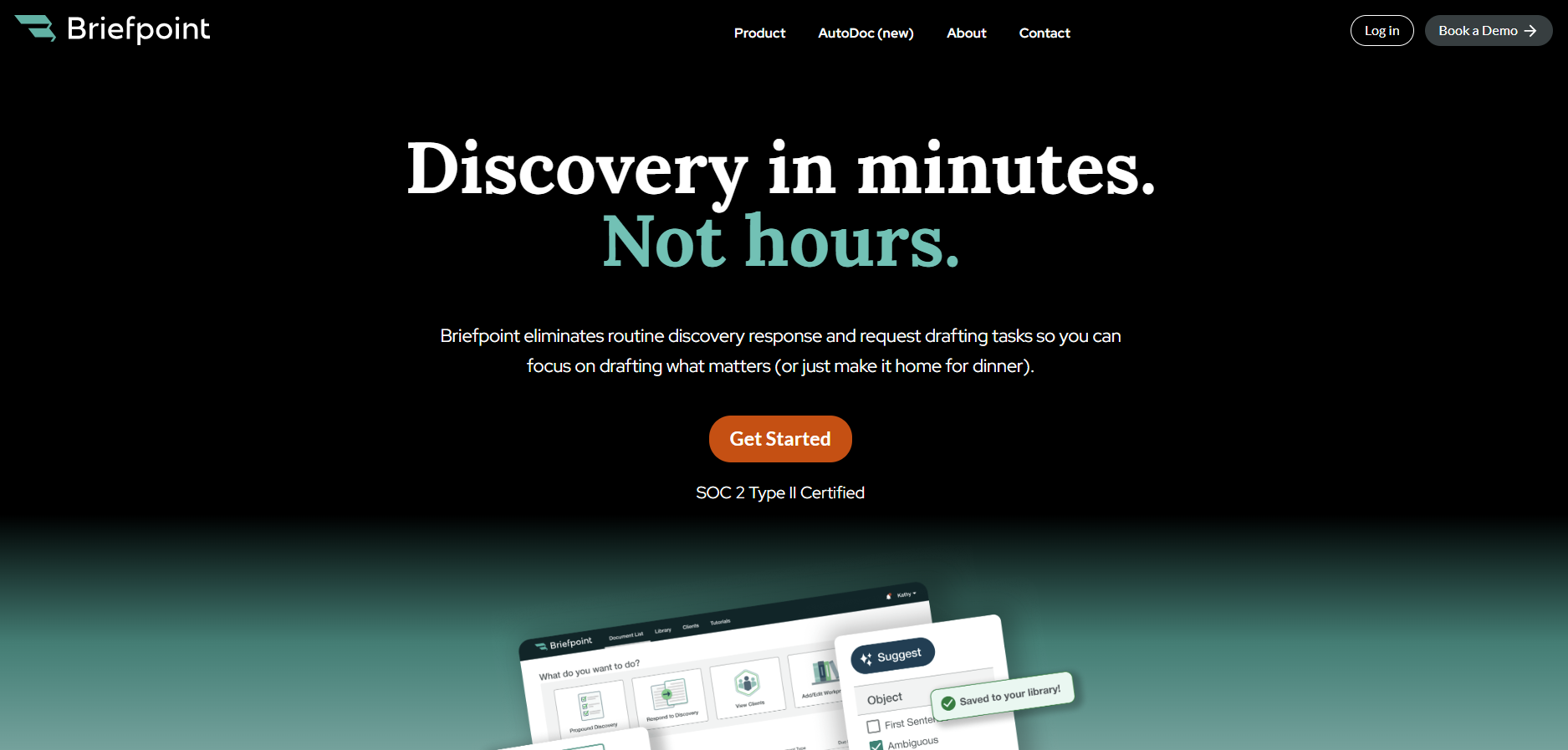
Briefpoint also supports automatic objections, client-collected responses, plain-English and Spanish client translations, Word-format downloads, and jurisdiction-specific formatting for all 50 states and all 98 federal district courts.
Briefpoint’s Autodoc feature can also help with document production. You can upload RFPs, the complaint, and case files, then generate Word responses with objections, substantive answers, Bates citations, and a Bates-numbered production package.
If discovery still takes too much time in your practice, Briefpoint gives you a faster way to prepare cleaner drafts, collect client input, review responses, and deliver production packages with less manual work.
Book a Briefpoint demo today to see how much easier your discovery workflow can be.
