8 Top Legal Research Tools for Legal Professionals
What are Legal Research Tools?
Generally speaking, legal research tools are digital resources that help legal professionals conduct legal research with speed and accuracy. They’re diverse, ranging from full-scale databases packed with case law and statutes to platforms that focus on legal news, analytics, or court rules.
While they serve different purposes, the general idea is to give users quick access to legal materials they can trust.
Most tools pull from both state and federal courts, along with commentary, practice guides, and regulatory updates. And because the law changes constantly, these platforms also make it easier to stay up to date on new rulings and legislative shifts.
Some of the common features you’ll find include:
- Searchable collections of legal materials such as cases, statutes, and regulations
- Coverage of opinions from state and federal courts
- Citation checkers to confirm the validity of cases
- Built-in legal news updates and analysis
- Filters by jurisdiction, topic, or practice area
- Resources tailored for specific legal fields
In general, legal research tools give professionals one reliable place to research, check, and track information that matters for their work.
8 Top Legal Research Tools For All Kinds of Law Professionals
There’s no single tool that fits every need. Some platforms focus on deep case law research, while others highlight legal news or analytics.
Below, you’ll find a mix of options to choose from:
1. LEGALFLY
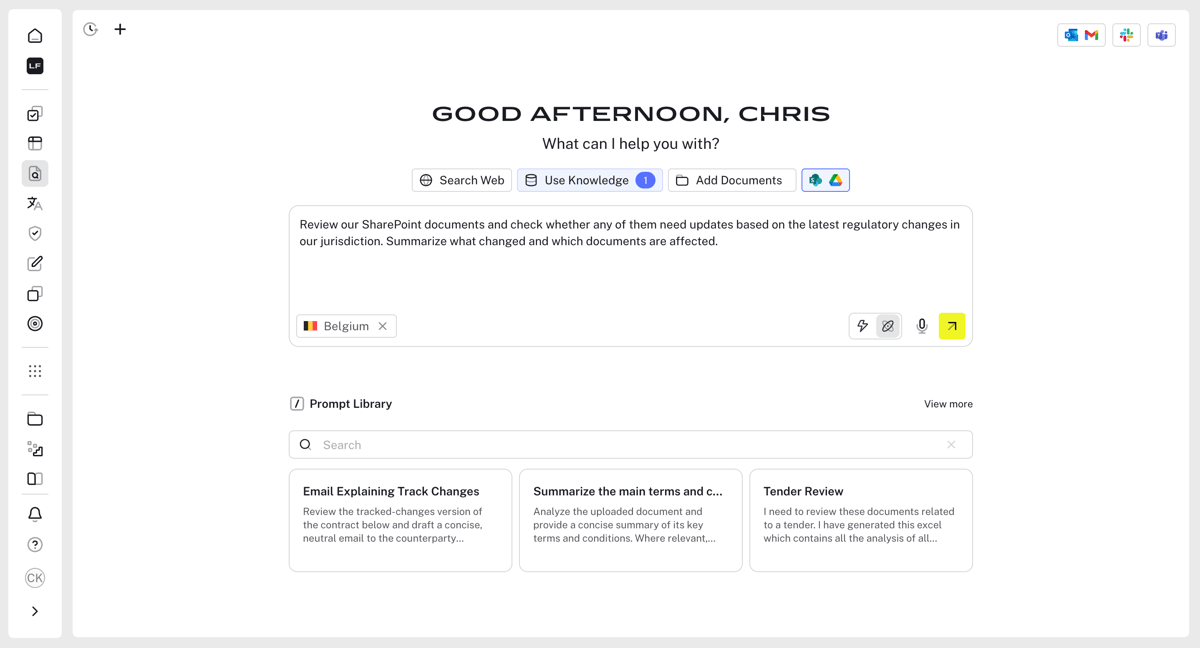
LEGALFLY is one of the newer legal research platforms gaining traction with law firms and solo attorneys.
It acts like a modern law library that combines classic legal databases with AI support to speed up searches. Whether you’re reviewing federal and state cases, looking at Supreme Court decisions, or following pending legislation, LEGALFLY brings it all into one system.
Source: G2
It also connects with state court websites to offer quick access to legal opinions and updates across jurisdictions.
Beyond case law, the platform provides legal journals, commentary, and information from administrative agencies, which makes it useful for both statutory research and practice-specific needs.
Best Features
- AI summaries: Breaks down lengthy opinions from federal appellate courts and the Supreme Court.
- Case law coverage: Access to federal and state cases across multiple jurisdictions.
- Statutory research: Tools for finding relevant statutes, rules, and regulations.
- Secondary sources: Integration with legal journals and commentary for deeper context.
- Legislative tracking: Updates on pending legislation and new rulings from administrative agencies.
Pros
- Saves time with clear summaries of cases and statutes
- Strong mix of statutory research, case law, and secondary sources
- Connects to both state court websites and federal rulings
- Fits the needs of both large law firms and smaller practices
2. Lex Machina
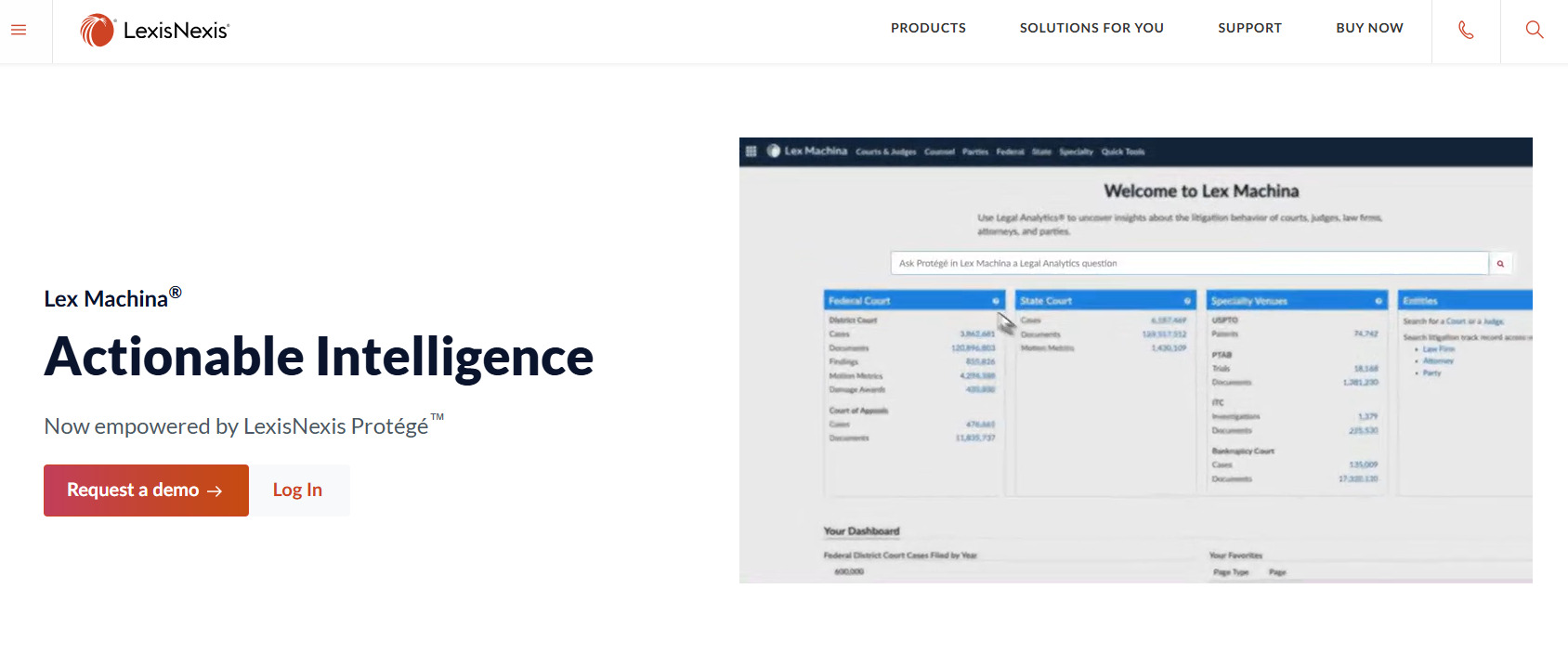
Lex Machina is designed for legal experts who need more than just case law. It provides litigation analytics that help shape strategy.
Source: LexisNexis.com
Rather than rifling through a basic searchable database, this platform digs deeper into trends. It can show how judges, courts, and even opposing counsel have handled similar legal issues in the past.
It’s especially valuable for firms that want to prepare with data. Alongside analytics, Lex Machina also gives access to case documents, statutes, and references like law review articles or notes from the Law Revision Counsel.
Best Features
- Litigation analytics: Detailed data on judges, lawyers, law firms, and case outcomes.
- Searchable database: Quick access to case law, filings, and related legal issues.
- Federal regulations: Coverage of statutes and rules that impact case outcomes.
- Secondary resources: References to law review articles and other commentary.
- Historical insights: Information from the Law Revision Counsel and long-term case patterns.
Pros
- Helps predict outcomes with data-backed insights
- Saves time preparing case strategies with detailed analytics
- Strong support for complex legal issues and multi-jurisdiction cases
- Widely used by large firms and litigation-focused attorneys
3. Bloomberg Law
Bloomberg Law is a well-known choice among legal experts and a go-to for both practitioners who want deeper insights.
Unlike free legal resources that only cover the basics, Bloomberg offers a vast mix of case law, statutes, and business-focused updates.
Source: BloombergLaw.com
You’ll find everything from Supreme Court opinions and case summaries to commentary pulled from legal blogs, practice guides, and even a built-in legal dictionary for quick reference.
While some platforms rely only on raw case law, Bloomberg combines traditional databases with news-driven updates to help professionals keep up with both legal and business trends. It also pulls from open-access journals, which gives researchers additional context alongside standard materials.
Best Features
- Comprehensive coverage: Access to statutes, Supreme Court opinions, and detailed case summaries.
- News integration: Ongoing updates that connect legal developments with business and finance.
- Secondary resources: Includes references from legal blogs, practice guides, and open-access journals.
- Research support: Built-in legal dictionary and tools designed for practicing attorneys and law students.
- Case tracking: Alerts on dockets, filings, and emerging case law.
Pros
- Strong mix of legal research and business intelligence
- Includes resources beyond traditional case law, like legal blogs and journals
- Helpful for both practicing attorneys and law students
- Reliable case summaries that speed up research
4. Legal Information Institute
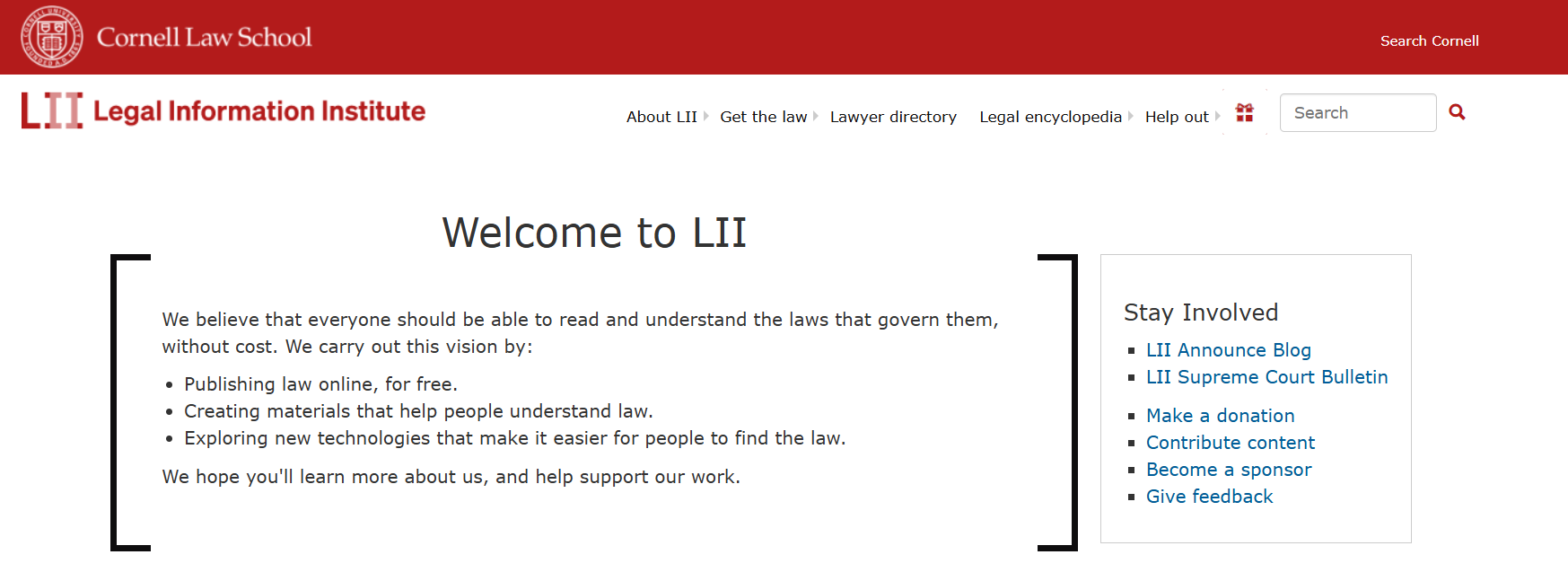
The Legal Information Institute (LII), hosted by Cornell Law School, is one of the most trusted free legal research tools available online. It provides open access to a broad range of legal documents, including statutes, regulations, and U.S. Supreme Court decisions.
For many in the legal industry, this platform is the first stop when they need reliable information at no cost.
Source: Law.Cornell.edu
What sets LII apart is its focus on free legal research. Users can browse legislative materials, check congressional records, and search through an extensive collection of federal and state resources.
Sadly, it doesn’t have advanced analytics like paid platforms, but it’s a go-to for anyone who needs dependable and straightforward legal information.
Best Features
- Free access: Open-source platform for statutes, case law, and U.S. Supreme Court decisions.
- Extensive collection: Covers legislative materials, congressional records, and key rulings.
- Educational support: Simple guides and explanations for students and non-lawyers.
- Trusted source: Backed by Cornell Law School, respected across the legal industry.
- User-friendly design: Easy to search and navigate compared to many traditional systems.
Pros
- 100% free and accessible to anyone
- Broad coverage of cases, statutes, and legislative materials
- Respected academic source with a strong reputation
- Useful for both professionals and the general public
5. vLEx
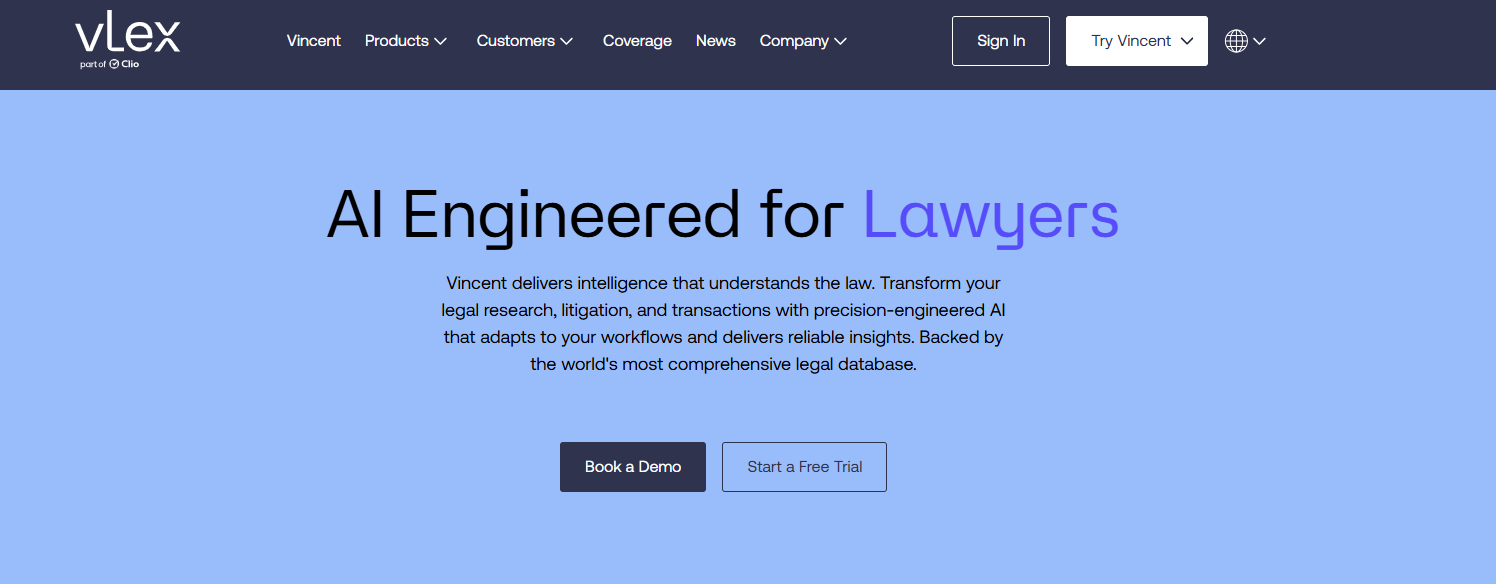
vLex is a practical option for lawyers who want an affordable yet reliable research tool. Many state bar associations have long offered Fastcase as a member benefit, and with the shift to vLex, it remains one of the most widely available platforms for legal research.
Source: vLex.com
It gives attorneys access to an extensive database that covers decisions from federal and state courts, making it easier to search case law and find relevant precedents for the matters they’re handling.
On top of its broad coverage, vLex includes advanced search options that help users find useful rulings faster. It also offers visualization tools, which can help lawyers see how cases connect and support stronger legal analysis.
Best Features
- Federal cases: Broad coverage of rulings from across the country.
- Advanced search options: Filters and tools to refine case law research with precision.
- Visualization tools: Graphs and maps showing how cases are linked.
- Mobile access: Research from anywhere with mobile support.
- Practice tips: Contextual guidance that supports decision-making.
Pros
- Affordable option, with access often tied to bar memberships
- Easy-to-use design with mobile support
- Strong coverage across federal and state courts
- Helpful extras for finding relevant precedents and understanding case connections
6. Caselaw Access Project
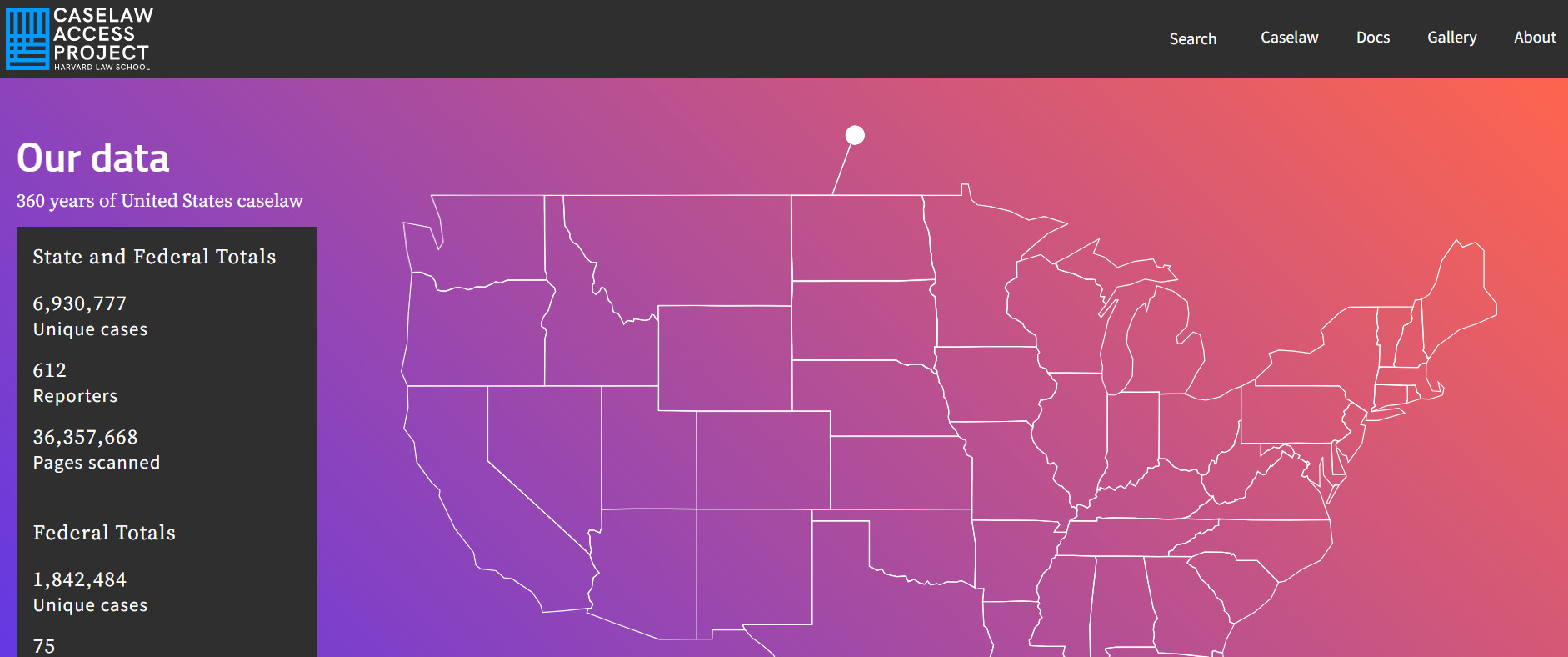
The Caselaw Access Project (CAP) is one of the most ambitious free legal research resources available today. Backed by Harvard Law School, it gives open access to millions of U.S. court decisions, including historic rulings and modern opinions.
For researchers, law students, and legal scholars, CAP is a powerful way to study how the law has evolved over time.
Source: Case.law
The database spans everything from U.S. Supreme Court decisions to state-level rulings, organized by report volume number for accuracy.
While the basic platform is free, CAP also offers paid desktop plans with additional features like bulk downloads and advanced search. It’s widely recognized by groups like the American Bar Association for its value to both academics and practitioners.
In addition to case law, the project gives access to session laws and related materials, which makes it a strong complement to other research tools.
Best Features
- Extensive coverage: Millions of cases, including U.S. Supreme Court decisions and state rulings.
- Reports volume number: Organized referencing for precise case identification.
- Free access: A strong choice among free legal research resources.
- Paid desktop plans: Options for bulk downloads and advanced research features.
- Legal scholarship support: Widely used for studies, journals, and academic work.
Pros
- Open access for researchers, lawyers, and students
- Valuable for legal scholarships and historical studies
- Endorsed by the American Bar Association as a trusted resource
- Combines free use with optional upgrades for professionals
7. Paxton AI
Paxton AI is an emerging tool built to support both attorneys and law firms with faster research powered by artificial intelligence.
Unlike traditional law library systems, Paxton uses natural language processing to interpret questions in plain English and deliver precise results from statutes, federal and state cases, legal opinions, and other court documents.

Source: Paxton.ai
What makes it stand out is how it combines traditional legal databases with newer features like real-time tracking of pending legislation and access to secondary sources such as legal journals and legal guides.
This mix makes it useful for practicing lawyers who want faster answers and for students who want a more approachable way to conduct legal research.
Best Features
- AI-powered search: Responds to plain language questions and provides targeted case law and relevant statutes.
- Federal and state coverage: Access to rulings from multiple jurisdictions, including appellate and trial courts.
- Pending legislation tracking: Alerts on proposed laws and regulatory changes.
- Secondary materials: References from legal journals, legal guides, and practice commentaries.
- Citation support: Tools to verify and cross-check legal opinions and court documents.
Pros
- Speeds up research with AI-generated responses
- Covers both federal and state cases in one platform
- Helpful for smaller law firms looking for cost-effective options
- Combines traditional research with real-time legislative updates
8. Westlaw
Westlaw is one of the most established legal research platforms used by law firms, in-house teams, and courts.
As cloud-based software, it gives users access to a broad collection of primary and secondary sources while also offering specialized tools for research, citation checking, drafting, and litigation analysis.
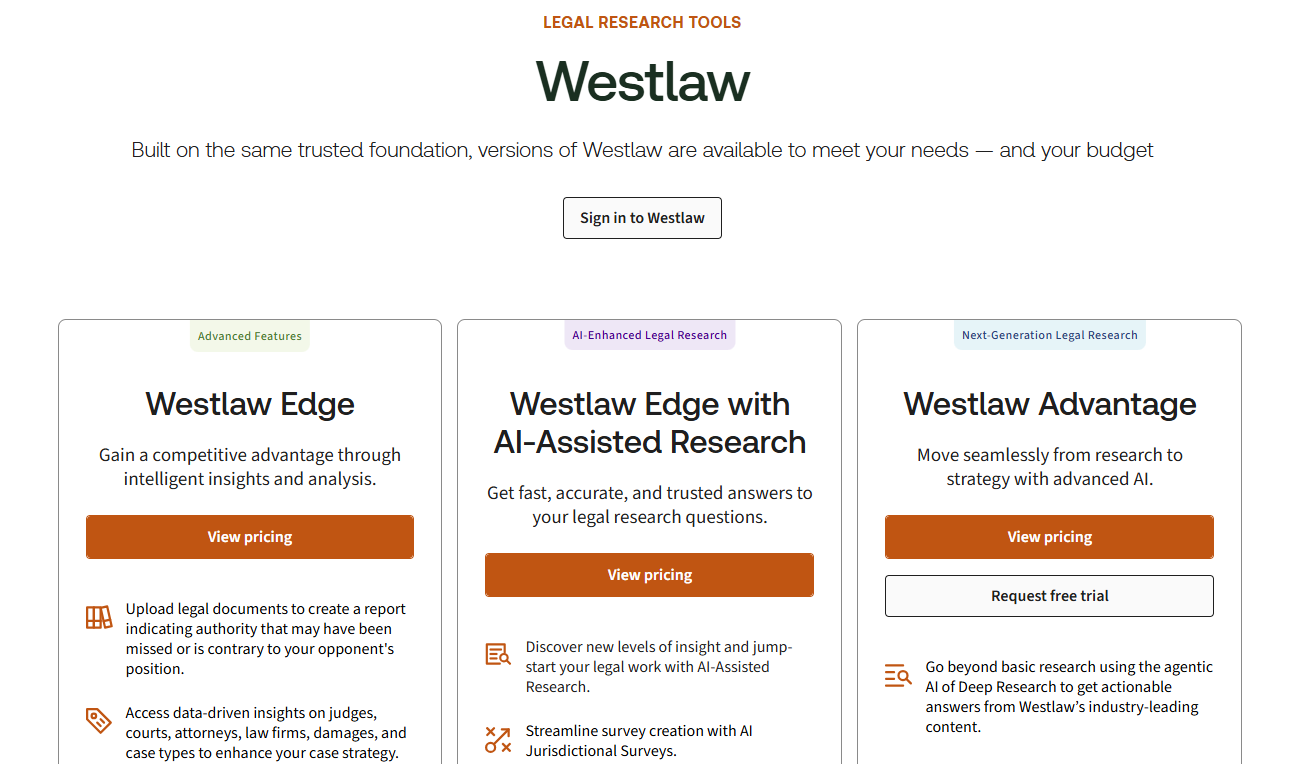
Thomson Reuters currently positions its lineup around Westlaw Edge, Westlaw Edge with AI-Assisted Research, and Westlaw Advantage.
Source: Legal.ThomsonReuters.com
It’s especially useful for lawyers who need to find relevant case law quickly and work across different parts of the research process in one system.
Along with coverage across jurisdictions, Westlaw includes tools for validating authorities, reviewing litigation trends, and accessing practical resources written by attorney editors.
Best Features
- Diverse legal research tools: Advanced legal research with AI-supported tools designed to help users research faster and more accurately.
- KeyCite: Citation tool that helps verify if a case, statute, regulation, or administrative decision is still valid.
- Litigation analytics: Data on judges, courts, law firms, attorneys, damages, and case types across many practice areas.
- Practical law: Attorney-written practice notes, checklists, standard documents, and how-to resources.
- CoCounsel integration: AI-assisted research, drafting, and document analysis grounded in Westlaw and Practical Law content.
Pros
- Strong option for finding relevant case law across multiple jurisdictions
- Combines research, citation checking, practical guidance, and analytics in one platform
- Cloud-based software with multiple research tools for different legal workflows
- Helpful for lawyers who want to move from search to drafting with fewer gaps in the process
From Research to Ready-to-Serve Documents With Briefpoint
Legal research helps you find the right authority, but it does not finish the discovery work for you. You still need to draft responses, match documents to specific requests, format everything correctly, and make sure the final output is ready to serve. That part can take far more time than it should.
Briefpoint helps cut down that workload. Its core platform helps you draft and respond to requests for production, requests for admission, and interrogatories, while keeping formatting and objections consistent.
Autodoc takes things further by turning productions and case files into ready-to-serve responses with Bates-cited Word output and production packages in as little as 3 to 10 seconds per request.
For interrogatories, Briefpoint also supports Supplemental Responses and client response collection, which helps you gather answers faster and move them into Word-ready drafts.
Briefpoint is trusted by 1,500+ law firms nationwide and is built for firms that want to spend less time on repetitive discovery tasks and more time on the work that actually needs legal judgment.
