11 Best Legal Tech Companies of 2026
1. Briefpoint.ai
Briefpoint is a litigation-focused legal tech company built to take the most time-consuming parts of written discovery off your plate: discovery document preparation.
Drafting discovery responses, mapping productions, and managing Bates citations often eat up hours of attorney and paralegal time, even though much of the work follows repeatable patterns. And that’s just one part of the tedious discovery process.
Briefpoint addresses that problem with purpose-built automation designed specifically for real-world litigation workflows.
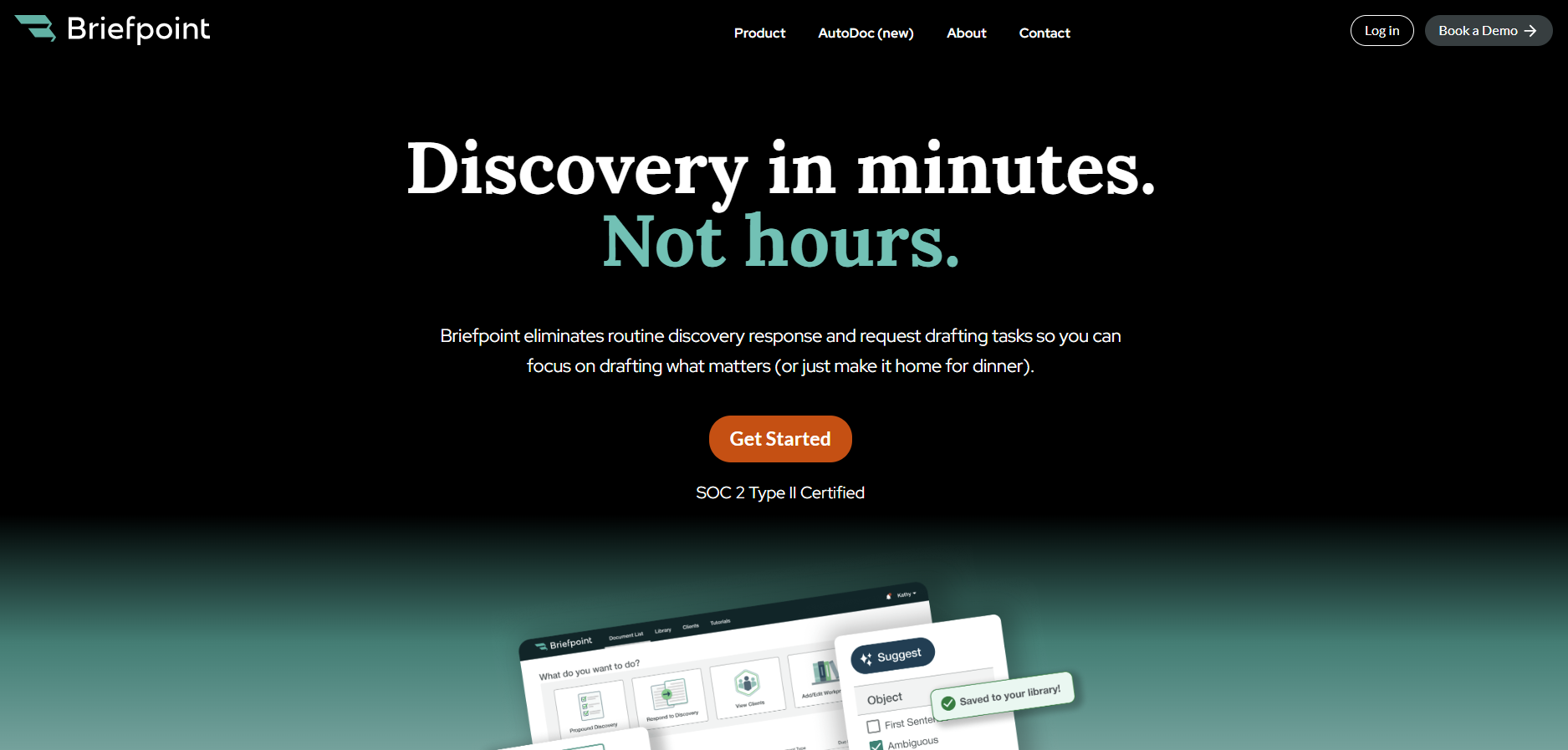
The platform includes features like Autodoc, which helps teams move from raw productions and discovery requests to cited, court-ready responses far faster than traditional manual review.
And with Briefpoint’s generative AI, legal teams can draft discovery response documents in minutes. These include, but are not limited to:
- Requests for admission
- Requests for production
- Interrogatories
Key Features
- Automated discovery drafting: Generates objection-aware requests for admission, requests for production, and interrogatories based on complaints and case details.
- Response drafting with built-in objections: Pre-fills consistent objections and response structures that firms can customize across matters and practice areas.
- Client response collection (Briefpoint Bridge): Sends plain-English questions to clients, collects answers securely, and inserts them directly into Word-ready discovery drafts.
- Autodoc production automation: Turns productions and case files into Bates-cited discovery responses and ready-to-serve production packages with page-level citations.
- Microsoft Word–first output: Produces fully captioned, editable Word documents for requests, responses, and productions.
- Firm-wide consistency controls: Helps standardize objections and drafting practices across teams and offices.
- Security and compliance: SOC 2 Type II certified with safeguards designed to protect confidential work product.
Briefpoint saves legal professionals thousands of dollars every year. More importantly, lawyers and paralegals can spend the extra time on more impactful and engaging work.
2. Clio
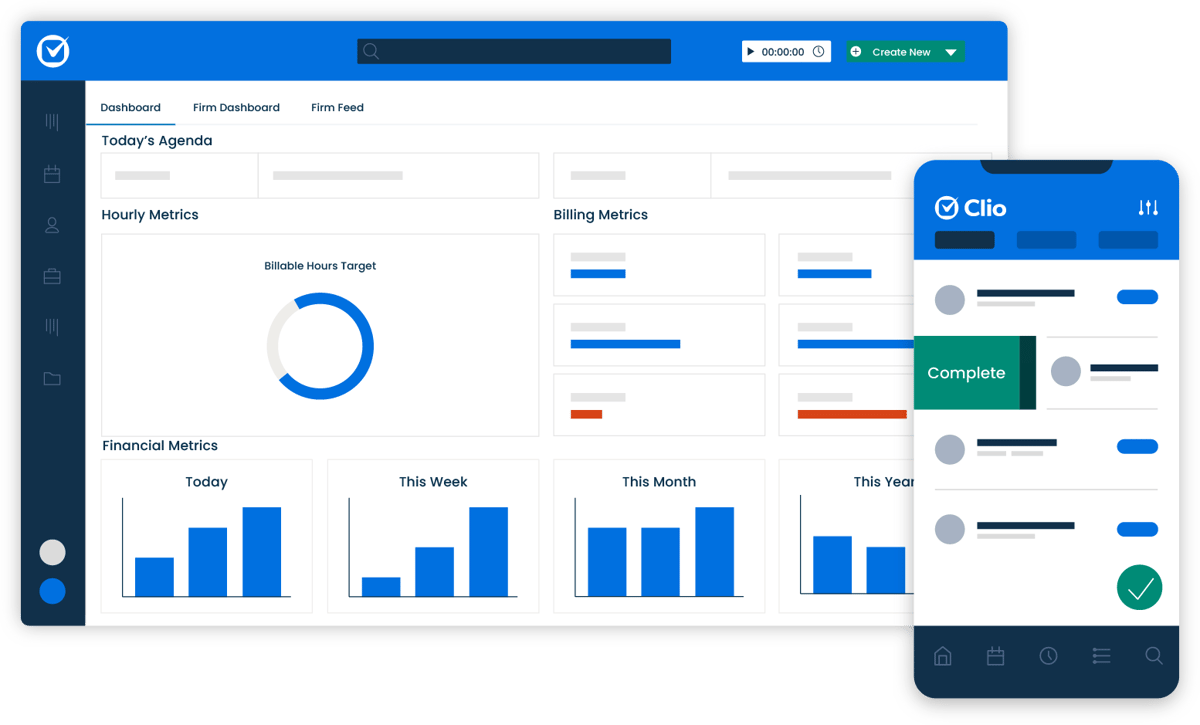
Clio has long been the answer for law firms and legal professionals looking for a simple yet effective practice management system.
Source: G2
Its comprehensive suite is remarkably user-friendly and accessible to a broad range of professionals, regardless of their technical expertise.
As a cloud-enabled solution, Clio also offers the flexibility required in today’s legal environment and allows work to be conducted from virtually anywhere. This adaptability is especially valuable given the increasing shift towards remote and flexible working arrangements.
Key Features
- Case management: Organizes client matters, documents, and communications in one centralized platform to help teams navigate high-stakes matters.
- Time tracking & billing: Tracks billable hours and generates invoices. Also, the platform integrates directly with payment processing tools.
- Document management: Stores, organizes, and shares legal documents securely with version control.
- Client intake & CRM: Streamlines client onboarding with customizable intake forms and contact management.
- Task and workflow automation: Automates routine legal workflows to improve efficiency and reduce administrative tasks.
- Secure communication: Provides encrypted messaging and client portals for confidential interactions.
- Integrations & API access: Connects with legal tech tools like QuickBooks, Microsoft 365, and Zoom.
3. Everlaw
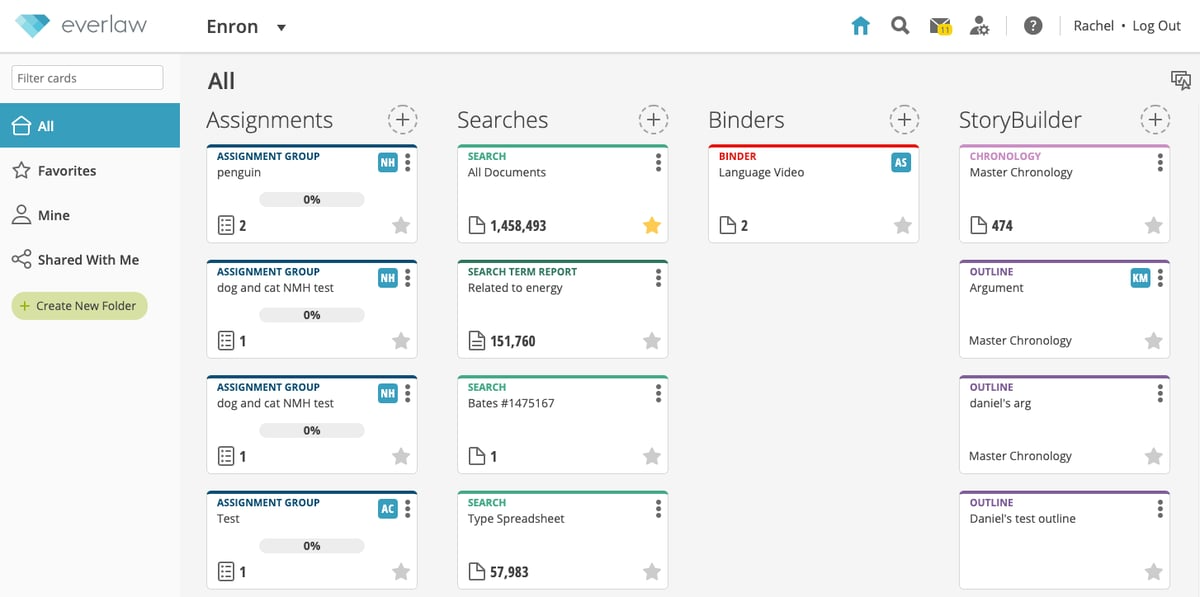
Everlaw is a global leader in advanced discovery and litigation support solutions.
Its platform is known for merging cutting-edge technology with an intuitive design to manage the complexities of legal document analysis and case preparation efficiently for corporate legal teams.
Source: G2
What’s also great about Everlaw is how it champions team collaboration. The platform includes tools for annotation, tagging, and sharing documents, which allows team members to work together regardless of their physical location.
Key Features
- Predictive coding: Uses machine learning to prioritize and categorize documents, speeding up the review process.
- AI-powered document review: Automates document analysis, which helps you quickly identify relevant information.
- Advanced search and filtering: Offers powerful search capabilities with Boolean operators, AI-driven suggestions, and natural language processing.
- Redaction and annotation tools: Allow users to highlight, redact, and comment on key information directly within documents.
- Case timeline visualization: Helps teams track case progress and connect key events through interactive timelines.
- Automated transcription: Converts audio and video files into searchable text for faster review to deliver innovative solutions for modern law practices.
4. LawVu
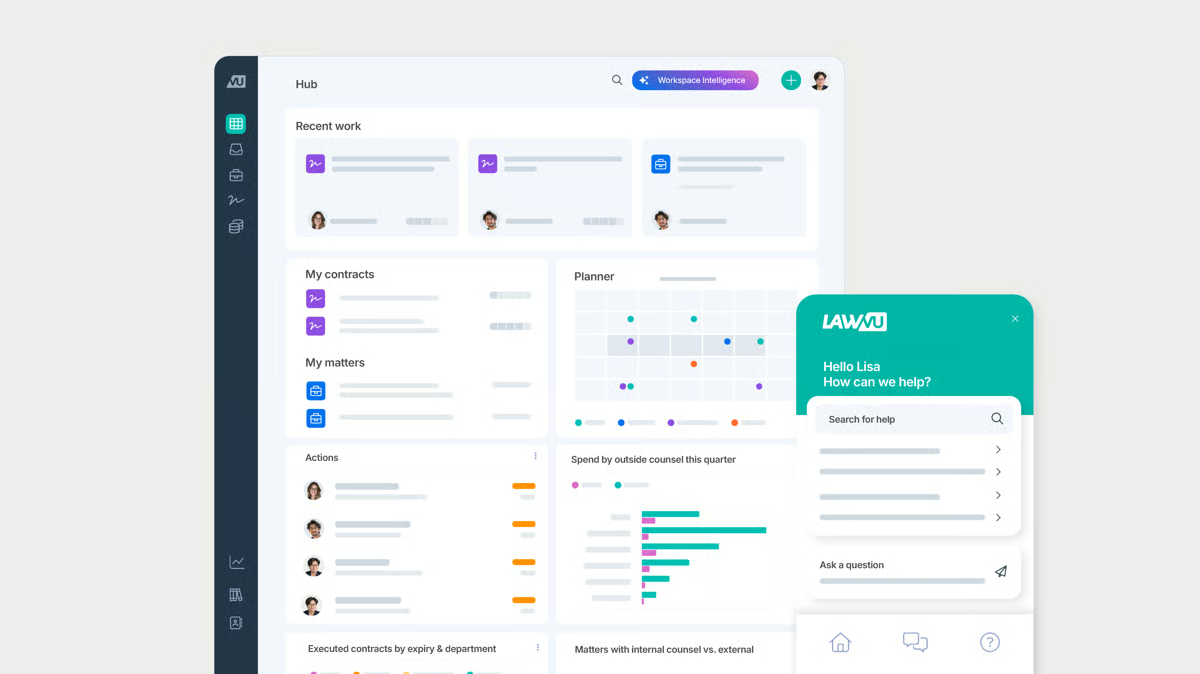
LawVu combines multiple aspects of legal operations into one convenient platform. This approach is meant to address the specific needs of in-house corporate legal departments and improve the efficiency, collaboration, and overall management of legal matters.
Source: G2
Plus, LawVu’s platform includes advanced analytics and reporting capabilities, which allow legal services to get a clear grasp of their operations, assess performance, and make data-driven decisions to improve their services.
Key Features
- Matter management: Centralizes all legal matters, documents, and communications in one platform.
- Contract lifecycle management: Tracks contracts from drafting to execution with automated workflows.
- Spend management: Monitors legal expenses, invoices, and budgets to control costs.
- Knowledge management: Stores and organizes legal documents, templates, and historical case data to transform daily knowledge work.
- Task & workflow automation: Streamlines legal processes with automated task assignments and approvals.
- Collaboration tools: Enable secure communication and collaboration between in-house teams and external counsel.
5. LeanLaw
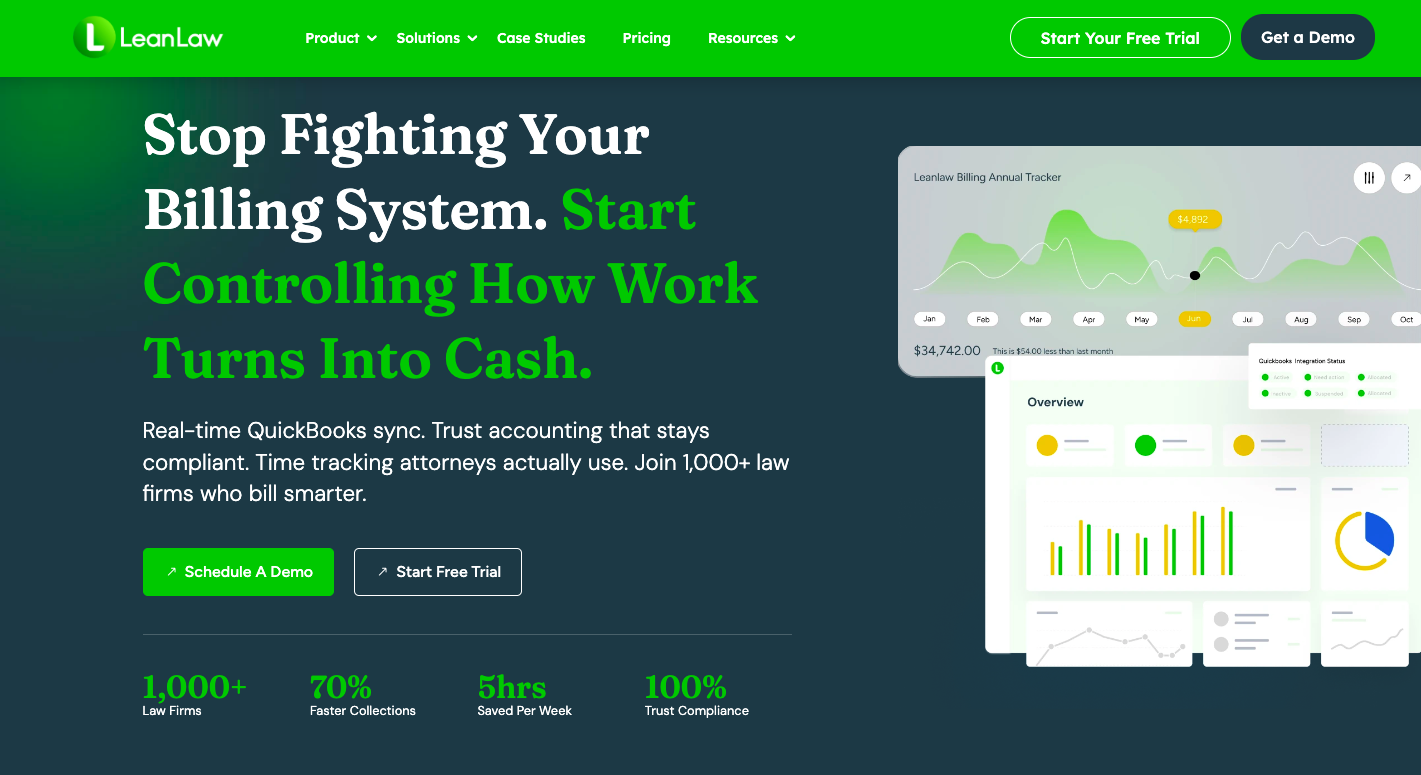
LeanLaw Billing Software is a smart solution for smaller and mid-sized law firms looking to mesh their legal practice needs with solid accounting in the legal industry.
Source: LeanLaw.co
By teaming up with QuickBooks Online, LeanLaw taps into powerful accounting tools and makes the whole financial side of running a law firm (from keeping track of billable hours to keeping an eye on the firm’s finances) a lot smoother and more straightforward.
LeanLaw also offers a package for organizing client details and internal resources, so everything you need is just a few clicks away.
Key Features
- Time tracking: Tracks billable hours with real-time timers and manual entry options to help firms in the legal profession meet growing demand without losing billable time.
- Automated legal billing & invoicing: Generates LEDES-compliant invoices and integrates with QuickBooks for accurate, consistent billing.
- Trust accounting: Manages client trust accounts with built-in compliance safeguards aligned with common accounting requirements.
- Expense tracking: Logs case-related expenses and links them directly to client invoices to improve overall operational outcomes.
- Revenue & compensation reports: Provides visibility into firm profitability and attorney compensation as workloads increase across the legal profession.
- Matter management: Organizes cases, documents, and client information in one centralized system.
6. Smokeball
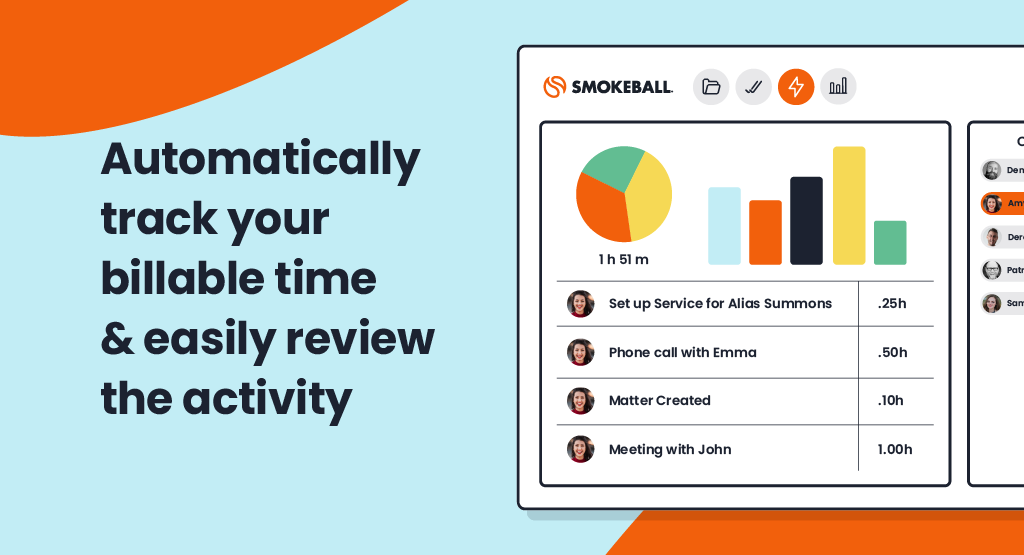
Smokeball is legal practice management software geared specifically towards small law firms and solo practitioners. It focuses on streamlining repetitive legal processes, which can reduce the time lawyers spend on administrative work.
Source: G2
Billing and time tracking are other areas where Smokeball excels. It automatically tracks time spent on each task and integrates it with its billing system, simplifying the invoicing process and ensuring that no billable hour goes unrecorded.
Key Features
- Case and matter management: Centralizes case files, client communications, and documents in one platform.
- Document automation: Generates legal documents quickly using customizable templates and client data.
- Task and workflow automation: Streamlines legal workflows with automated task assignments and reminders.
- Firm insights & reporting: Provides real-time analytics on firm performance, revenue, and law firm productivity to drive better business outcomes.
- Secure client communication: Offers a built-in client portal for messaging and document sharing to protect sensitive business content.
7. Ironclad
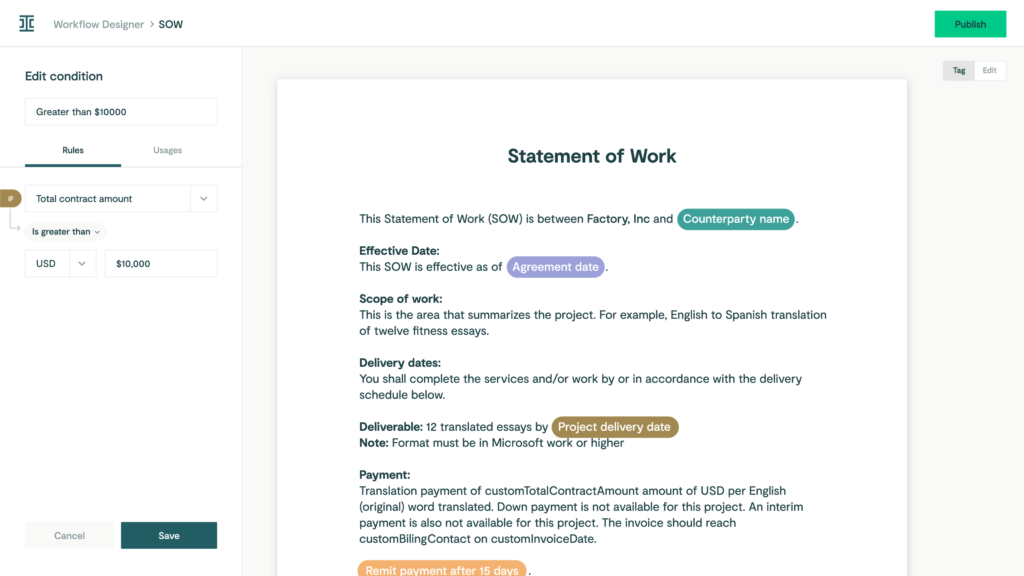
Ironclad is a complete and scalable solution for teams drowning in contracts and looking for a better way to get things done.
Source: G2
The contract management tool automates the creation, execution, and management of contracts. In addition, it can integrate with other tools you’re already using.
Its integration capabilities ensure that contract management becomes a cohesive part of the broader business ecosystem and leads to smoother workflows across departments.
Key Features
- AI-powered contract review: Uses artificial intelligence to analyze contracts, identify risks, and suggest edits.
- Automated contract generation: Creates contracts using templates and pre-approved clause libraries.
- E-signature integration: Integrates with DocuSign and other e-signature platforms for seamless contract execution.
- Real-time collaboration: Allows legal, sales, and procurement teams to collaborate on contracts within the platform.
- Contract repository & search: Stores all contracts in a secure database utilizing advanced information technology.
- Compliance & audit trails: Tracks all contract changes and approvals for compliance and reporting.
8. MyCase
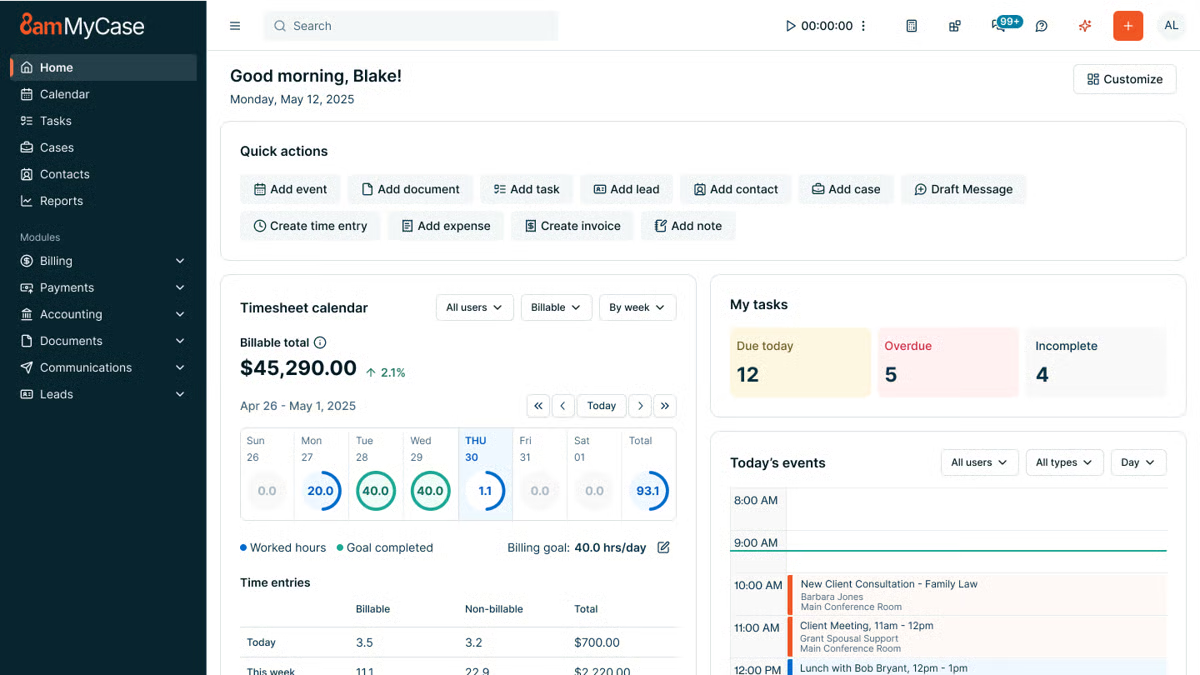
MyCase is a legal practice management software that simplifies legal workflows and keeps them running smoothly. It tackles everything from case management and client communications to billing and time tracking into one neat platform.
Source: G2
This means lawyers can spend less time handling different tools and more time focusing on their clients’ needs. With MyCase, everything you need to run your law practice is right there in one easy-to-use interface.
MyCase is also great when it comes to keeping clients in the loop. It offers secure messaging, updates on case progress, and easy online payment options, which help law firms improve their client relationships.
Key Features
- Case management: Organizes case details, deadlines, and documents in a centralized system.
- Document automation: Creates, stores, and manages legal documents with customizable templates.
- Time tracking and billing: Logs billable hours, generates invoices, and integrates with online payment processing.
- Secure client messaging: Provides a built-in client portal for encrypted communication and case updates.
- Calendar and task management: Schedules meetings, tracks deadlines, and assigns tasks to team members.
- Online payment processing: Allows clients to pay invoices easily through credit cards or ACH transfers.
- Reporting and analytics: Offers insights into firm performance, revenue, and case progress.
- Mobile access: Enables lawyers to manage cases and communicate with clients on the go.
9. CoCounsel
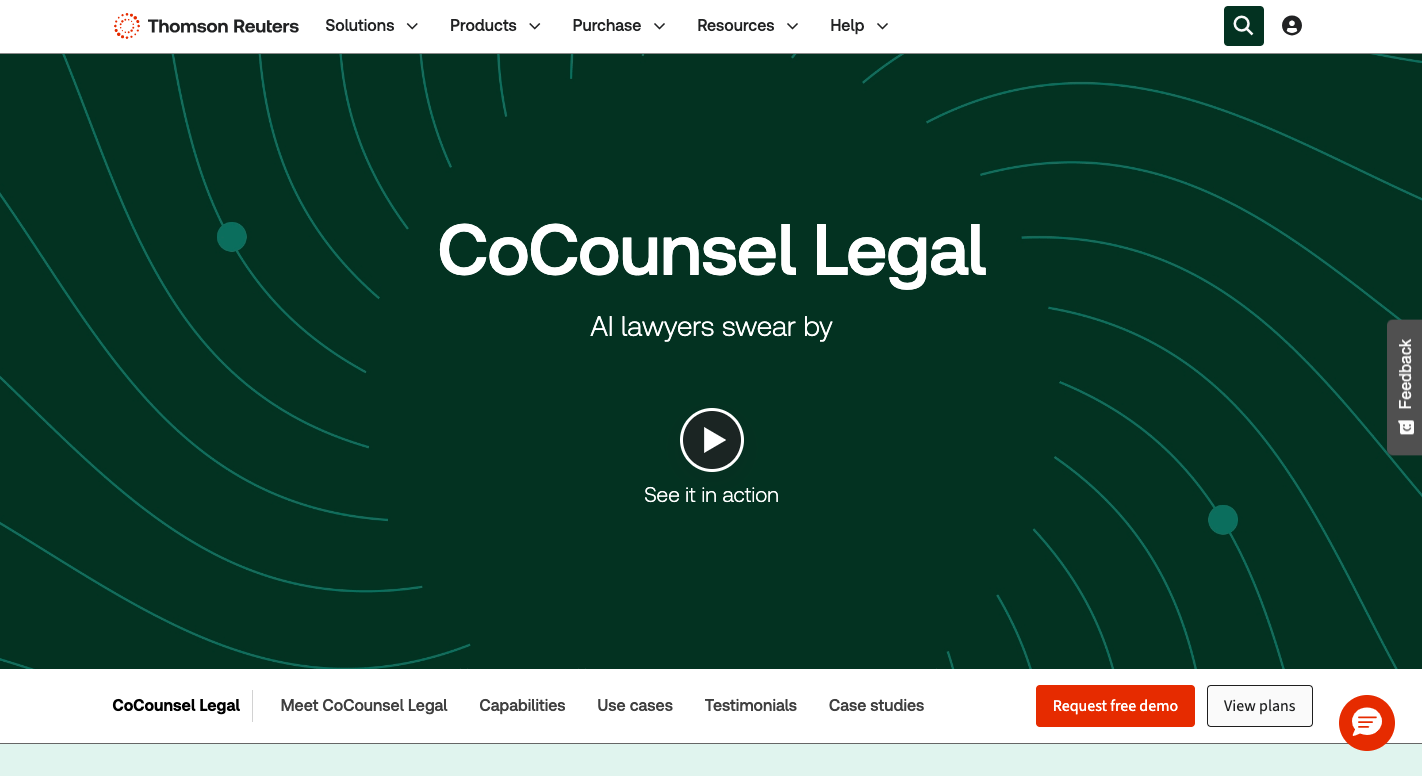
CoCounsel, powered by Casetext, is another innovative legal tech tool. This AI legal assistant is groundbreaking for several reasons, notably its ability to offer legal support for a range of tasks that traditionally require hours of human expertise and effort.
Source: Legal.ThomsonReuters.com
Powered by Casetext’s extensive legal database, it leverages the latest in AI legal technology to fine-tune its capabilities and offer more personalized and accurate assistance over time.
Key Features
- AI-powered legal research: Uses advanced legal AI to quickly find relevant case law, statutes, and legal precedents.
- Automated contract review: Analyzes contracts, flags risks, and suggests revisions to ensure compliance.
- Deposition preparation: Summarizes depositions, highlights key testimony, and extracts important details.
- Litigation strategy assistance: Provides AI-driven insights to help lawyers craft stronger legal arguments.
- Legal document analysis: Reviews legal documents for inconsistencies, missing clauses, and potential errors.
- Secure cloud-based storage: Keeps all legal research, documents, and case materials organized and accessible from anywhere.
- Real-time collaboration: Allows legal teams to work together on case analysis, research, and legal document review.
- Integration with legal tools: Connects with existing case management and document automation software.
10. UniCourt
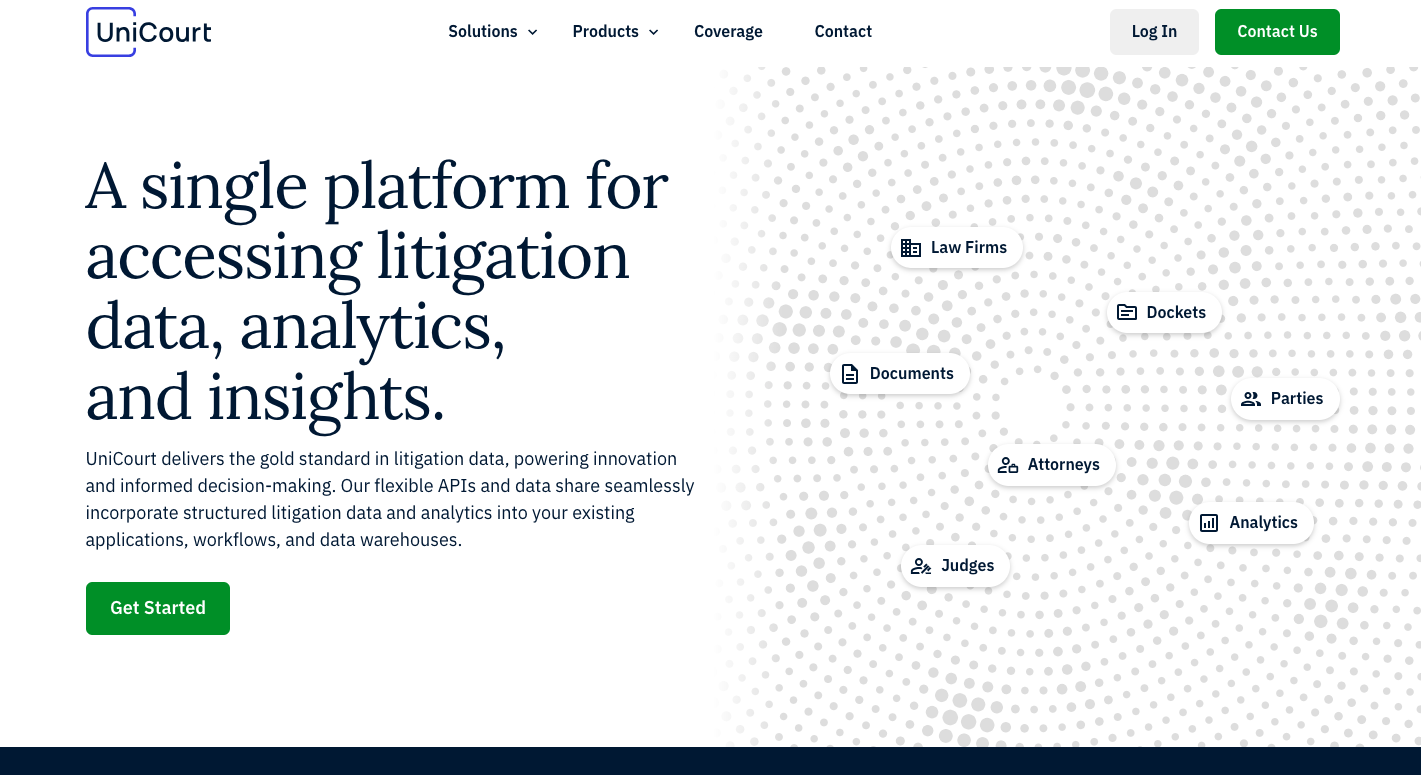
UniCourt is a legal tech service that simplifies how law firms get their hands on and use legal data. It’s a go-to resource for law firms, businesses, and government agencies that need quick access to court records and insights into legal trends.
Source: UniCourt.com
The best feature of UniCourt is how it brings all kinds of legal data together under one roof. Whether you’re keeping tabs on a specific case or trying to spot trends in litigation, UniCourt lets you do it all without the need to jump between different databases.
Aside from accessing data, UniCourt helps you manage it better. You can set up alerts to track cases automatically, so you’re always in the loop with real-time updates without constantly checking in manually.
Key Features
- Automated court data access: Retrieves real-time case data from federal and state courts.
- Legal research & analytics: Provides AI-driven insights into case law, dockets, and litigation trends.
- Case tracking & alerts: Notifies users of case updates, filings, and procedural changes.
- API & data integration: Connects court records with legal and business intelligence platforms.
- Docket management: Centralizes court dockets for easy organization and access.
- Business & litigation intelligence: Identifies patterns in litigation to help firms assess risks and opportunities.
- Document retrieval: Automates access to pleadings, motions, and other legal filings.
11. Justpoint
Justpoint is a legal tech startup that combines AI and scientific research to spot harmful products and undisclosed adverse effects earlier, then helps people who may have been harmed understand their legal options.

Source: Justpoint.com
Victor Bornstein, the co-founder and CEO, trained in biomedical sciences, brings a research-first mindset to the company’s work, focusing on how data and science can surface risks tied to everyday consumer products sooner.
He co-founded Justpoint to apply innovation and an AI-driven solution to uncover harm earlier and help move people closer to justice.
Rather than selling a standalone tool to plaintiff law firms, Justpoint runs investigations, reviews records and research, and routes viable claims into litigation through Justpoint Law and partner law firms.
Key Features
- Legal AI-assisted risk detection: Uses large-scale analysis of research, safety signals, and real-world data to flag potential dangerous products (e.g., harmful drugs) and adverse effects.
- Medical record review and case viability screening: Evaluates medical records and related documentation to assess medical and legal viability.
- Scientist-led investigations: The company employs scientists and pairs AI output with reviews from experts across areas like toxicology, pharmacology, and epidemiology.
- Plaintiff intake and claim matching: Helps affected individuals submit information and get routed into an appropriate legal path.
- Litigation pathway through Justpoint Law and partners: Moves validated matters toward filing and case progression through its legal arm and partnered firms.
- No upfront fees for plaintiffs: Operates on a pay-only-if-you-win approach, covering case costs up front.
Why Briefpoint Sets the Standard for Discovery Automation
Legal discovery is often the most complex professional challenge and time-consuming part of litigation, not because it requires deep legal judgment at every step, but because the same tasks repeat again and again.
Drafting requests, preparing responses, tying productions to specific requests, and handling Bates numbers can quietly take over an entire case.
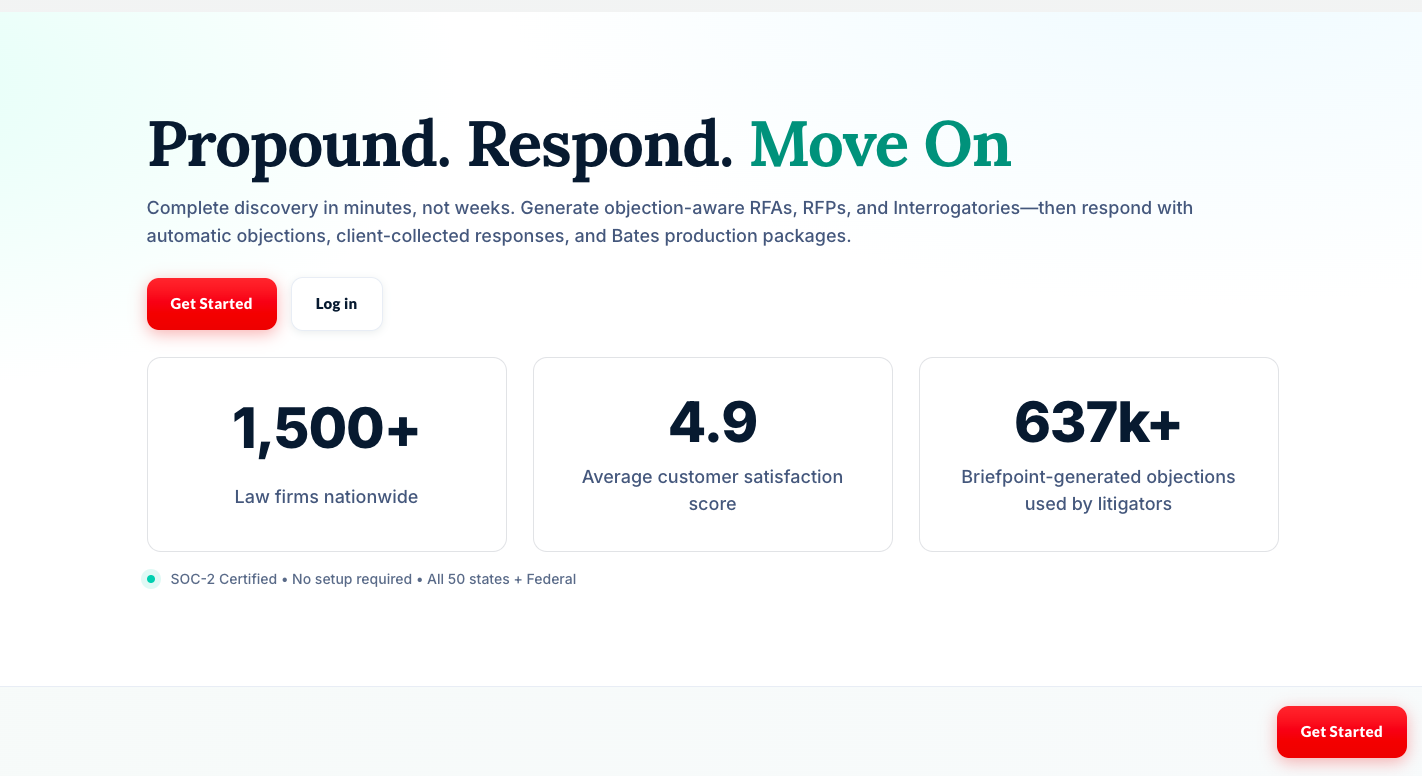
That’s the gap Briefpoint was built to address. It focuses on the work that slows teams down and clears it out of the way.
Briefpoint automates large portions of discovery drafting and production preparation so litigation teams can move faster and stay consistent across matters.
Reviews stay in human hands, timelines become easier to manage, and discovery stops feeling like the part of the case that throws everything off track, especially in matters with heavy document volume.
Curious what that looks like in practice?
