How AI Discovery Software Supports Litigation
What Is AI Discovery Software?
AI discovery software uses artificial intelligence to help legal professionals handle parts of the discovery process with less manual work. It can support written discovery, document review, client information collection, and other litigation tasks that often take significant time.
This category is becoming more common, though it is still broader than a single type of product. Some legal AI tools focus on drafting interrogatories or responses, while others review large document sets and flag potentially relevant material.
Traditional discovery software usually relies on search filters, templates, and rules created by the user. On the other hand, AI-powered platforms can interpret case information, recognize context, and generate work based on the documents provided, just to name a few capabilities.
The main difference comes down to how much the system can understand. Non-AI tools follow preset instructions. AI discovery software can analyze language and adapt its output to the case, which can make discovery work faster and easier to manage.
How AI Is Used in the Legal Discovery Process
AI for legal discovery can support several parts of the process, from early drafting through document production.
The exact role depends on the software, but most tools focus on reducing repetitive work while keeping legal professionals in control of the final output.
Drafting Discovery Requests
An AI tool can review the complaint and other case materials to prepare a first draft of written discovery. Legal teams can then refine the language based on the strategy of the matter and the court’s rules.
For example, a plaintiff-side firm handling an employment dispute could upload the complaint and ask the software to draft interrogatories related to the employer’s stated reason for termination. The system may also suggest a relevant request for production based on the same issue.
Attorney review still plays a central role, especially when the wording could affect later discovery responses or motion practice. However, a case-aware draft gives the lawyer a stronger place to start and reduces the time spent reworking old templates.
Preparing Responses and Objections
AI can also support discovery workflows after requests arrive. The software reviews each request, compares it with the case materials, and prepares draft responses or discovery objections based on the available information.
Relevant information from client questionnaires, uploaded records, or prior filings can be connected to the correct request. That can give legal departments and law firms a clearer starting point for review, particularly in matters with long request sets.
Like always, leveraging AI does not remove the need for legal judgment. Attorneys still need to confirm the facts, assess privilege, and decide which objections are appropriate under the governing rules. The software mainly reduces the repetitive work involved in sorting requests and building the first draft.
Collecting Information From Clients
Client input often shapes a discovery response, but email chains and repeated follow-ups can slow the process. AI-driven software can send clients a secure questionnaire that explains each request in clearer language and asks for the details needed.
The platform can also organize large volumes of information as the client submits answers or uploads files. This gives the legal team one place to review the material and see which requests still need attention.
Common uses include:
- Sending secure questionnaires
- Requesting supporting files
- Tracking incomplete answers
- Connecting submissions to the relevant request
Finding Responsive Documents
AI systems can compare a discovery request with files from available data sources and identify material that may be responsive. This can support saving time when a matter involves large data sets that would otherwise require repeated manual searches.
For example, a request may seek communications related to a contract amendment. The software can review uploaded emails and flag messages that discuss the amendment, even when the wording differs from the request.
These processes may include:
- Matching files to specific requests
- Flagging possible duplicates
- Marking documents for attorney review
- Connecting responsive files to draft responses
Preparing Documents for Production
AI discovery software can help organize digital information after responsive documents have been reviewed. Depending on the platform, it may apply Bates numbers and prepare a production set in the required format.
Generative AI may also help draft the accompanying responses or identify where citations should appear. Attorney review still remains necessary before anything is served. Relying solely on the software could lead to missing files, incorrect labels, or production choices that do not fit the case.
A careful final review should confirm that privileged material has been withheld, the production matches the agreed scope, and each document appears in the correct place.
What Types of Discovery Can AI Software Handle?
AI software can support several forms of discovery, though its capabilities vary by platform. Some products focus on written discovery for a single case, while eDiscovery systems review large collections of digital data.
Depending on the platform, AI discovery software may support areas such as:
- Interrogatories: AI can draft questions based on the pleadings and prepare response language from client-provided facts.
- Requests for admission: The software can create targeted statements or help draft admissions and denials for attorney review.
- Requests for production: AI can prepare document requests and identify relevant documents connected to each request.
- Document review: eDiscovery tools can search files from sources such as email accounts or shared drives and flag material related to the dispute.
- Investigations: AI can help organize records and locate connections within a large body of information before or during litigation.
These capabilities can apply to many practice areas. In a personal injury case, for example, the software might help draft written requests and review medical records for information connected to the claimed injuries.
Key Features of AI Discovery Software
A strong AI discovery platform should fit the way your firm already handles case preparation and review. Look for features that support the work from the first draft through final production, such as:
Case-Aware Drafting
Case-aware drafting uses the facts and documents from a specific matter to produce more relevant discovery language. Rather than pulling from a generic template, the software can shape requests around the claims, defenses, and issues already present in the case.
For example, in a wage dispute, the platform might review the complaint and draft interrogatories focused on timekeeping practices. It could also suggest a related request for production tied to payroll records.
This feature can support early case assessment by helping attorneys spot missing information sooner. It may also surface key insights that guide informed decisions about what to request next. How legal teams use the draft still depends on their strategy, so attorney review remains part of the process.
Client Information Collection
As noted earlier, client input often feeds directly into discovery responses. A strong platform can collect that information through a secure portal and connect each submission to the correct request.
Common collection features include:
- Secure questionnaires
- File uploads
- Status tracking
- Evidence organization
- Electronically stored information intake
This keeps the review process more organized and gives the attorney a clearer record of what the client has provided.
Responsive Document Identification
Once the requests for production are in place, the next step is finding the documents that actually respond to them. Technology-assisted review can compare each request with the available case files and flag material that appears relevant.
The software looks at context rather than relying only on exact keyword matches. As a result, it may surface useful documents even when the wording differs from the language in the request.
A strong platform should also show where it searched and let you confirm or remove suggested files. That visibility makes the review process easier to manage before any document becomes part of the production.
Bates Numbering and Citations
After the responsive files have been selected, they still need to be organized for production. A Bates number is a unique identifier placed on each page so attorneys can refer to a specific document or page without relying on file names.
Briefpoint’s Autodoc handles this part of the process by identifying responsive documents, applying Bates numbers, and preparing Word responses with page-level citations. It can also package the selected files for production.
Advanced search controls help you review where the system looked, while the citations connect each substantive response to the correct Bates range. Together, these features can improve accuracy and reduce the manual work involved in labeling and cross-referencing documents.
Discovery Workflow Integrations
Integrations help AI discovery software fit into the tools your team already uses. For example, the platform may connect with document storage systems so case files can move into review without repeated uploads.
It may also work with case management software or an AI assistant that helps attorneys find prior responses and related matter information.
Some integrations support reviewing and analytics as well. A dashboard might show which requests still need attention or how much material has been collected for production. That can give the team a clearer view of the workload and help shape case strategy.
Storage costs deserve attention too, especially when the platform handles large collections of files. Before choosing a product, check how it stores data, what limits apply, and what happens when a matter grows.
Other Features to Look For
Core drafting and document tools may get most of the attention, but a few supporting features can have a major effect on daily use. Before choosing a platform, look closely at how it handles security, search, and review:
- Security and access controls: The software should protect client data with clear permissions, audit logs, and controls that limit who can view or change sensitive information.
- Natural language queries: Strong platforms let you search case files using everyday questions rather than relying only on simple keyword searches.
- Natural language processing: This helps the software understand context, which can improve document matching and reduce irrelevant results.
- Machine learning review: Some systems learn from attorney decisions during review and use that feedback to rank potentially relevant material.
- Risk assessment tools: Useful features may flag privilege concerns, missing information, or other potential risks that need closer review.
You should also consider the learning curve. A feature-rich product may offer stronger risk mitigation, but it still needs to fit the team’s workflow. A guided trial can help you assess risk and see how much training the platform will require.
The Benefits of Using AI for Discovery
AI discovery software can improve several parts of the process, including but definitely not limited to:
- Faster review: AI can examine large document collections and identify potentially relevant material sooner, which can shorten the time spent on manual review.
- Stronger analysis: The software can connect related information, highlight patterns, and surface meaningful insights that may influence case strategy.
- More consistent drafting: Approved language and internal standards can be applied to discovery requests or responses with fewer manual revisions.
- Better workload management: Law firms and corporate legal departments can handle larger matters without placing every review task on an attorney or paralegal.
- Improved search quality: Natural language tools can help you find useful information that simple keyword searches may miss.
- Support for compliance requirements: Search histories, access logs, and review records can help document how information was collected and handled.
- Clearer case preparation: Faster analysis can help teams answer key questions earlier and focus attention on the documents that deserve closer review.
Make Discovery Work Easier to Manage
AI discovery software can help you move from the first draft to final production with far less repetitive work. Nevertheless, the best results come from a platform built around the actual demands of litigation rather than a general-purpose AI tool.
Briefpoint focuses specifically on written discovery. You can draft interrogatories, requests for admission, and requests for production from the case materials already in front of you.
Then, when responses come due, the platform can prepare objection-aware drafts and collect client answers through Client Bridge.
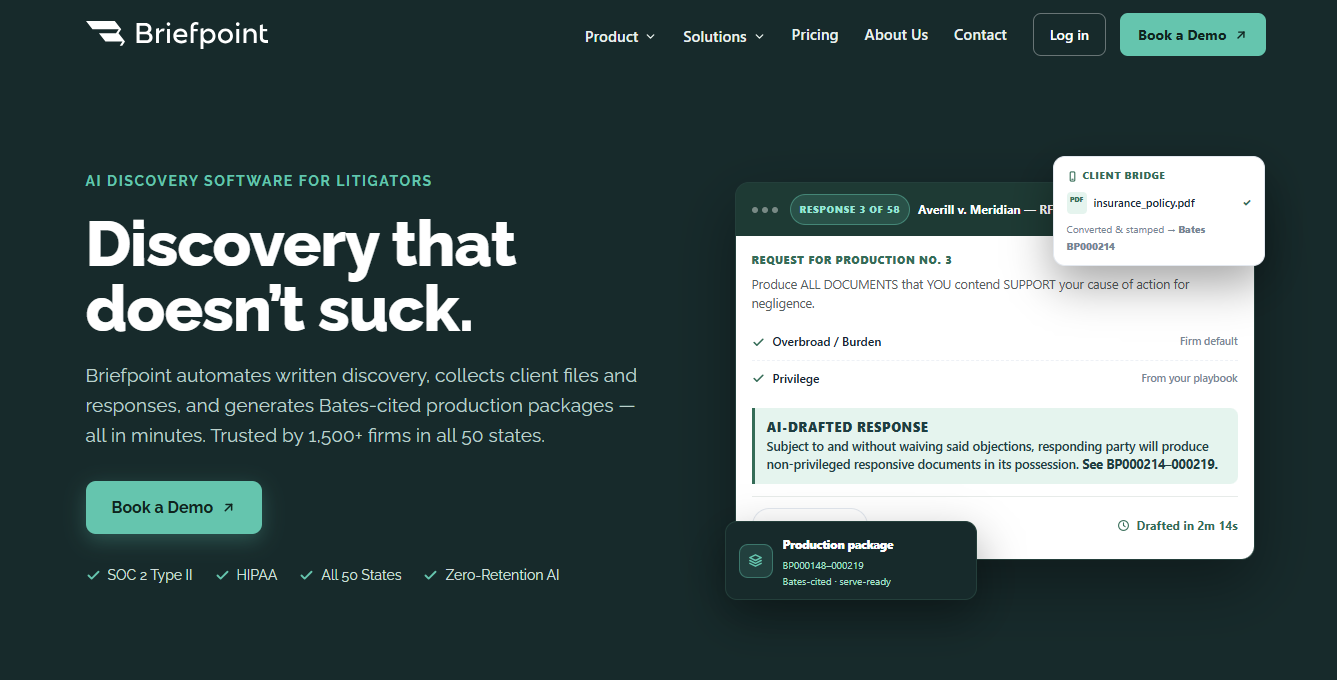
From there, Autodoc brings document review and production into the same workflow. It can locate responsive files, apply Bates numbers, add page-level citations to Word responses, and prepare the production package for service.
Briefpoint also lets firms use Discovery Playbooks to apply their preferred objection language and response approach more consistently. That gives you a clearer process from drafting through production without piecing together several disconnected tools.
