Understanding eDiscovery Costs and How to Manage Them
What Are eDiscovery Costs?
eDiscovery costs simply refer to the total expenses involved in managing electronically stored information (ESI) during the eDiscovery process. This includes collecting, processing, reviewing, and producing digital data for litigation, investigations, or regulatory matters.
Many firms frequently observe a substantial increase in discovery expenditures once their data expands in both quantity and intricacy. Expenses like hosting, software, vendor bills, and reviewer time can quickly stack up, especially with mountains of paperwork.
Pricing also varies widely across providers. Some bill by the gigabyte, while others offer per-matter or subscription plans that make budgeting easier to predict.
eDiscovery spending comes down to balance: collecting enough data to build a solid case without paying for unnecessary storage or review work.
To keep legal costs down, firms are investing in smarter technology and clearer work plans. This is because digital evidence now factors into almost every case.
Main Factors That Drive eDiscovery Pricing
If you’ve ever reviewed an eDiscovery bill and wondered how it got so high, the answer usually comes down to a few recurring cost drivers.
The final price depends on how much data you need to handle, how efficiently the process is structured, and the billing model your service provider uses. Processing and hosting costs can rise quickly, while specialized vendors may charge premium rates for complex work.
Here are the main factors to keep in mind:
- Data volumes: Larger amounts of ESI require more storage, processing, and review.
- Data collection: Gathering files from email servers, chat platforms, and cloud storage adds time and technical complexity.
- Review costs: Document review often combines legal automation with human review to confirm relevance, privilege, and accuracy.
- Labor costs: Attorneys, paralegals, and support staff involved in tagging, redacting, and validating files can increase the final bill.
- Unnecessary data: Irrelevant, outdated, or duplicate files create avoidable expenses.
- eDiscovery software providers: Platforms may charge per gigabyte, user, matter, or subscription.
- Hidden costs: Reprocessing, metadata recovery, technical support, and unexpected storage fees can raise the total.
Understanding these drivers early helps you build a realistic budget and reduce unnecessary spending.
Common Mistakes That Increase eDiscovery Costs
You might organize a discovery project well, but forgetting small items will quickly make it expensive. Projects often run way over budget. A lot of those extra costs come from totally preventable errors, such as:
Collecting Unnecessary or Duplicate Data
Gathering every file in sight may seem thorough, but it usually leads to higher costs during data processing and review. Data minimization (collecting only what’s relevant) helps reduce eDiscovery costs and shortens the overall workflow.
Duplicate files or outdated storage systems add another layer of waste. They increase hosting fees and reviewer time without contributing anything useful to the case.
Skipping Early Case Assessment
Early case assessment (ECA) lets you see all your case data clearly, well before you start the full review. Skipping this step often leads to more documents to process and more time wasted, which in turn increases eDiscovery costs.
Law firms find that modern eDiscovery’s initial data scans make a real difference. These first-look tools quickly shrink the volume of information to sort through, sharpen the accuracy of discoveries, and maintain financial discipline from the start.
Relying Too Heavily on Manual Review
Human checks matter, yet relying too heavily on them bogs down work and wastes money. A balanced approach that combines automation with human judgment helps maintain accuracy while managing eDiscovery costs.
Tools that highlight duplicate or irrelevant content can save hours during the review process and lower total spend.
Ignoring Data Retention and Deletion Policies
Skipping proper retention and deletion policies often means dealing with old or irrelevant data that only adds to collection and review costs. Poor governance also increases the risk of data breaches, especially if sensitive files sit in legacy systems.
That’s why establishing clear policies keeps your records organized and easier to manage during discovery.
Choosing Vendors Without Understanding Pricing Terms
Don’t assume every eDiscovery company bills you the same way. Unexpected charges for data storage, user access, or reprocessing often push your total bill way past your first guess.
Remember: Always check the pricing details upfront and clarify what’s included before committing to a provider.
Failing to Track Progress or Document Review Decisions
It’s easy to waste time redoing tasks when there’s no clear record of what’s been reviewed or approved. Gaps in documentation can also lead to costly mistakes during production.
A good way to avoid this problem is by using project dashboards and audit trails. These help teams monitor every step, maintain defensibility, and reduce rework throughout the discovery process.
Best Practices to Control eDiscovery Spending
Luckily, the spots where your expenses grow the most are also the places you can save significantly. With a few strategic habits and the correct lawyer tools, you can keep discovery efficient, defensible, and within budget.
Here are several cost-saving measures you can apply:
1. Use Automation and AI to Reduce Manual Work
Discovery requests can easily overwhelm any legal department. When each case brings thousands of pages of electronic data, even small tasks can turn into a major source of eDiscovery expenses. Many teams try to handle it manually, but the sheer volume makes that approach inefficient and costly.
Law firm automation changes that. AI-powered tools can quickly identify relevant files, eliminate duplicates, and prepare productions without the endless page-turning.
For example, instead of assigning several paralegals to review one client’s emails line by line, automation can surface responsive messages in seconds.
In other words, bringing eDiscovery in-house with the right legal AI tools not only helps reduce costs but also gives you more control over timing and quality.
That’s exactly what Briefpoint’s Autodoc is built for. Upload your RFPs, case files, and productions, and Autodoc instantly drafts fully cited Word responses, complete with Bates numbering and page-level citations. You can verify results, make edits, and serve your production in minutes.
With automation handling the tedious work, your team can focus on strategy and client outcomes rather than administrative tasks.
Book a demo today to see how fast discovery can actually move.
2. Start With Early Case Assessment
Before diving into the review phase, take time to understand what data you’re working with. Early case assessment helps you evaluate the scope of your electronically stored information and pinpoint what’s actually relevant.
Skipping this step often leads to unnecessary review hours and inflated eDiscovery costs. So, a quick, structured assessment can save both time and money down the line.
Here’s what a solid ECA process includes:
- Identify key custodians and data sources: Know where your data is stored and who manages it.
- Filter out irrelevant content early: Narrow the data set to focus only on relevant information.
- Estimate data volumes and timelines: Helps forecast workloads and project costs accurately.
- Use analytics to spot duplicates or patterns: This reduces the time spent sifting through vast amounts of data.
Legal teams that apply ECA at the start often cut eDiscovery costs significantly. It sets a clear direction for the rest of the process and keeps your review focused on what matters.
3. Standardize Data Collection and Review Workflows
One of the easiest ways to cut wasted time during discovery is to build a repeatable process and stick to it.
When every case follows a different system, even simple steps like finding chat messages or sorting documents can slow things down. That inconsistency not only causes delays but also drives up total litigation spend.
Meanwhile, a consistent legal workflow brings order to the chaos. For instance, collecting data from emails, messaging apps, and shared drives using the same structure every time keeps everything aligned and easy to track.
It also creates clear communication between attorneys and staff since everyone knows exactly where files belong and how they move through review.
And with the best eDiscovery software, these workflows almost manage themselves. For starters, automation can log collection details, group similar documents, and show real-time progress, so you always know what’s done and what’s next.
4. Work With Transparent eDiscovery Providers
Unclear pricing models can make discovery budgeting unpredictable. Some firms only discover extra charges after the invoice arrives, leaving little room to adjust.
Working with providers that prioritize pricing transparency gives you a clearer view of what you’re paying for as data volumes grow. It also helps you compare flat-fee, subscription, and tiered pricing models before committing.
When evaluating an eDiscovery platform, look for:
- Flat-fee or capped pricing: Predictable billing makes ongoing matters easier to manage.
- Clear storage terms: Review how rates change for active data, archived files, and long-term storage.
- Defined user seats: Confirm how many team members can access the platform before additional fees apply.
- Detailed scope of services: Check whether processing, hosting, support, and exports are included.
- Accessible dashboards and reports: Usage and project data should be easy to monitor throughout the matter.
Choosing a provider involves more than comparing features. Clear terms, fair pricing, and reliable reporting make it easier to forecast eDiscovery costs accurately and avoid unexpected charges.
5. Train Your Team on Defensible Discovery Practices
Defensible discovery practices are the rules that keep every step of the eDiscovery process clear and legally solid. The point is to be able to show that data was handled the right way, if anyone questions how evidence was collected or reviewed.
Training your team with these eDiscovery best practices strengthens credibility and prevents costly disputes later on. Key areas to focus on include:
- Project management: Define responsibilities, timelines, and checkpoints to keep every task organized.
- Data governance: Set clear policies for data storage, retention, and access control to avoid confusion later.
- Chain of custody: Track who accessed or modified files to preserve authenticity throughout the process.
- Communication with opposing counsel: Keep all correspondence professional and well-documented to prevent disputes.
- Documentation and reporting: Maintain detailed records that demonstrate how evidence was handled and reviewed.
- Billing awareness: Review how billable hours are spent and identify where automation or improved reviewer training can save time.
6. Adopt the Right Software With Predictable Pricing Models
Choosing the right technology can change how legal professionals manage discovery costs and workloads. Many firms still rely heavily on outside vendors, which can lead to slower turnarounds and unpredictable billing.
As the eDiscovery market expands, more platforms are offering clear, fixed pricing alongside automation, analytics, and project tracking. Bringing these tools in-house can give your team greater control over spending while reducing the risk of hidden fees or unexpected add-ons.
Predictable pricing also makes it easier to plan resources around relevant data rather than redundant tasks. Over time, the right technology can help firms lower costs, improve efficiency, and depend less on external providers.
Reduce eDiscovery Costs and Work Smarter With Briefpoint
Keeping discovery affordable starts with a structured process and tools that reduce unnecessary work.
Consistent workflows, trained teams, and reliable technology make eDiscovery costs easier to predict. Automation builds on that foundation by cutting repetitive review and formatting tasks while helping firms move matters forward faster.
Briefpoint streamlines discovery from request to production. Its Autodoc feature drafts Bates-numbered, Word-formatted responses with page-level citations in minutes, which then gives your team a clear starting point that remains fully editable and easy to verify.
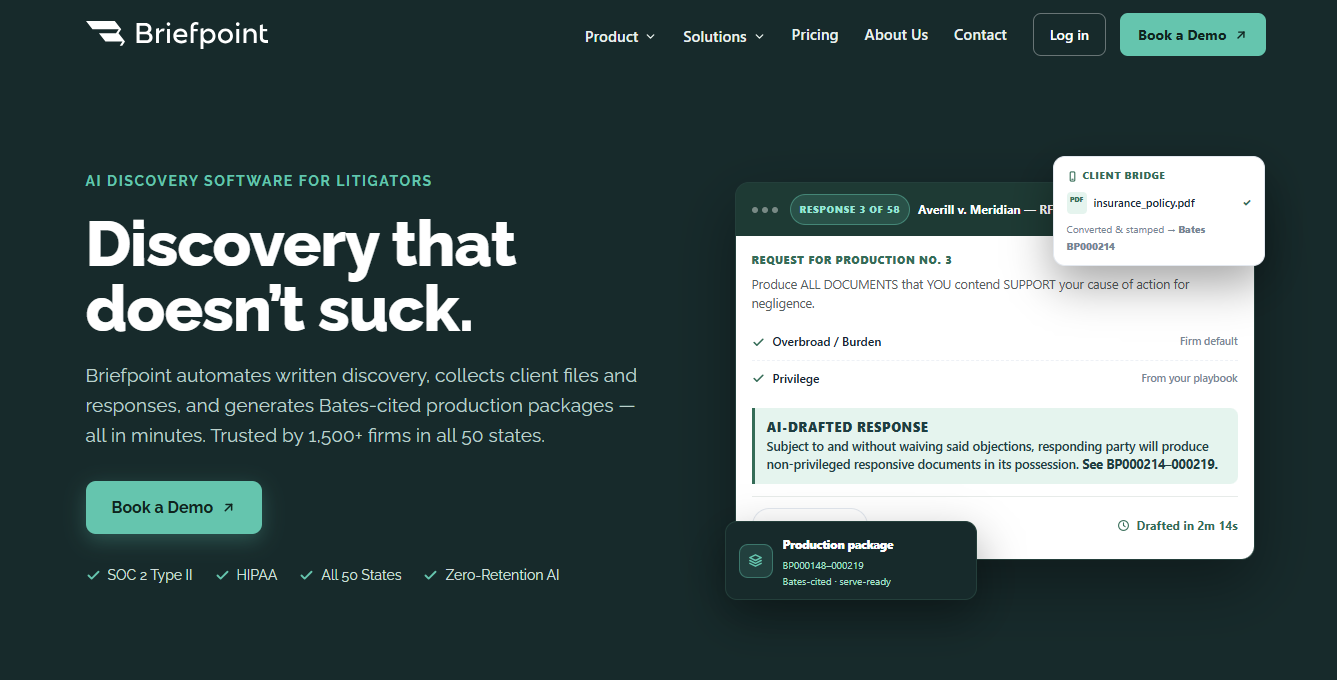
Firms can save more than 30 hours per case while maintaining control over the final work product.
Plus, clear pricing and an intuitive platform make it easier to manage discovery in-house, reduce reliance on outside providers, and keep costs from growing unexpectedly.
