How to Reduce Manual Work With Litigation Support Automation
What Is Litigation Support Automation?
Litigation support automation uses software to handle repeatable work that comes up throughout a case. Rather than asking your team to re-enter the same information or move each task forward manually, the system helps keep the workflow moving with fewer administrative steps.
Common tasks include:
- Case intake
- Discovery drafting
- Client information collection
- Document review
- Bates numbering
- Deadline tracking
The exact setup can look different from one firm to another. Some legal teams use workflow automation for a single stage of litigation, while others connect several parts of the case process.
How Does Litigation Support Automation Work?
Litigation support automation starts with a trigger in your existing workflow. That could be anything from a new case entering the system to a document being uploaded. The software then carries out the next action based on rules, templates, or AI.
Common technologies include:
- Rules-based automation: Moves tasks forward when a set condition is met, such as assigning work after intake is complete.
- Document automation: Pulls case data into templates to create first drafts with less manual entry.
- Artificial intelligence: Reviews source material and helps generate content based on the facts in the file.
- Natural language processing: Interprets written requests and identifies relevant language in case documents.
- System integrations: Connects tools so information can move between platforms without repeated copying.
For litigation teams, legal automation can reduce manual processes throughout a case. Some firms use process automation for a single routine task, while others build automated workflows that connect several stages of the litigation process.
Which Litigation Tasks Can Be Automated?
Many litigation tasks follow repeatable steps, which is exactly what makes them good candidates for automation. The sections below cover the parts of casework that litigation teams can often streamline with software:
Case Intake and Matter Setup
Automation can create a new matter as soon as a client submits an intake form. The system can transfer the information into your case management platform, assign the file, and open the next task without requiring legal professionals to enter the same details again.
For example, a personal injury firm could use an online intake form to collect accident details. Once submitted, the software can create the matter and send the client the next required form.
In turn, this reduces repetitive tasks at the beginning of a case and gives your team a cleaner starting point.
Document Collection and Organization
Automation tools can help your team collect files from clients and place them in the correct matter. They can also rename uploads or sort them based on the document type.
Common files include:
- Legal documents
- Medical records
- Client correspondence
- Photographs
- Expert reports
- Court filings
If you’re dealing with legal cases with a large document volume, automated organization makes it easier to locate the right file more easily and quickly.
Discovery Request Drafting
Using automation can speed up the early drafting work for interrogatories, requests for admission, and requests for production. Attorneys may start by choosing the discovery document they need, and then using software to shape the requests around the facts.
A typical process may include:
- Reviewing source material: The software reads pleadings or other case information to identify useful topics.
- Selecting the request type: Attorneys choose the document and define the scope.
- Generating the draft: The platform prepares requests using the case details and preferred language.
- Exporting the document: The draft is moved into Word for editing and filing preparation.
Tools such as Briefpoint can help firms follow the same drafting process from one matter to the next. This can reduce setup time while allowing firms to handle larger caseloads more efficiently.
Discovery Response Preparation
You can also use automation to help with incoming discovery. For example, the software can read each request, organize the response work, and prepare draft language using information already available in the matter.
In a litigation practice, this can reduce the time spent moving client answers into documents or matching responsive files to individual requests. Legal workflow automation may also help organize discovery objections and place supporting details under the correct response.
Once routine processes are connected, your team can move from the incoming request to a usable draft with fewer manual steps.
Client Information Collection
Gathering details from clients can become time-consuming when answers arrive through calls or email threads.
Automated litigation support gives your clients a structured place to submit information and keeps each response tied to the correct case.
The process may include:
- Digital questionnaires: Clients answer questions through an online form built around the matter.
- Conditional prompts: Follow-up questions appear based on earlier responses.
- Secure data transfer: Client data moves directly into your firm’s system.
- Progress tracking: You can see which questions are complete and which still need attention.
Automation can also make client meetings more productive. When you review the submitted answers beforehand, you can spend the meeting clarifying important details rather than collecting basic information.
Document Review and Identification
Document review software helps you work through large case files and locate material connected to a request or legal issue. It can narrow the pool of documents before you begin a deeper review.
Useful functions include:
- Keyword and concept search: Finds documents containing a term or discussing a related idea.
- Document classification: Sorts files based on their content or likely relevance.
- Duplicate detection: Identifies repeated copies of the same document.
- Responsive document matching: Links case files to the requests they may answer.
- Privilege flagging: Marks documents that may contain protected information.
When you are handling multiple cases, these tools can reduce the administrative burden tied to early review. Plus, they can limit unnecessary risk from missed files and create measurable benefits through faster document identification.
Bates Numbering and Production
Bates numbering is the process of assigning a unique, sequential identifier to every page in a document production. The Bates number usually appears in the same place on each page, which makes it easier to cite a specific document during discovery or later in the case.
Automation can apply these numbers to an entire production set at once. It may also organize the files in production order and create a corresponding index.
For example, a set of 500 pages might be labeled ABC000001 through ABC000500, giving you a clear reference for each page.
This saves legal staff from entering numbers manually and reduces the chance of skipped or repeated identifiers. At the same time, it can shorten processing time when a production contains many files or needs to be prepared on a tight schedule.
Deadline and Task Management
Automation can help you keep case deadlines visible and move assignments forward as dates approach. It may also streamline operations by sending automated notifications when action is required.
Common uses include:
- Court deadline tracking
- Discovery due dates
- Task assignments
- Status reminders
- Calendar updates
- Escalation alerts
Legal Research and Case Analysis
AI legal research tools can help you find relevant authority sooner and work through a large body of legal material with less manual searching.
For example, you can enter a question in plain language, review the cases the system identifies, and compare how courts have treated a similar issue.
The same technology can also summarize decisions or pull key passages from lengthy opinions. In complex cases, this gives lawyers more time to examine how the authority affects case strategy rather than spending most of the research window locating basic sources.
The potential time savings are substantial. Thomson Reuters estimates that AI-assisted legal research can reduce the research time for an average litigation matter from 17–28 hours to roughly 3–5.5 hours.
And for law firms with limited resources, that faster starting point can make legal support available earlier in the case and help the attorney develop a clearer direction before drafting begins.
Reporting and Case Updates
Automation can pull current information from your case systems and turn it into a consistent update for clients or internal review.
The report may include:
- Recent case activity
- Upcoming deadlines
- Current matter status
- Completed tasks
- Pending client requests
- Next steps
For instance, after a discovery response is served, the system could update the case status and send the client a short notice explaining what happened. Your staff would not need to rebuild the update from separate notes each time.
Regular reporting also gives you a clearer view of active work and helps clients understand what is happening with their case. For one, clearer communication can support better service and create a smoother experience around your legal services.
Benefits of Litigation Support Automation
We’ve talked about the tasks litigation support automation can handle. The practical benefits become clearer when you look at how those tools affect daily work.
Key benefits include:
- Less manual data entry: Information can move from intake forms or case files into later documents with fewer repeated inputs.
- Faster turnaround: Automated steps can shorten the time needed to prepare drafts or organize files.
- More consistent workflows: Legal departments can follow a repeatable process even when complex workflows involve several people.
- Better client service: Faster responses and clearer updates can improve client engagement during the case.
- More time for higher value work: Lawyers can spend more of the day on analysis, negotiation, or case strategy.
- Easier adoption across practice areas: Firms can apply automation to different types of litigation rather than limiting it to one narrow use case.
For the legal industry, the broader shift is toward reducing the administrative load tied to daily tasks. That gives your staff more room to focus on substantive legal work and deliver a smoother experience for clients.
How to Choose Litigation Support Automation Software
Litigation platforms are not created equal, so start with the work you actually want to improve.
A tool may look impressive in a demo but still add friction if it does not fit the way your firm handles cases, so make sure to consider the following:
- Workflow fit: Look for software that supports your current process and can adapt as your needs change.
- Data security: Review how the provider stores client information, controls access, and protects files during transfer.
- Compliance support: Check for safeguards that align with professional obligations and the rules affecting your practice.
- Useful integrations: Confirm that the platform connects with the systems your staff already uses.
- Ease of adoption: Choose a tool that legal staff can learn without rebuilding the entire workflow.
- Reporting and visibility: Make sure you can track progress and see where work is slowing down.
- Vendor reliability: Review customer support, product updates, and experience in the legal field.
Reduce the Manual Work Behind Litigation
Litigation support automation can make the routine side of casework easier to manage. When repetitive steps take less time, your firm has more room for substantive work and better communication with clients.
Discovery is one area where the administrative load can become particularly heavy. Briefpoint helps you draft and respond to interrogatories, RFAs, and RFPs using the facts in the case file. It can also collect client answers through a secure, mobile-friendly link.
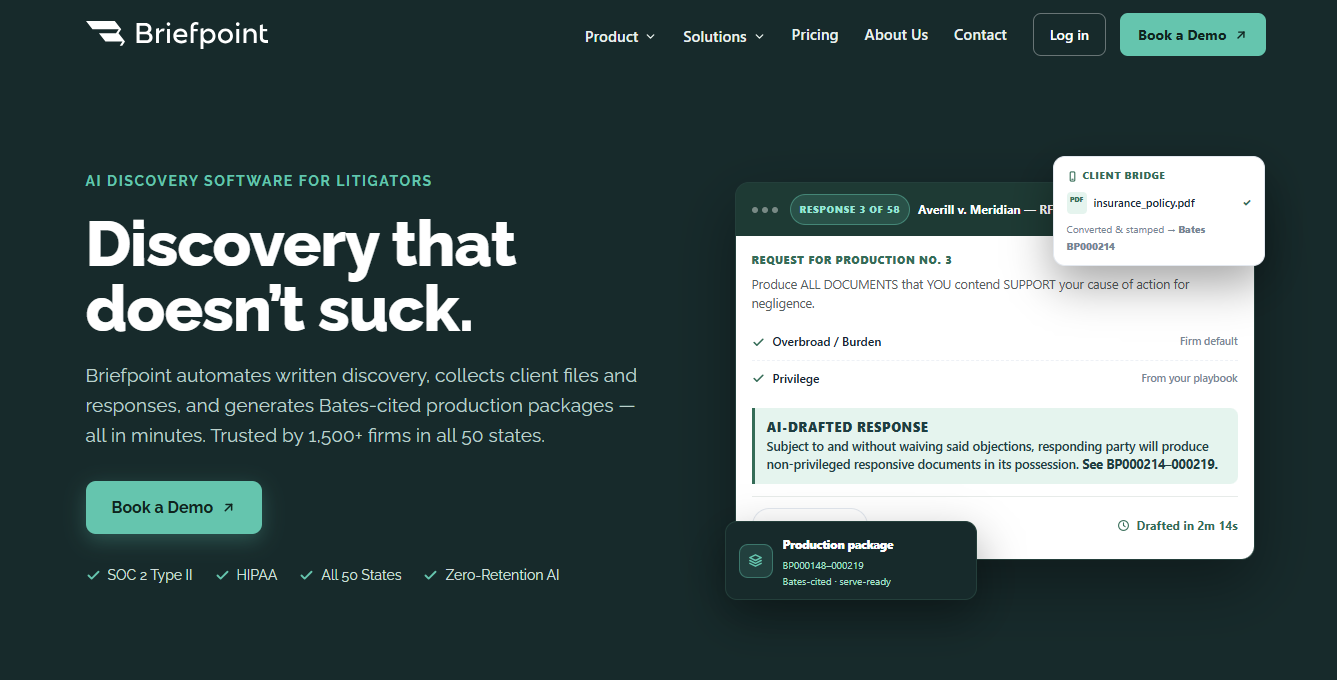
For document productions, Briefpoint identifies responsive files and prepares Bates-cited Word responses with page-level references.
Apart from that, the platform can generate an organized production package that is ready for service. Firms handling matters in different jurisdictions can use it throughout all 50 states and federal district courts.
