Litigation Timeline and the Stages of a Civil Case
The Civil Litigation Timeline at a Glance
A civil lawsuit can move through several stages before the court reaches a final decision. Some civil cases end early through dismissal or settlement, while others continue through trial and appeal.
Here is a quick look at the typical litigation process:
- Pre-litigation: The parties review the facts, preserve relevant evidence, and explore whether the dispute can be resolved before filing.
- Pleadings: The plaintiff files a complaint, serves the defendant, and receives an answer or another formal response.
- Case scheduling: The court sets key deadlines for the discovery process, motions, and other upcoming proceedings.
- Discovery process: Each side requests information, exchanges documents, takes depositions, and works through any disputes over what must be produced.
- Pretrial motions: Attorneys may ask the court to resolve specific legal issues or dismiss part or all of the civil case.
- Settlement: Negotiations or mediation can take place at almost any point, even shortly before trial.
- Trial: Both sides present evidence and arguments before a judge or jury, which then reaches a decision.
- Post-trial and appeal: The parties may file additional motions, enforce the judgment, or ask a higher court to review the outcome.
How Long Does Civil Litigation Usually Take?
Civil litigation can last anywhere from a few months to several years. According to the United States Courts’ Judicial Business 2025 report, the median time from filing to disposition for federal civil cases was 15.6 months in 2025. Cases that reach trial usually take longer.
Of course, no two cases move at the same pace. The timeline depends on the court, the applicable rules of civil procedure, and the amount of work involved.
Personal injury cases may resolve sooner when liability and damages are fairly clear. On the other hand, a case can become much more time-consuming when it involves extensive discovery, expert testimony, or repeated motions.
A general timeline may look like this:
- Early settlement or dismissal: A few months
- Resolution during discovery: Six months to two years
- Case proceeding to trial: One to three years or longer
- Appeal after judgment: Several additional months to multiple years
Even then, these are only rough estimates. Court congestion, discovery disputes, scheduling changes, and the number of parties can all affect how quickly the case moves.
What the Litigation Timeline Looks Like
A civil case usually moves through a series of stages, though some may overlap or end earlier if the parties reach a resolution.
Here is how the timeline typically unfolds:
Pre-Litigation Investigation and Case Assessment
Before a lawsuit is filed, the attorney reviews the facts, available evidence, and possible legal claims. This early stage helps determine whether the case is strong enough to pursue and what steps may be needed next.
In a personal injury lawsuit, for example, the review may include medical records, accident reports, and information from the opposing party.
The process generally covers:
- Client interviews
- Evidence preservation
- Legal research
- Damages assessment
- Statute of limitations review
- Early settlement discussions
Filing the Complaint
The lawsuit formally begins when the plaintiff files a complaint with the court. This document outlines the legal claims, identifies the parties, and explains what relief the plaintiff is asking the court to provide.
The plaintiff will usually file any required court forms, pay the filing fee, and request a summons for the defendant.
Serving the Defendant
After filing, the plaintiff must formally notify the defendant that the lawsuit has started. Service has to follow the court’s rules, and the plaintiff will later file proof showing that delivery was completed properly.
Unfortunately, delays can happen if the defendant is difficult to locate, refuses service, or challenges the method used.
The Defendant’s Response
After being served, the defendant has a set amount of time to respond. Their lawyer may file an answer that admits or denies the allegations, raises defenses, or brings claims against the other side.
For example, a defendant in a contract dispute might deny breaching the agreement and argue that the plaintiff failed to perform first. In some cases, the response comes as a motion asking the court to dismiss all or part of the lawsuit before the case moves further.
Initial Case Management and Scheduling
Once the parties have filed their initial pleadings, the court begins organizing how the case will move forward. The judge may hold a case management conference, set deadlines for discovery and motions, and establish a tentative trial date.
The schedule gives both sides a shared roadmap, but it may change as the case develops. Extensions or new issues can push deadlines back, while a settlement may bring the case to an earlier close.
The Discovery Phase
The discovery stage usually begins after the main pleadings are in place, including the complaint and the defendant’s responsive pleading.
At this point, each side asks the other party for information that may support its claims or defenses.
The scope and length of discovery depend on the circumstances of the case. A straightforward dispute may involve a limited exchange, while a case with extensive records or several witnesses can take much longer. The main phases often include:
- Written discovery: Lawyers send written questions through interrogatories and requests for admission.
- Document requests: Each side asks for records, files, and other materials connected to the dispute.
- Depositions: Attorneys question parties or witnesses under oath before trial.
- Expert discovery: Specialists may prepare reports or give testimony on technical issues.
- Discovery disputes: The parties may ask the court to step in when they disagree about a request or response.
Discovery can begin months after filing suit and often continues for much of the case. It gives both sides a clearer view of the evidence before settlement discussions, motions, or trial.
Expert Witness Discovery
Some cases require expert witnesses to explain technical issues or offer specialized opinions. During this stage, each side may disclose its experts, exchange reports, and prepare depositions so the other side can examine the basis for those opinions.
A plaintiff’s attorney might use an expert to explain medical treatment in an injury case, while the defense may bring in its own expert to challenge that analysis. The court usually sets firm deadlines for disclosures, rebuttal reports, and related motions.
Pretrial Motions
Before a jury trial begins, either side may ask the court to decide certain issues in advance. These motions can narrow the dispute, exclude evidence, or resolve the case before trial if the judge finds that no genuine factual issue remains.
Common motions include motions for summary judgment, motions to exclude expert testimony, and motions in limine. Each one must follow the court’s schedule, and the opposing side receives notice and an opportunity to respond.
Settlement Negotiations and Alternative Dispute Resolution
Many civil cases end before trial through settlement or another form of alternative dispute resolution. These discussions can happen early, during discovery, or after the court rules on major motions.
Common options include:
- Direct negotiation: The parties discuss possible terms through their lawyers and try to reach an agreement.
- Mediation: A neutral mediator helps both sides work toward a voluntary resolution.
- Settlement conference: A judge or court-appointed officer guides the parties through structured negotiations.
- Arbitration: A neutral decision-maker hears the dispute and issues a ruling, which may be binding depending on the agreement.
Settlement talks can become complicated when the parties disagree about things like liability or how much money should be paid. Even so, resolving the case outside trial can reduce legal costs and give both sides more control over the outcome.
Final Pretrial Preparation
As the trial date approaches, both sides check off tasks like organizing the evidence, confirming which witnesses will appear, and preparing the arguments they plan to present.
The court may also hold a final pretrial conference to address remaining issues and set expectations for the proceedings.
Final trial preparation often includes:
- Witness lists
- Exhibit lists
- Trial briefs
- Motions in limine
- Jury instructions
- Subpoenas
- Opening statements
- Closing arguments
Trial
At trial, each side presents its case through evidence, witness testimony, and legal arguments. The plaintiff usually goes first, followed by the defense, and both sides have a chance to question witnesses and challenge the evidence presented.
A judge or jury then decides the disputed facts and applies the relevant law. Some trials finish in a day or two, while more complex cases may continue for several weeks.
However, reaching this point can still take several months or years because the parties must first complete discovery, resolve pretrial motions, and prepare the case for presentation.
Once both sides have finished, the judge or jury issues a decision. That ruling may resolve the dispute, though either party may still file post-trial motions or pursue an appeal.
Post-Trial Motions and Judgment
After the trial ends, the court enters a final judgment that states the outcome and any relief awarded. A party may then ask the judge to reconsider part of the decision or address an issue that arose during trial.
Common post-trial steps include:
- Motion for a new trial: Requests another trial because of a serious legal or procedural problem.
- Motion to alter or amend the judgment: Asks the court to revise part of the final judgment.
- Motion for judgment as a matter of law: Argues that the evidence could not reasonably support the verdict.
- Enforcement of judgment: Begins the process of collecting money or carrying out another court-ordered remedy.
A default judgment follows a different path and may be entered when a defendant fails to respond or appear as required.
Appeals
A party that believes the trial court made a legal error may ask a higher court to review the decision. The appeal must be filed within the deadline set by the jurisdiction, and the appellate court usually reviews the existing record rather than hearing the case again from the beginning.
After considering written briefs and, in some cases, oral arguments, the appellate court may affirm the judgment, reverse it, or send the case back for further proceedings.
How AI Litigation Support Software Can Help
A litigation timeline can create a lot of routine work, particularly during discovery and document-heavy stages. AI litigation support software can make that work easier to manage, which gives lawyers more room to focus on the facts and the decisions that shape the case.
Depending on the platform, it may help with:
- Document review: Search large sets of files and identify material that may be relevant or responsive.
- Discovery drafting: Prepare written discovery requests and responses using information already connected to the case.
- Client collection: Gather answers and supporting files through guided questionnaires or secure forms.
- Production preparation: Organize documents, apply Bates numbers, and prepare files for production.
- Response updates: Revise prior discovery responses when new information comes in.
How Briefpoint Helps Keep Discovery Moving
Discovery often takes up a large part of the litigation timeline, and much of that time goes toward repetitive drafting, client follow-up, and document production.
Briefpoint brings those tasks into one workflow, so your team can move from incoming requests to ready-to-serve responses with less manual work.
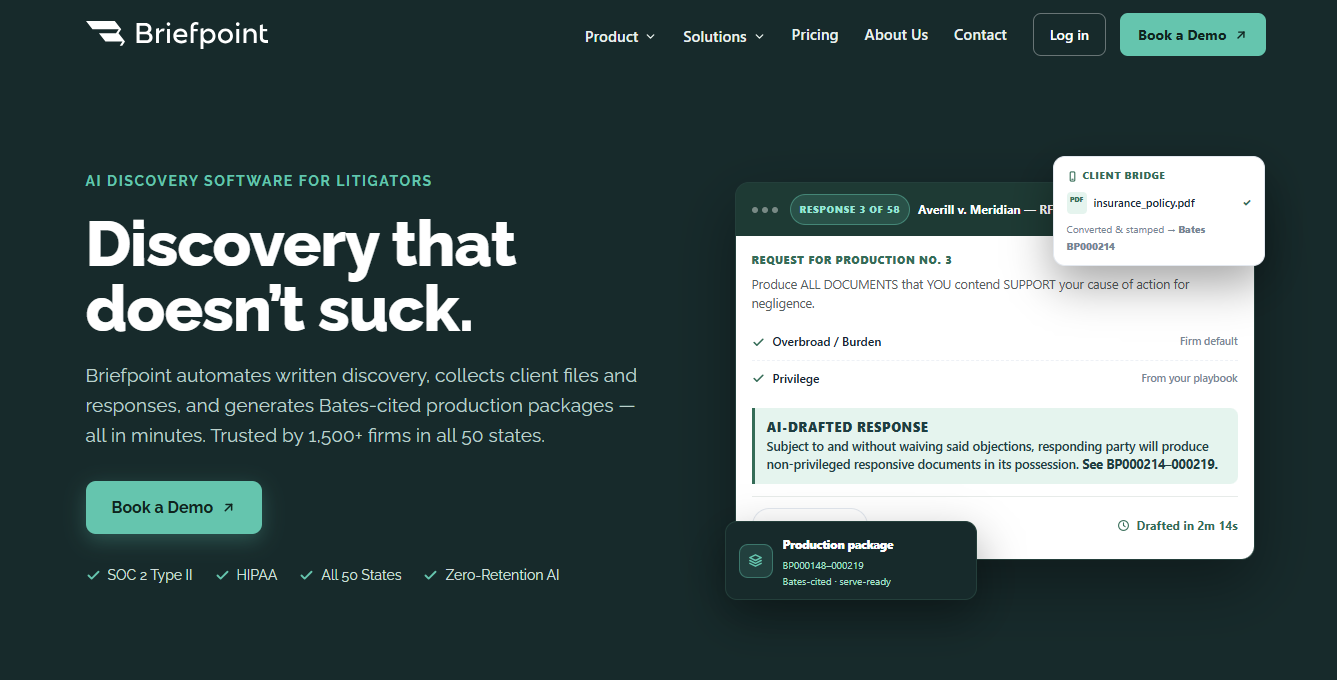
You can use Briefpoint to propound and respond to interrogatories, RFAs, and RFPs for all 50 states and federal courts.
Autodoc reviews case files, identifies responsive documents, and creates Bates-cited Word responses with page-level citations, along with a Bates-numbered production package.
Client Bridge collects answers and files through a secure link that works on any device in English or Spanish. The information then flows back into the response draft for attorney review, so you spend less time chasing updates and transferring answers manually.
As the case develops, supplemental responses let you update prior interrogatories, RFAs, and RFPs while keeping earlier answers intact and available for reference.
