What Legal Discovery Management Looks Like in Practice
What Is Legal Discovery Management?
Legal discovery management is the process of organizing and overseeing discovery from the first request through final production and any later supplementation. Essentially, it covers the practical work needed to keep information moving and responses organized throughout a case.
For law firms, the process can involve written discovery, client communications, document collection, review, and other evidence that may need to be located or produced.
Larger matters can add another layer of difficulty, particularly when lawyers are dealing with massive volumes of documents or technical aspects tied to electronically stored information.
Discovery management makes it easier to see where things actually stand in a case. You can quickly tell what has already been answered, what still needs work, and when you need to follow up with a client. It also cuts down on the time spent hunting through files or retracing earlier steps.
The exact workflow will vary from case to case, but the basic purpose stays fairly consistent: keep discovery organized enough that lawyers can respond accurately, meet obligations, and spend less time piecing together what happened at each stage.
What Does the Legal Discovery Process Involve?
Discovery moves through several stages, and each one creates its own set of tasks to manage. Knowing how those stages fit together can help you keep the process organized from the first request through production and later updates.
Here is how the process typically unfolds:
Discovery Planning and Case Assessment
Discovery usually begins with figuring out what the case may require before requests start moving in either direction. Early case assessment can help attorneys identify important issues, likely sources of evidence, and any procedural limits that could shape the process.
Digital records may need special attention at this stage. If the matter involves large amounts of electronically stored information, the discovery plan may need to account for collection methods, preservation, and the likely scope of electronic discovery.
Good planning gives you a clearer picture of the work ahead. It can also help keep later requests focused and reduce unnecessary effort once document collection starts.
Propounding Discovery Requests
Once the case is better understood, attorneys can start drafting requests aimed at getting the information they need from the other side.
Those requests may include interrogatories, requests for production, or requests for admission, among other discovery tools. The wording is critical because unclear requests can create avoidable objections or lead to incomplete answers.
A strong request should be specific enough to target evidence related to the issues in dispute while still fitting within the applicable rules. Careful drafting at this point can make later review easier because you have a clearer framework for evaluating what comes back.
Responding to Written Discovery
Responding to discovery requires close review of each request and a clear process for gathering the information needed to answer it. The work can become more involved when records are spread between different people or systems.
Common tasks include:
- Reviewing each request for scope and possible objections
- Gathering responsive documents and other information
- Identifying privileged material
- Using an eDiscovery process when larger digital collections are involved
- Recording what has already been produced
A consistent response workflow can make it easier to spot missing information and keep the record organized. At the same time, it gives attorneys a better starting point if responses need to be updated later.
Collecting Information From Clients
A large part of discovery depends on information only the client can provide. For example, legal teams may need to collect background details, locate records, and clarify facts that are not obvious from the case file.
The process often works best when requests are easy for the client to understand. Plain-language questionnaires, guided forms, or structured follow-ups can help you gather useful information without forcing the client to interpret dense legal wording on their own.
Client collection can also surface key evidence that changes how the rest of discovery is handled. New facts may affect later document requests, depositions, or other litigation procedures, so keeping those responses organized from the start can save a lot of cleanup later.
Reviewing and Organizing Documents
Once documents start coming in, the focus shifts to sorting through what you have and deciding what actually belongs in the response.
Document review may involve electronic documents, emails, attachments, and other digital evidence collected from the client or opposing party. Reviewers typically look for responsiveness, relevance, and privilege while keeping the material tied to the correct request.
Attorney-client privilege needs particular care because producing protected material can create serious problems. Larger collections may require dedicated review tools or workflows that help organize electronic information and make it easier to find specific records again later.
Good organization here gives you much better control over the production stage and reduces the chance of duplicating work.
Producing Responsive Documents
After review is complete, responsive material has to be prepared and delivered in a usable form. Production is not simply a file transfer. The documents need to match the discovery requests and follow any applicable court rules or agreed procedures.
Typical production tasks include:
- Finalizing the production set: Remove nonresponsive material and confirm the remaining files are ready to produce.
- Applying Bates numbers: Add consistent identifiers so documents can be referenced later in motions, hearings, or depositions.
- Handling protected material: Follow protective orders or confidentiality requirements when sensitive data is involved.
- Preparing the delivery format: Convert or package files according to the required production specifications.
- Recording what was produced: Keep a clear production history so you can trace documents back to the relevant request.
Supplementing Discovery Responses
Discovery does not always end after the first response is served. New information can emerge as litigation develops, and some rules require parties to update prior responses when earlier answers become incomplete or inaccurate.
Supplementation may be triggered when you discover new documents, receive additional client information, or learn something during later investigations.
Keeping earlier responses organized makes the update process much easier because you can quickly see what was originally stated and what needs to change.
A reliable supplementation process also helps maintain consistency between written discovery and later stages of the case, such as depositions or hearings.
The cleaner your discovery record is, the easier it becomes to make those updates without rebuilding the history from scratch.
What Types of Discovery Need to Be Managed?
Discovery can involve several different methods of gathering information, and each one creates its own set of deadlines, documents, and follow-up work.
Keeping them organized helps counsel see what has been requested, what has been received, and what still needs eyes.
Common types include:
- Interrogatories: Written questions that require formal answers, often with input from the client and reviewing attorney.
- Requests for production: Demands for documents, files, or other materials that may need to be collected and reviewed before production.
- Requests for admission: Statements the receiving party must admit or deny, which can narrow disputed issues in the case.
- Depositions: Sworn testimony that requires scheduling, preparation, exhibits, and coordination with opposing counsel.
- Subpoenas: Requests directed to third parties for documents, testimony, or other relevant information.
- Physical or mental examinations: Court-authorized examinations that may be part of discovery in certain cases.
What Is Legal Discovery Management Software?
Legal discovery management software gives you a central place to handle the moving parts of discovery without relying so heavily on issues like separate documents and manual tracking.
Depending on the platform, it can support anything from drafting written discovery to organizing productions and monitoring deadlines.
Common capabilities include:
- Discovery drafting: Helps prepare requests, responses, and objections using case information or approved language.
- Client collection: Gives clients a structured way to answer questions and provide documents.
- Document organization: Connects responsive files to the requests they relate to, which can make review easier.
- Deadline tracking: Keeps important dates visible so follow-up work is easier to manage.
- Legal holds: Helps preserve relevant information when litigation or investigations require it.
- Review and analysis: Uses technology to surface useful insights from documents and other discovery data.
- Case management connections: Some solutions link discovery activity with broader matter information and existing systems.
Generally, the right tools can take a lot of routine coordination off your plate while giving you better visibility into the discovery process.
Bring Your Discovery Workflow Together With Briefpoint
At a certain point, discovery becomes difficult to manage with manual drafting and scattered files alone. Software can take over much of the repetitive work behind the process and give attorneys a more practical way to handle discovery as cases grow in scope.
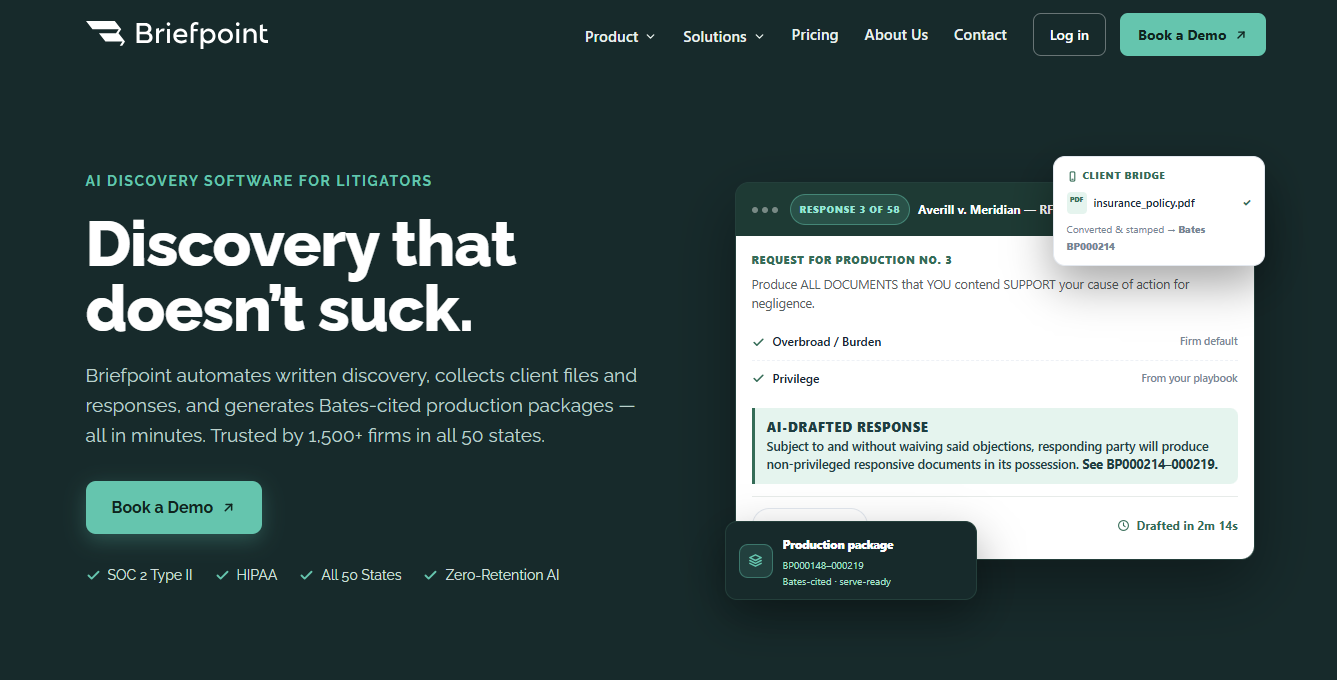
Technology can help with much of the repetitive work behind that process.
Briefpoint is built specifically for discovery, with tools that assist with drafting and responding to written discovery, collecting client answers and files, preparing document productions, and managing supplemental responses.
Autodoc can turn discovery information into attorney-ready documents, while Briefpoint’s workflows help keep requests and responses easier to follow.
If your current discovery process still relies heavily on manual drafting or repeated follow-up, Briefpoint can make the work much easier to manage.
Book a demo to see how Briefpoint can support your discovery workflow.
