
Best AI for Legal Documents: Top 7 Tools for 2026
Types of AI Tools for Legal Documents
First things first, let’s talk about the different types of AI tools for legal documents. Keep in mind that not all legal AI tools do the same thing.
Here are the main types of AI tools, per the process they cover:
- Legal document drafting: Creates pleadings, discovery documents, contracts, and other legal paperwork based on templates and case details. Generally, it expedites the drafting process while maintaining accuracy.
- Contract drafting: These tools help create legal agreements using templates and user inputs.
- Document review: Speeds up analysis by identifying risks, missing clauses, and inconsistencies, similar to how legal professionals review documents.
- Legal research: Finds relevant case law, statutes, and regulations quickly to cut down the time spent on legal research.
- E-signature and contract management: Simplifies contract signing, tracking, and storage to make sure deadlines aren’t missed.
- Litigation support: Assists with case analysis, summarizing legal documents, and predicting case outcomes in litigation workflows.
Top 7 AI Tools for Legal Documents
Below are some of the best AI tools for legal documents:
1. Briefpoint
Briefpoint is an AI-powered discovery platform designed for the part of litigation that tends to consume the most time, which is most often drafting and responding to discovery.
If your work involves propounding discovery requests, reviewing responses, and preparing Bates-numbered productions, Briefpoint brings those steps into one cohesive workflow that matches how discovery actually gets done.
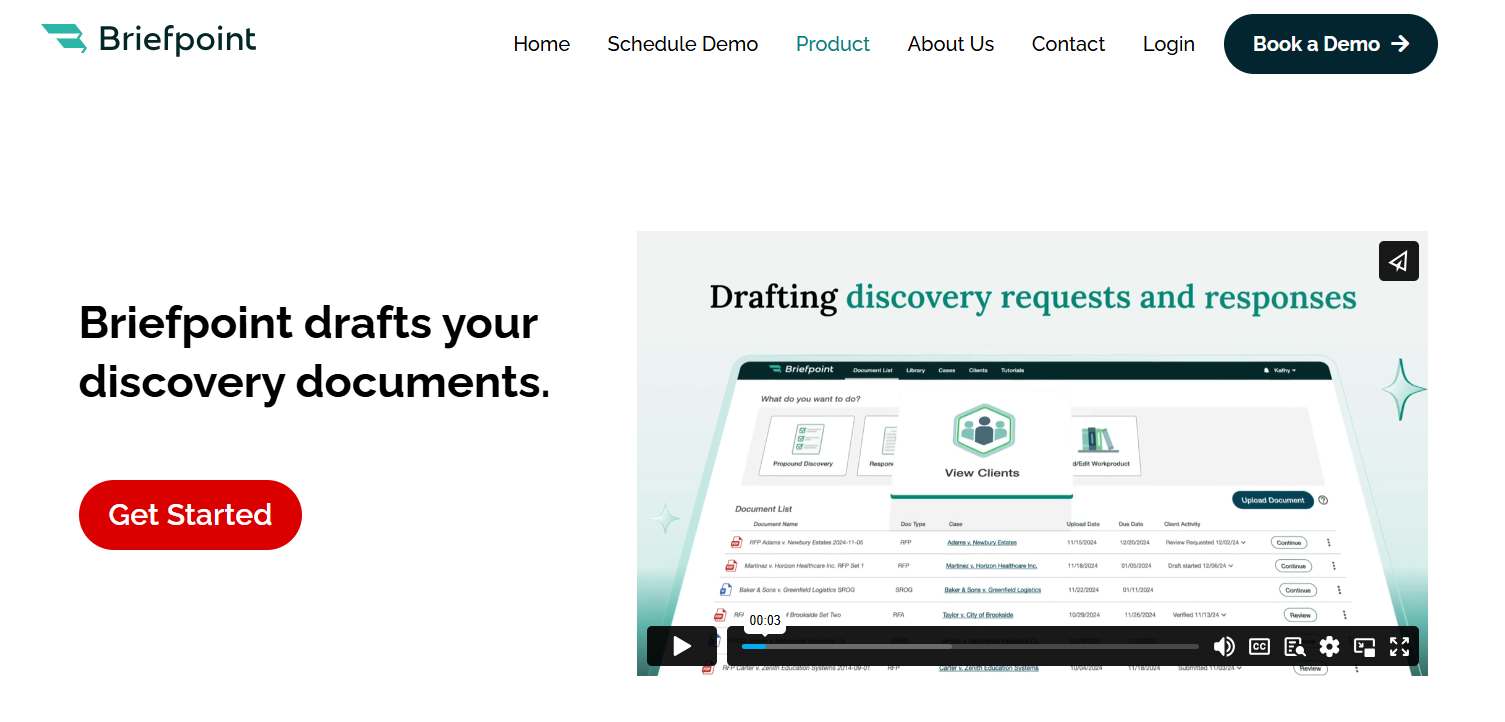
Rather than drafting requests for admission, requests for production, and interrogatories from scratch or spending days organizing productions, you can let Briefpoint handle the repetitive structure while you stay focused on substance and strategy.
The platform applies jurisdiction-ready formatting, standard objections, and properly structured responses, so discovery keeps moving.
If discovery shows up often in your matters, Briefpoint takes hours of repetitive work off your plate and replaces it with a review-first process you can rely on from case to case.
Key Features
- Propound discovery from a complaint: Upload a complaint, and Briefpoint automatically generates tailored interrogatories, RFAs, and RFPs. Each request is written to avoid common drafting issues like ambiguity or assuming facts.
- Automated discovery response drafting: Upload opposing counsel’s discovery requests, and Briefpoint identifies court details, parties, set numbers, and local formatting rules. Responses are structured automatically, with standardized objections applied where appropriate.
- Client response collection in plain English: Briefpoint Bridge converts interrogatories into plain-language questions and sends them to clients through a secure portal. Clients respond directly in their browser, and answers flow back into Word-ready drafts.
- Word-ready documents: All discovery responses export as properly formatted Word documents, complete with captions, numbering, and objections. Final review and edits happen where attorneys already work.
- Autodoc: Autodoc extends Briefpoint’s discovery workflow into document production. Upload RFPs and case files, and Autodoc locates responsive documents for each request and generates written responses with page-level Bates numbering.
- Security and compliance: Briefpoint is SOC-2 certified, encrypts data in transit and at rest, and keeps client data siloed per account. Uploaded materials are never used to train Briefpoint or third-party models.
Pros
- Handles both propounding and responding to discovery
- Produces jurisdiction-ready RFAs, RFPs, and interrogatories
- Cuts discovery drafting and production time from days to minutes
- Generates Bates-cited responses and ready-to-serve productions
- Keeps attorneys in control with Word-first editing and verification
If you want a full tour of Briefpoint, book your free demo today!
2. CoCounsel by Casetext
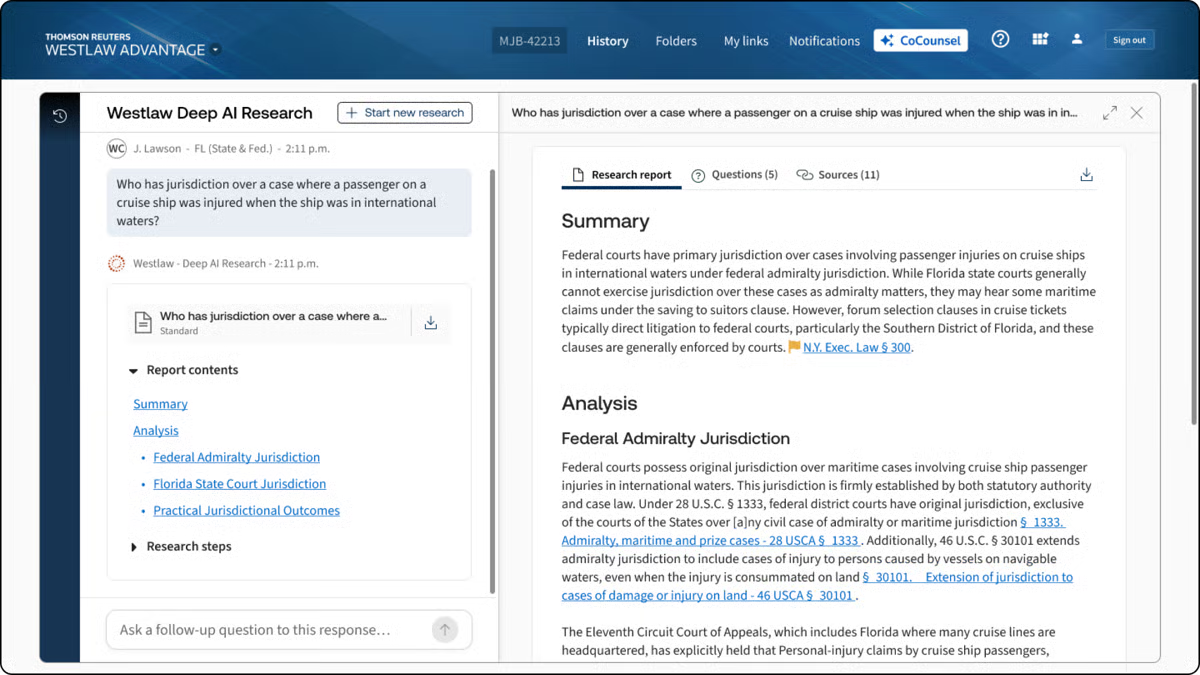
CoCounsel is an AI-powered legal document assistant that helps lawyers with research, contract review, and document analysis.
Developed by Casetext, it automates time-consuming legal tasks that would otherwise require significant manual effort.
Source: G2
With features like document summarization, deposition preparation, and contract analysis, CoCounsel functions as an AI-powered document assistant trained on large language models designed for legal workflows.
It processes full transactional documents, reviews different document versions, and responds to legal questions while staying grounded in the legal context.
Key Features
- Legal research assistance: Quickly finds relevant case law, statutes, and regulations while accounting for legal context and jurisdictional nuance.
- Contract review: Analyzes contracts, flags potential risks, and surfaces issues across full transactional documents.
- Deposition preparation: Helps attorneys organize key points, review testimony, and prepare outlines with less manual effort.
- Legal document summarization: Extracts critical details from lengthy documents and multiple document versions.
- Case analysis: Identifies key arguments, supporting evidence, and relevant precedents to support actionable intelligence.
Pros
- Finds case law and statutes faster than manual searches
- Flags risks and missing clauses with AI-powered insights
- Automates repetitive tasks, reducing workload for legal teams
3. ChatGPT
ChatGPT isn’t designed specifically for law firms (or legal practice, for that matter), but many in the legal industry use it as a general-purpose AI for a wide range of legal-adjacent tasks.
From drafting emails and summarizing case law to generating legal arguments and reviewing long documents, it serves as a flexible AI-powered legal assistant.

Source: ChatGPT.com
While it doesn’t replace specialized legal AI tools, lawyers often rely on ChatGPT to answer questions, produce first drafts, brainstorm ideas, and refine legal writing before final review.
Key Features
- Legal writing assistance: Helps draft contracts, emails, and legal memos with clear, structured language suitable for first drafts.
- Document summarization: Condenses case law, statutes, and long legal documents into digestible summaries.
- Legal research support: Helps locate case law, statutes, and legal concepts, though outputs require verification.
- General productivity support: Assists with scheduling, transcription, simple legal services, and other administrative tasks.
Pros
- Useful for research, writing, and general legal-adjacent tasks
- Quickly generates drafts, summaries, and contract reviews
- More accessible than many specialized legal AI apps or tools
- No complex setup or integrations required
4. ContractSafe
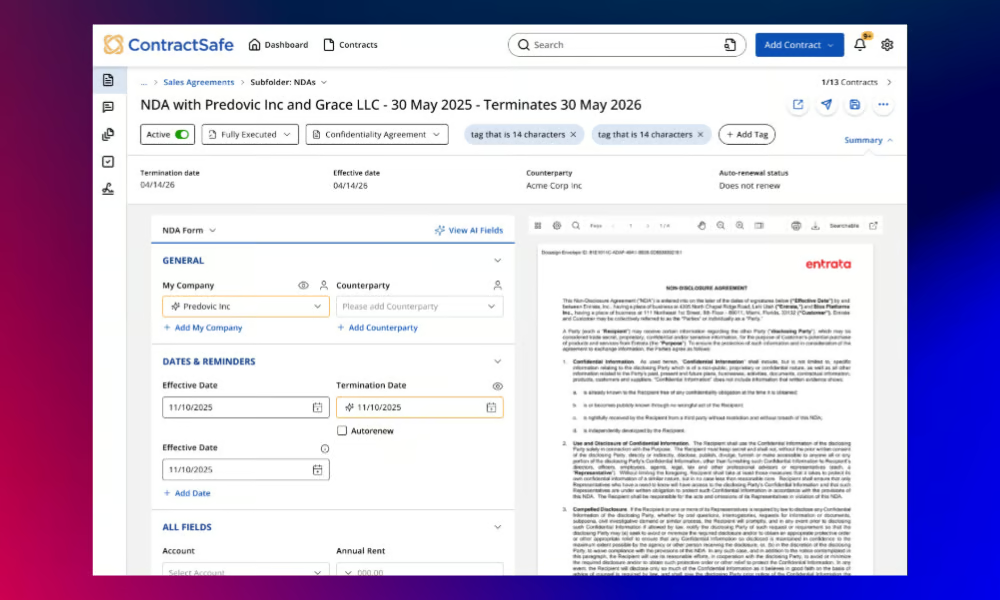
ContractSafe is a contract repository tool that helps teams store, search, and keep track of agreements in one place.
Source: G2
ContractSafe avoids the tediousness of having documents in separate places by giving contracts a single home. You can search across documents the same way you would search legal briefs, pulling up specific clauses, names, or dates in seconds.
Behind the scenes, it organizes legal data across a vast database of agreements. At the same time, automated reminders help teams stay on top of renewals and obligations, and secure storage keeps sensitive files protected.
It stays focused on organization and tracking rather than drafting or reviewing full contracts. For teams that need clarity around active agreements, deadlines, and responsibilities, ContractSafe offers a straightforward way to keep contract work moving without adding friction.
Key Features
- AI-powered search: Instantly locates contract terms, clauses, and key details within complex documents using simple keyword searches.
- Automated deadline reminders: Send alerts before renewals, expirations, or other important obligations tied to active agreements.
- Secure document storage: Keeps contracts centralized and searchable for faster attorney review.
- User permissions & access control: Controls who can view, edit, or download contracts across teams.
- Integrations with business tools: Connects with CRMs and document management platforms to fit into existing systems.
Pros
- Makes finding contracts quick and easy
- Prevents missed deadlines with automated reminders
- No complex setup or IT support needed
- Supports team collaboration with access controls
5. DocuSign
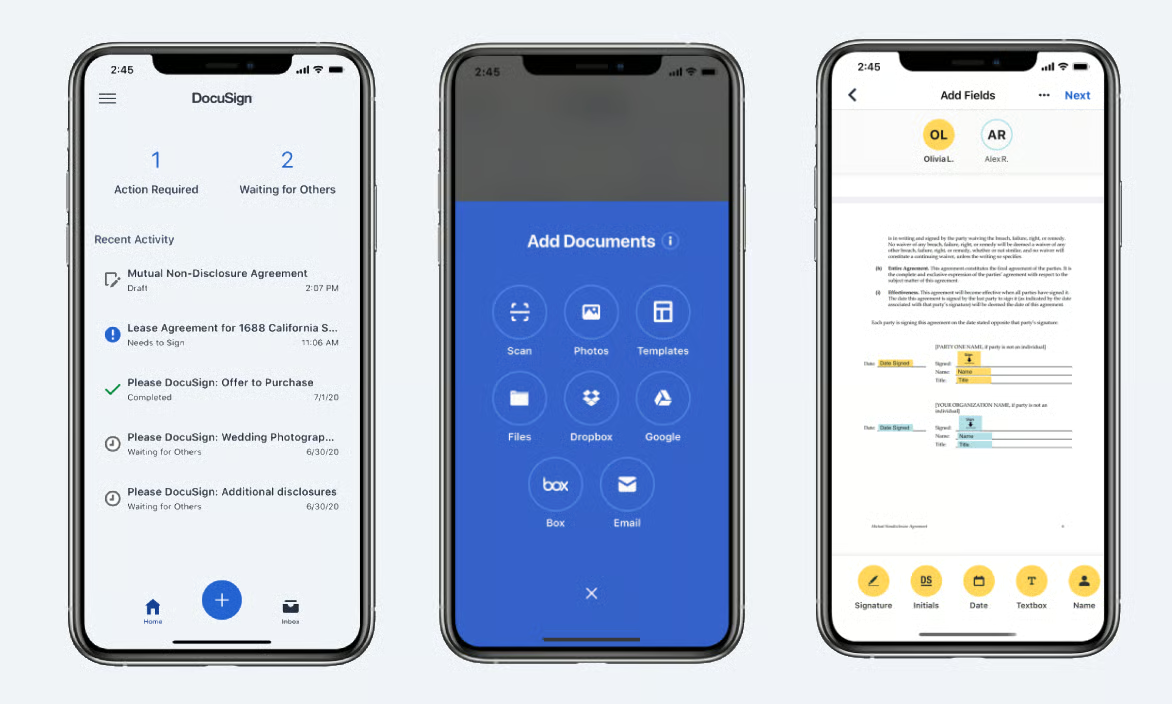
DocuSign makes signing and managing legal documents faster, more secure, and fully digital.
With legally binding e-signatures and automated workflows, it helps businesses and law firms move agreements forward without the friction of printing, scanning, or mailing documents back and forth.
Source: G2
While DocuSign is best known for e-signatures, its platform has expanded to support broader legal document workflows used by transactional lawyers and corporate legal departments.
Tools like DocuSign Iris add AI capabilities that assist with due diligence, document review, and data extraction. These features help teams work through agreements more efficiently while staying aligned with client service expectations.
These features support agentic workflows and custom legal workflows that fit into existing processes, making DocuSign a fully integrated option for managing agreements from signature through storage and tracking.
Key Features
- Legally binding e-signatures: Allows users to sign documents securely from anywhere, across devices.
- Automated contract workflows: Supports custom workflows for sending, signing, approving, and finalizing agreements.
- AI-assisted review with Iris: Helps surface key terms and insights during due diligence and contract review.
- Audit trails & compliance tracking: Maintains a detailed activity record to support compliance and internal review.
- Secure cloud storage and integrations: Connects with legal CRM, document management, and legal systems to stay fully integrated.
Pros
- Speeds up contract signing with secure e-signatures
- Supports due diligence and review with AI-assisted tools
- Fits into custom, agentic workflows across teams
- Accessible across devices for remote and distributed work
6. MyCase
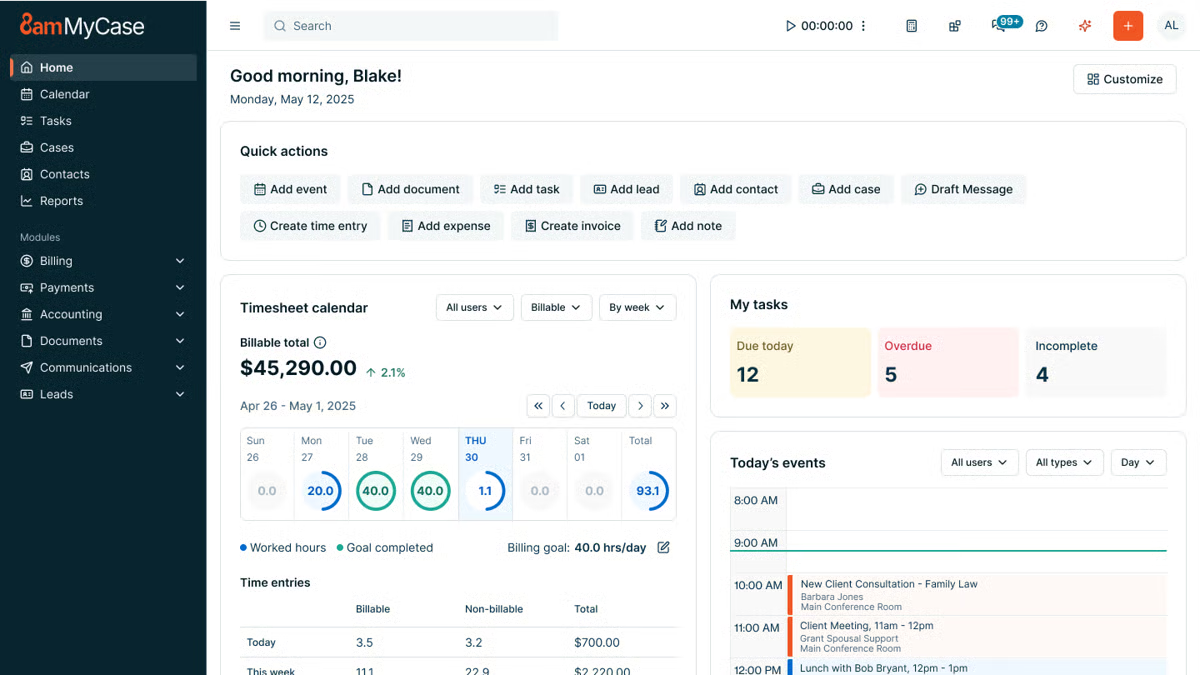
MyCase simplifies document storage with a secure, cloud-based document management system built specifically for law firms.
Source: G2
MyCase helps attorneys store, access, and manage case data in one centralized location to reduce the risk of lost files and version confusion. Documents stay connected to the right matters, clients, and deadlines, which supports consistency and data security across the firm.
While MyCase offers broader practice management tools, its document storage features focus on keeping sensitive client information protected, searchable, and easy to work with, whether files originate in Microsoft Word or are uploaded from other sources.
Overall, the platform is designed to support everyday workflows while helping firms ensure compliance with internal policies and security expectations.
Key Features
- Cloud-based document storage: Keeps legal files organized and accessible from any device.
- Advanced search & tagging: Uses filters and keyword searches to quickly locate legal content tied to specific cases.
- Role-based access control: Manages who can view, edit, or download documents containing sensitive client information.
- Client portal integration: Allows secure document sharing without email attachments.
- Automatic backups & security encryption: Protects case data and supports data security and compliance needs.
Pros
- Keeps all legal documents in one secure location
- Makes it easy to search and retrieve case files
- Allows controlled access for clients and team members
- Provides cloud-based access for remote work
7. Harvey AI
AI models are making legal work faster and more efficient, and Harvey AI is one of the newest tools built specifically for law firms.

Source: Harvey.ai
Designed to assist with legal research, contract review, and document analysis, Harvey AI helps lawyers process large amounts of information quickly while maintaining accuracy.
No type of artificial intelligence can be a total replacement for human legal expertise, of course. Nevertheless, many firms use Harvey AI to speed up repetitive tasks, analyze legal documents, and improve decision-making.
Key Features
- AI-powered legal research: Finds relevant case law, statutes, and legal precedents in seconds.
- Contract analysis & review: Identifies key clauses, missing terms, and potential risks in agreements.
- Litigation support: Assists with drafting briefs and legal arguments and summarizing case details.
- Document summarization: Extracts important points from long legal documents to save time.
- Natural language processing: Understands complex legal language and provides insights based on queries.
Pros
- Speeds up legal research by quickly retrieving relevant cases
- Helps identify risks and missing clauses in contracts
- Reduces the time spent summarizing lengthy legal documents
- Uses advanced AI to interpret legal language accurately
Why Should You Use Legal AI Tools for Legal Documents?
Aside from speeding up work, legal AI software improves accuracy, compliance, and overall efficiency.
Let’s go over why you should have them in the first place.
Speeds Up Document Drafting
Drafting legal documents takes time, but AI makes it a whole lot faster. Instead of starting from scratch every time, lawyers can generate complete, well-structured documents in minutes.
For instance, AI legal drafting tools can pull in key details, suggest relevant clauses, and format everything properly to cut down on repetitive work.
Take Briefpoint, for example. It automates legal drafting by pulling case details and structuring them into polished documents. That means less time spent on manual entry and more time focusing on the actual case.
Book a demo to see it firsthand!
Reduces Human Errors
Small mistakes in legal documents can create big problems. AI helps catch those issues early, before they turn into something you have to fix later.
When legal firms rely heavily on manual processes for writing legal documents, it’s easy to miss details. This happens most often with long agreements, repetitive discovery responses, or documents that go through multiple revisions.
Generative AI technology works like an added review layer. It scans legal information carefully and flags sections that don’t line up.
More specifically, AI can help spot issues like:
- Inconsistent terminology
- Missing key clauses
- Formatting mistakes
- Duplicate or conflicting sections
- Incorrect dates or names
- Ambiguous language
- Non-compliant contract terms
Remember: AI-generated output should always support your judgment, not replace it. The real value is speed and focus. Potential problems surface earlier, so your review time goes toward analysis and strategy rather than tracking down avoidable errors.
Improves Compliance With Legal Standards
Staying compliant in the legal field takes constant attention. Rules change, expectations shift, and even experienced teams can miss details when they’re working through documents quickly.
AI-powered tools help reduce that risk by acting as a steady backstop during review.
Many tools use machine learning trained on legal terminology to spot clauses, language, or structures that may fall outside current standards. They highlight areas worth a closer look, particularly in long contracts or documents that follow similar patterns.
For example, some contract management tools flag terms that don’t align with regulatory requirements or point out language that may need updating based on recent changes. That saves you from having to comb through every page, line by line, just to confirm compliance.
Again, you still stay in control of the final decision, but AI helps surface potential issues earlier.
Saves Costs on Administrative Tasks
Nobody wants to waste time on paperwork, and AI helps cut down on it. By handling routine tasks like legal drafting and data entry, AI lets law firms spend less on admin work and more on what really matters.
For example, AI can auto-fill forms, generate standard documents from templates, and organize case files without anyone having to do it manually.
That means fewer billable hours lost to repetitive work and more time for legal teams to focus on clients.
Supports Legal Research and Case Preparation
Research can quietly eat up half a day if you let it. Rifling through court documents, cross-checking citations, and making sure you’re not missing a key case takes real time.
Luckily, AI tools can easily shorten that process. Many use generative AI layered over large legal databases to sort through thousands of cases and regulations quickly. In the legal sector, that means less manual searching.
Picture this: you’re drafting a motion to compel and need recent decisions from a specific court that deal with a narrow procedural issue. An AI research tool can filter by jurisdiction, pull similar fact patterns, and return a short list of relevant cases with clear summaries.
Some platforms also include litigation analytics, which can give you insight into how certain judges have ruled in comparable situations.
All that changes how you prepare. You’re still responsible for checking the authority and shaping the argument, but you begin with organized results rather than a blank search bar.
The tool works like a focused personal assistant for research, gathering and sorting information so you can concentrate on analysis and positioning.
Keeps Documents Organized and Accessible
As matters grow, so does the paper trail. But without structure, even simple tasks like locating the latest draft or confirming a renewal date can slow everything down.
AI solutions help keep legal files organized by sorting, categorizing, and tracking documents automatically. Contracts, pleadings, and internal records stay connected to the right matter, client, or deadline, which makes retrieval much easier.
Many platforms also support document and contract analysis, so you’re not just storing files. You’re able to search inside them and surface key details in seconds.
An AI-powered organization often includes:
- Smart tagging based on keywords, client names, dates, or contract terms
- Full-text search across large volumes of documents
- Automated deadline and renewal reminders
- Version tracking to reduce confusion over edits
- Access controls that support data privacy and protect sensitive information
When documents are structured and searchable with AI software, your team spends less time hunting for files and more time acting on them. That clarity can create a real competitive edge, especially in fast-moving practices where quick access to information makes a difference.
Automate Your Biggest Bottleneck With Briefpoint
Discovery work tends to be the slowest, most repetitive part of litigation. Tedious tasks like drafting requests, organizing responses, and double-checking formatting can quietly consume days that could be spent on higher-value legal work.

Briefpoint is an AI-powered tool that targets the bottleneck directly. It handles the repetitive structure and formatting of discovery while keeping attorneys firmly in control of review and strategy. Everything stays in Word, so the process feels familiar and easy to verify.
Autodoc extends that workflow into document production. It connects requests for production to the actual case files, identifies responsive documents, and generates written responses with page-level Bates numbering.
All of these capabilities mean less time matching documents to requests and fewer manual steps before serving a production.
21 Must-Have Apps for Lawyers in 2026
What Are Legal Apps?
Every industry has its core tools. Designers rely on creative software. Accountants use financial platforms. Sales teams live inside CRMs. Lawyers have their own category of apps built around the structure and pressure of legal work.
Legal apps are software tools shaped by how a law practice actually operates. They account for deadlines that carry real consequences, detailed documentation requirements, and the need for organized task management under constant time constraints.
While many industries focus on speed and volume, legal work demands accuracy, traceability, and controlled workflows.
As mentioned, some legal apps are purpose-built for firms. Others come from broader productivity categories and adapt well to legal environments.
What separates them from generic business tools is how they support work productivity without disrupting professional standards or compliance needs.
How Can These Apps Benefit Law Firms and Legal Professionals?
You already know where most of your time goes. It’s not always the hard legal questions. Often, it’s the follow-ups, the tracking, and the small administrative tasks that sit between you and the actual work.
Legal apps are there to help clean that up. Essentially, they give your day more structure, so you’re not relying on memory or scattered systems to keep things moving.
When work is organized properly, you don’t have to think twice about what’s next or where something lives.
Here’s what that can look like:
- Fewer administrative tasks: Routine steps take less effort, which frees up mental space.
- Better control over important documents: Files stay connected to the right matters and are easier to locate.
- Real-time collaboration: Your team sees updates as they happen and stays aligned.
- Clearer coordination in larger firms: Responsibilities and workloads are more visible.
- Artificial intelligence support: Legal drafting and review move faster while you stay in charge.
- Stronger work productivity overall: Less friction means more consistent progress.
21 Best Apps For Lawyers
There are tons of tools out there, but not all of them are built with lawyers in mind. We’ve rounded up some of the most useful apps (both legal-specific and general productivity tools) that actually make a difference in your day-to-day work:
1. Briefpoint
Discovery has a way of taking over your calendar. One large set of RFPs can eat up days, especially when court dates are tight, and your team is already stretched. Briefpoint was built for that exact pressure in the legal world.
It’s an AI-powered discovery platform that helps you propound and respond to requests for production, requests for admission, and interrogatories in a fraction of the usual time.
With its Autodoc feature, you can upload a complaint, RFPs, and production files, then generate captioned Word responses with page-level Bates citations in minutes. What used to take 30–40 hours can now take minutes.
Briefpoint works for both small firms and larger litigation teams. The user-friendly interface means there’s no heavy setup, and it integrates with tools like Clio, Smokeball, and MyCase. It’s SOC 2 Type II certified, HIPAA compliant, and available in all 50 states and federal courts.
More than 1,500 law firms use Briefpoint, with an average 4.9 satisfaction rating. Plus, attorneys regularly report saving 30+ hours per case.
Key Features
- Propound discovery from complaints: Generate up to 70 targeted, objection-aware requests in minutes.
- AI-assisted response drafting: Apply consistent objections and draft answers quickly.
- Autodoc production packages: Create Bates-numbered productions with cited Word responses.
- Client response collection portal: Send plain-English questions and receive Word-ready drafts.
- Security and compliance: SOC 2 certified, HIPAA compliant, encrypted data.
Want to learn how Briefpoint can fit into your workflow? Book a demo today!
2. Evernote
Evernote is a simple note-taking app that helps you keep everything in one place, such as case notes, client information, meeting summaries, to-do lists, and even voice memos.
You can tag, search, and organize your notes into notebooks, which helps make it easy to find what you need fast.

Source: Evernote.com
Key Features
- Cross-device syncing: Access your notes from desktop, tablet, or phone without losing updates.
- Flexible note formats: Create text notes, attach images, or record audio in one place.
- Organized notebooks and tags: Sort information in a way that fits your workflow.
- Powerful search: Quickly locate saved notes using keywords and filters.
3. Clio
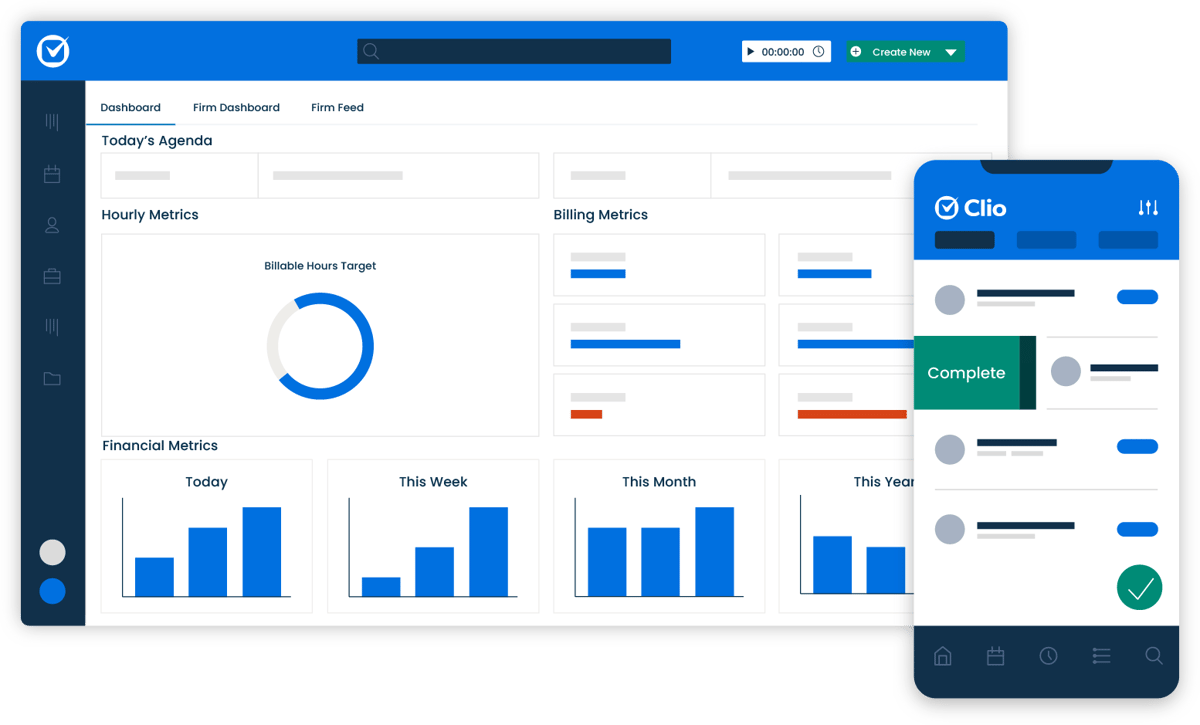
Clio is a case management platform designed specifically for the legal world. It brings your files, legal billing, scheduling, and client communication into one system so your practice runs with fewer moving parts.
Source: G2
It works well for solo attorneys and growing firms alike, especially if you want clearer visibility into deadlines, workloads, and client messages without relying on disconnected tools.
Its built-in calendar app, billing tools, and matter tracking features help boost productivity by keeping everything tied to the right case.
Key Features
- Centralized case management: Organize matters, contacts, and documents from a single dashboard.
- Integrated calendar app: Track court dates, meetings, and deadlines alongside your cases.
- Billing and time tracking: Log hours and generate invoices directly within the platform.
- Secure client portal: Share files and client messages in a protected environment.
- Wide integrations: Connect with tools like Outlook, Zoom, and Dropbox for smoother workflows.
4. OneDrive
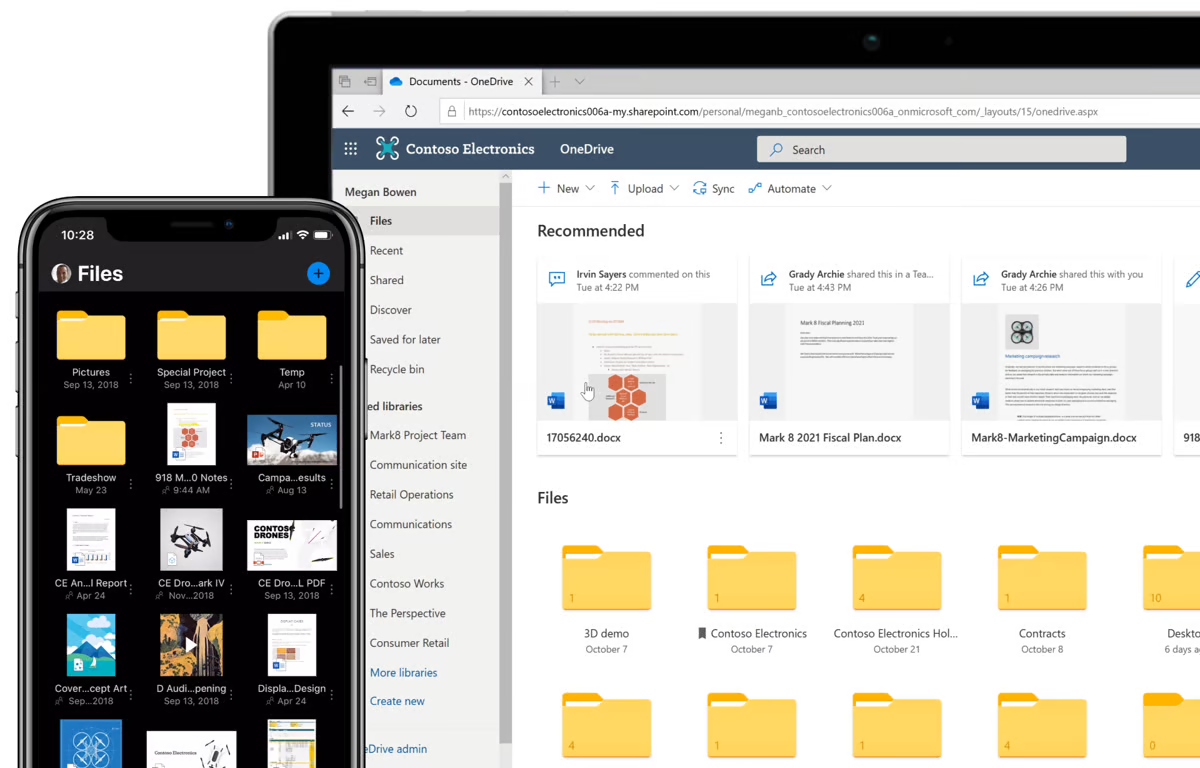
OneDrive is Microsoft’s cloud solution and a practical choice for lawyers who already work inside the Microsoft ecosystem.
It keeps case files and other files stored in one secure location while allowing you to open, edit, and share the same document without worrying about version confusion.
Source: G2
Because it connects directly with Word, Excel, and Outlook, your files stay synced automatically. That makes it easier to collaborate, store drafts, and keep everything backed up. There’s also a free plan available, which can work well for smaller practices getting started.
Key Features
- Cloud storage with automatic syncing: Keep case files and other files updated across devices.
- Real-time access to the same document: Collaborate without creating duplicate versions.
- Microsoft Office integration: Open and edit files directly in Word, Excel, and Outlook.
- Flexible sharing controls: Grant access to clients or colleagues with permission settings.
- Cross-device availability: Access files from desktop, tablet, or mobile phones.
5. Google Docs
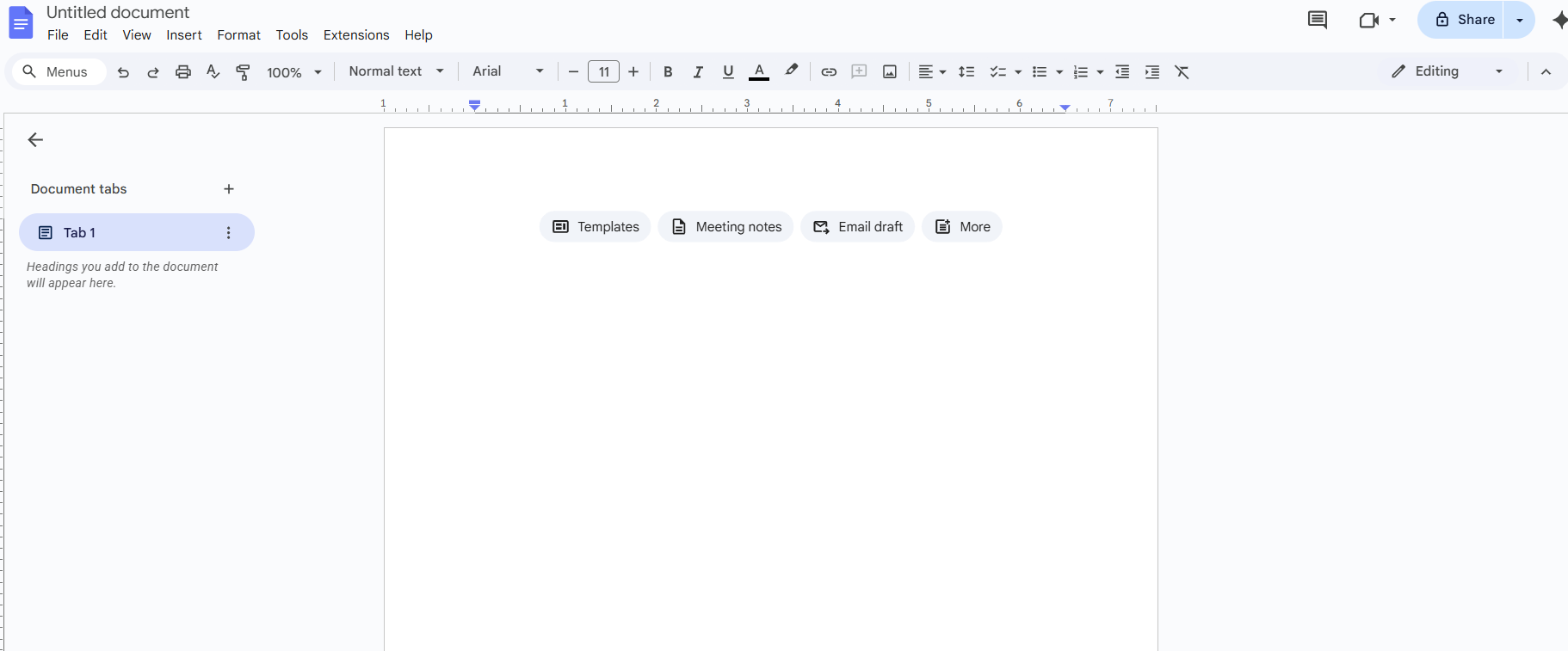
Google Docs is a simplistic tool, but that’s part of what makes it so useful. It’s quick to open, easy to use, and perfect for drafting documents with other lawyers or clients. You can leave comments, track changes, and never worry about hitting “save.”
Source: Docs.Google.com
Key Features
- Real-time editing and collaboration: Work on the same document simultaneously with comments and suggestions.
- Automatic saving to Google Drive: Changes are saved instantly without manual backups.
- Flexible sharing controls: Set viewing, commenting, or editing permissions for each user.
- Cross-device access: Open and edit documents from desktop, tablet, or mobile devices.
6. Clockify
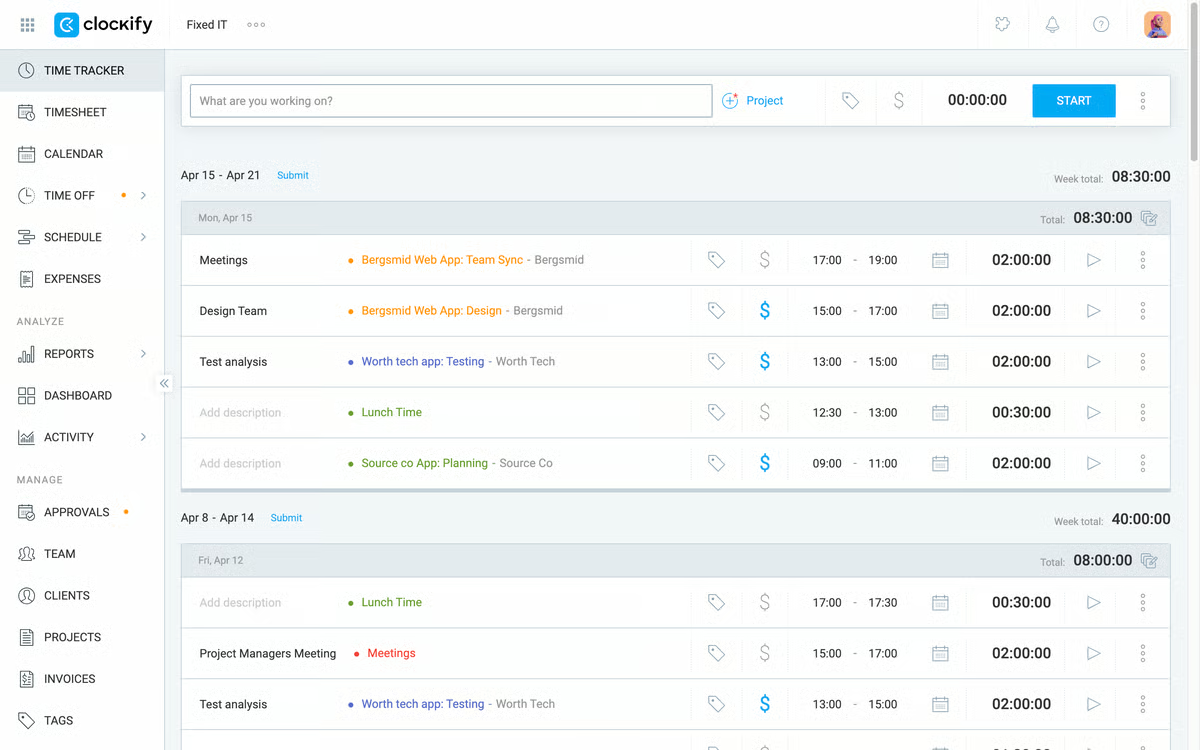
Clockify is a simple time-tracking app that helps you log billable hours without much setup. It’s great for solo lawyers or small teams who want something quick and easy. You can track time by client, case, or task and generate clean reports when it’s time to bill.
Source: G2
That said, it may be too simple for larger law firms that need more advanced billing features or deep integrations.
Key Features
- One-click timer and manual entry: Start tracking instantly or log hours after the fact.
- Client and case tagging: Assign time entries to specific matters or tasks.
- Detailed reporting tools: Generate summaries for billing and internal review.
- Multi-platform access: Use on web, desktop, or mobile devices.
7. Adobe Reader
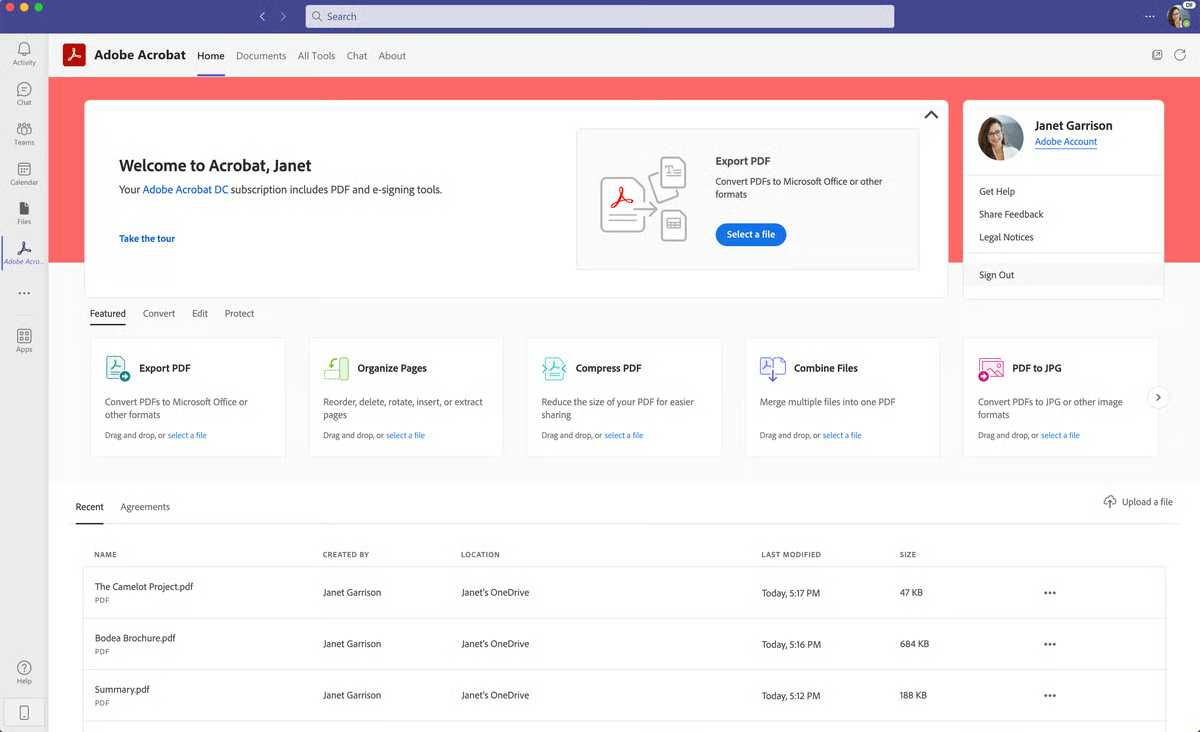
Adobe Reader is a must-have since many legal documents come in PDF form. It allows quick viewing, highlighting, commenting, and signing without printing anything.
Source: G2
Legal professionals can easily review and send legal documents while keeping everything digital and organized.
Key Features
- PDF viewing and annotation: Highlight, comment, and mark up documents directly within the file.
- Form filling and e-signatures: Complete and sign PDF forms without printing.
- Cross-device compatibility: Access and review files on desktop or mobile.
- Adobe ecosystem integration: Connect with other Adobe tools for editing and document workflows.
8. Grammarly
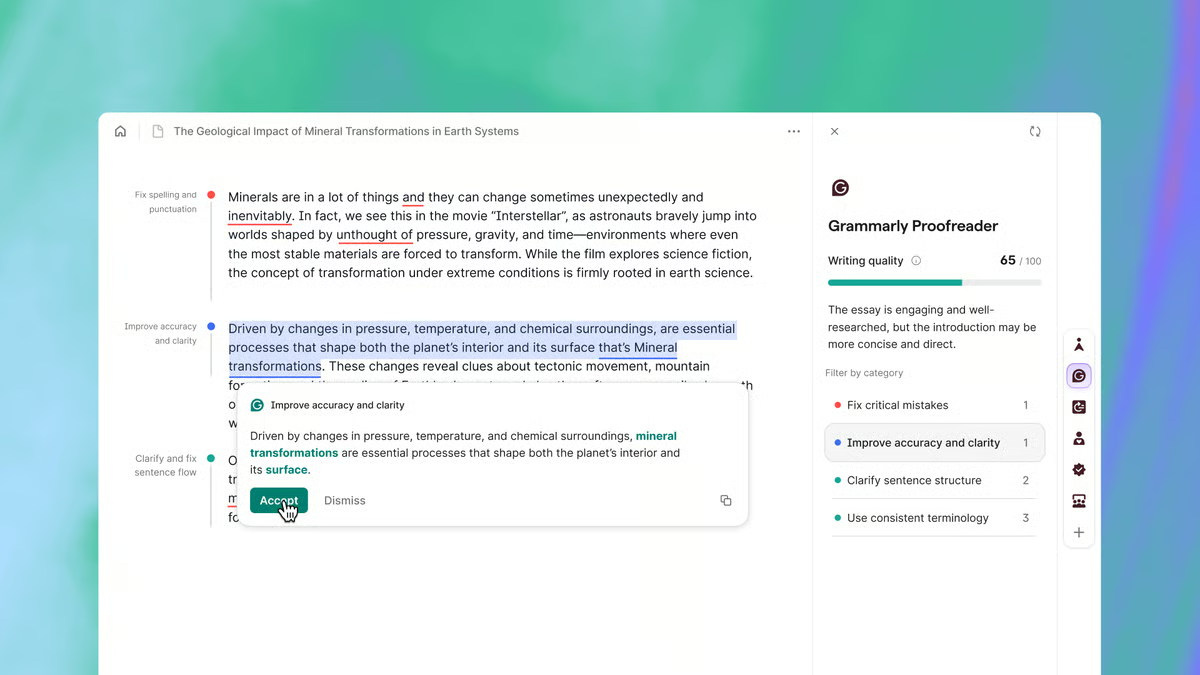
Grammarly helps catch grammar errors, awkward phrasing, and tone issues before anything is sent out. In the legal industry, clear writing matters, and this tool makes it easier to get things right the first time.
Source: G2
Plus, it works in email, documents, and even web browsers, which helps improve productivity across the board.
Key Features
- Real-time grammar and spell check: Identify errors as you write.
- Tone and clarity feedback: Adjust phrasing to match a professional voice.
- Cross-platform support: Works in Google Docs, email, and browser-based tools.
- Custom writing settings: Set preferences for formal or firm-specific standards.
9. Dropbox
Dropbox is a reliable file storage app widely used in the legal profession for sharing and organizing documents. It offers free storage to get started and makes accessing files from any device simple.

Source: G2
It integrates smoothly with common workplace tools, so it can fit into your existing setup without requiring major changes.
Key Features
- Cloud storage with device syncing: Keep files updated across desktop, mobile, and web.
- Secure file sharing: Control access with customizable permission settings.
- App integrations: Connect with tools like Slack, Zoom, and Microsoft Office.
- Anywhere access: Open and manage documents from multiple devices.
10. Zapier
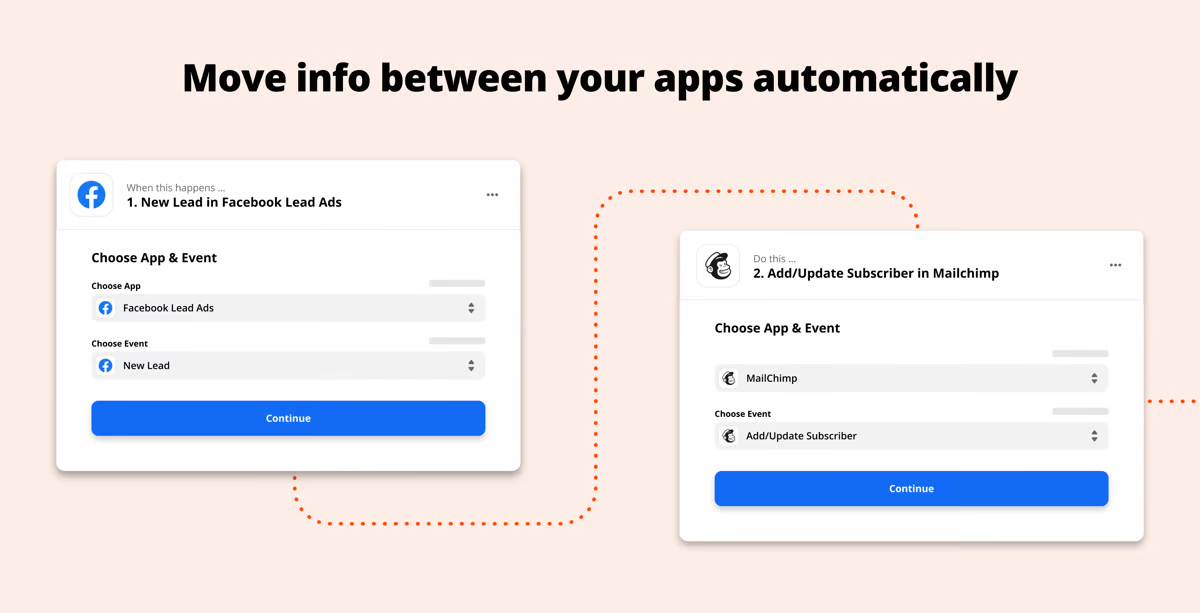
Zapier is a great tool for busy lawyers who want to cut down on repetitive tasks. It connects different apps and lets them work together automatically.
Source: G2
For example, you can set it up so that every time you receive a signed document in Dropbox, it gets copied to a case folder in Google Drive, and you get an email alert without doing anything manually.
By setting up these “Zaps” (which are basically if-this-then-that rules), you can streamline legal workflows and save a lot of time. It also works with thousands of apps, so chances are it fits right into how you already work.
Key Features
- App-to-app automation: Connect tools like Gmail, Google Docs, Clio, and Dropbox to run tasks automatically.
- No-code setup: Create workflows using simple trigger-and-action rules.
- Custom workflow rules: Automate document routing, alerts, and status updates.
- Wide app compatibility: Integrates with thousands of business and productivity platforms.
11. Slack
Slack is a messaging app that helps legal teams communicate quickly and easily. You can set up channels for different cases or departments and keep all your conversations organized. It’s easy to share files, ask quick questions, and get real-time updates.
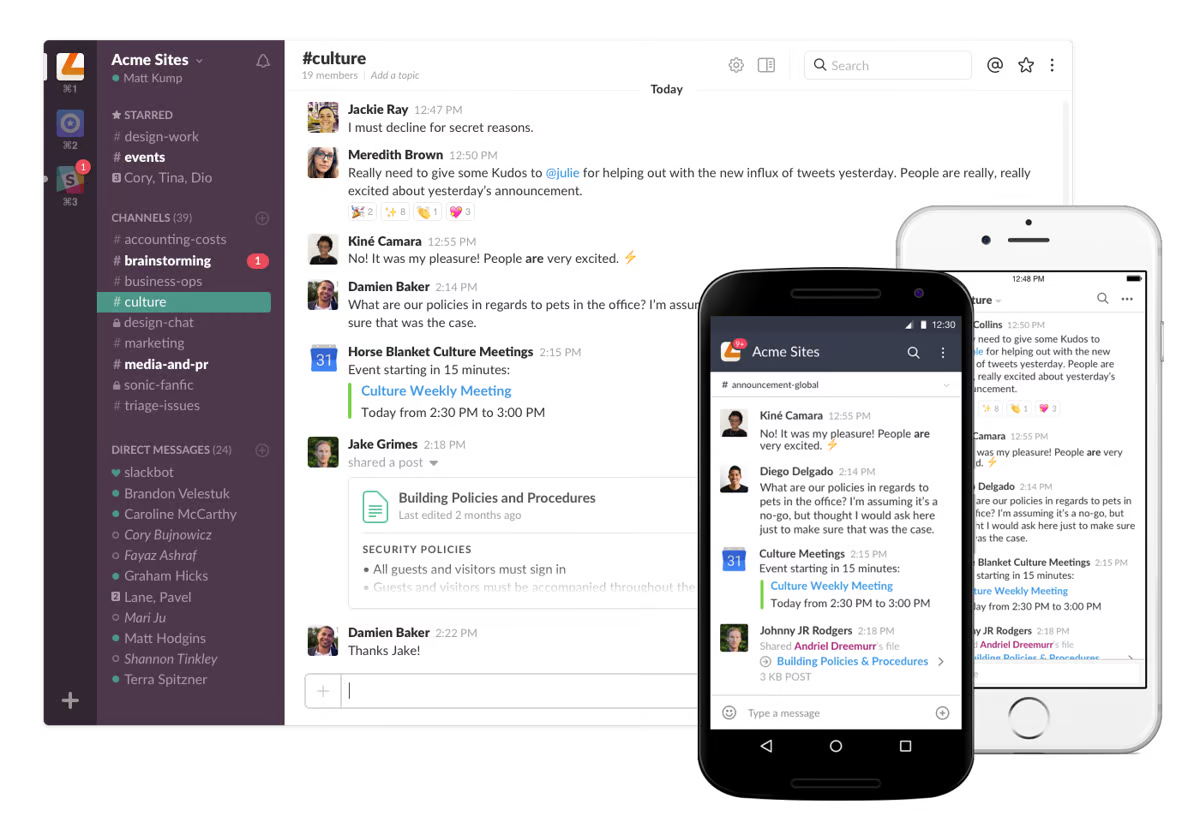
Source: G2
Key Features
- Channel-based messaging: Organize conversations by case, team, or topic.
- Direct messaging: Communicate privately with colleagues when needed.
- Searchable message history: Quickly find past discussions and shared files.
- Cross-device access: Use on desktop and mobile without losing updates.
- App integrations: Connect with tools like Google Drive, Zoom, and Calendly.
12. QuickBooks Online
QuickBooks Online is a cloud-based accounting platform that many law firms use to manage their finances in one place.

Source: G2
It covers billing, expense tracking, reporting, and payment processing without requiring a complicated setup. The layout has a simple interface, which makes it easier to navigate even if accounting isn’t your focus.
It works well for solo attorneys and small to mid-sized firms that want clearer visibility into revenue, outstanding invoices, and overall cash flow. You can attach detailed notes to transactions, categorize expenses, and connect your bank accounts for automatic updates.
Key Features
- Invoicing and online payments: Send invoices and accept online payments directly from clients.
- Integrated payment processing: Manage credit card and ACH transactions within the platform.
- Time tracking tools: Log billable hours and convert them into invoices.
- Expense tracking with detailed notes: Attach receipts and add context to each transaction.
- Set reminders: Automate payment reminders to reduce follow-ups.
- Mobile access and digital wallet support: Monitor finances and track payments on the go.
13. Toggl Track
Toggl Track is a time-tracking app built for professionals who want clarity without a complicated setup.
It’s especially helpful if you’re balancing multiple clients, matters, or internal tasks and want a cleaner picture of how your hours break down.
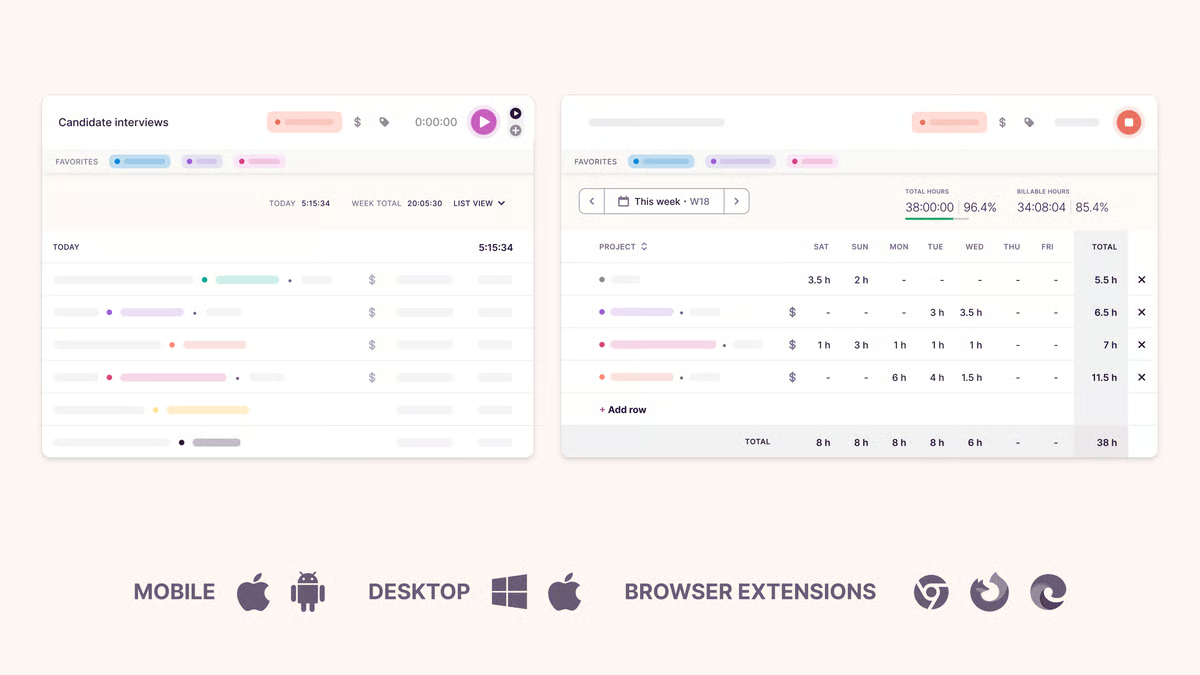
Source: G2
The layout is also straightforward, so logging time doesn’t feel like another chore at the end of the day.
Key Features
- One-click timers and manual entry: Start tracking instantly or log time after completing a task.
- Client and matter tagging: Assign hours to specific cases or projects for better organization.
- Clear reporting tools: Generate easy-to-read summaries of billable and non-billable time.
- Multi-platform support: Available on desktop, mobile, and browser extensions.
14. Zoom
Zoom has become a standard meeting platform for many professionals, including those in the legal world.
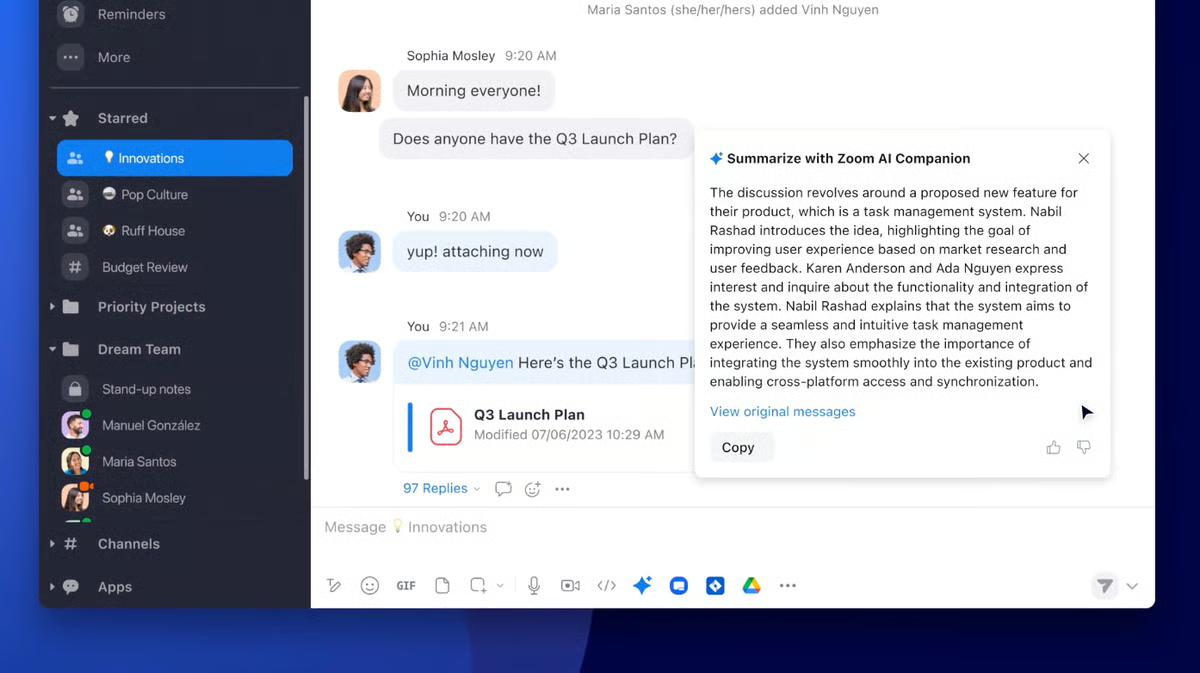
Source: G2
It supports virtual client meetings, internal team discussions, and remote appearances when needed. The setup is straightforward, and joining a meeting typically takes only a link and a few clicks.
It works reliably across devices, which makes it practical for firms coordinating across offices or time zones.
Key Features
- High-quality video and audio: Stable calls for client meetings and team discussions.
- Built-in scheduling tools: Coordinate meetings with calendar and time zone support.
- Screen sharing and recording: Present documents and save sessions when needed.
- Cross-platform access: Available on desktop and mobile devices.
15. Otter.ai
Otter.ai is a transcription tool that turns spoken conversations into searchable text. It’s useful for lawyers who want a written record of meetings, phone calls, or other audio recordings without taking manual notes the entire time.
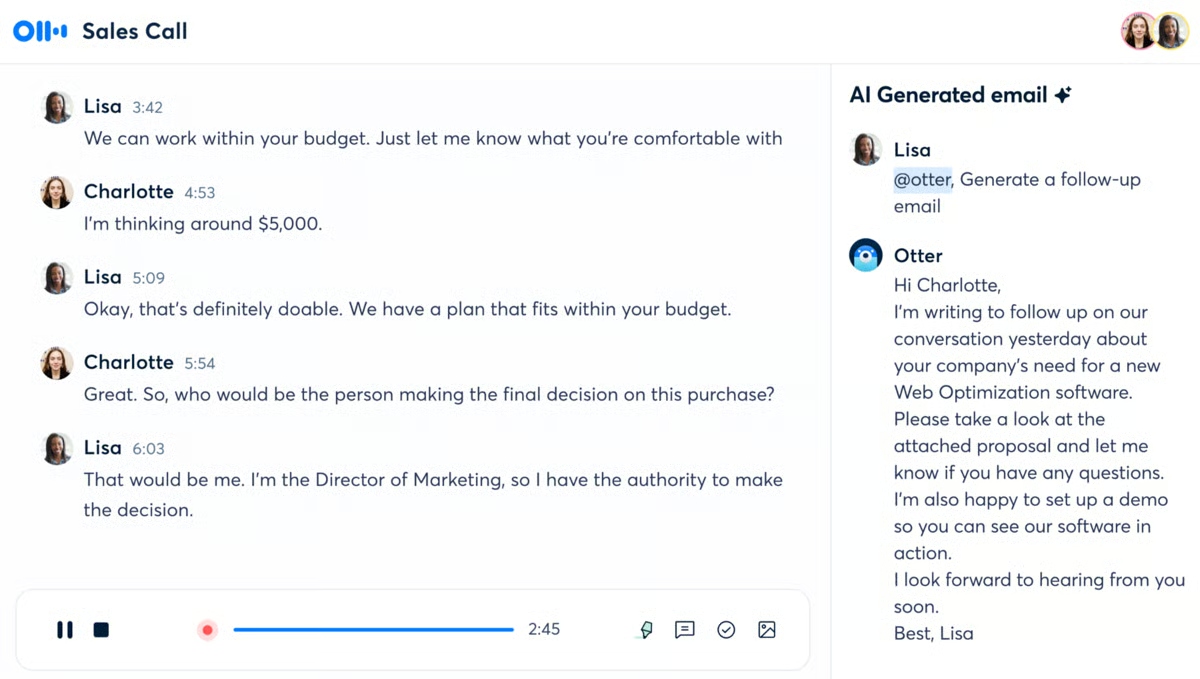
Source: G2
You can record directly inside the app or upload existing audio files, and the transcript appears within minutes. The interface is straightforward, which makes it extremely easy to review conversations, highlight key sections, and share notes with your team.
It works well for internal meetings, client discussions, and strategy sessions where capturing details matters.
Many users consider it a great app for organizing spoken information in a way that’s actually usable later.
Key Features
- Automatic transcription: Convert phone calls and audio recordings into searchable text.
- Live recording and uploads: Record in-app or import existing audio files.
- Searchable transcripts: Find keywords quickly within long conversations.
- Collaboration tools: Highlight, comment, and share transcripts with your team.
- Cross-device access: Use on desktop or mobile devices.
16. Feedly
Feedly is a smart news reader that helps lawyers stay updated on legal trends, case law, and industry news, all in one place. You can follow blogs, court updates, news sites, and even YouTube channels, then read them in a clean, organized feed.
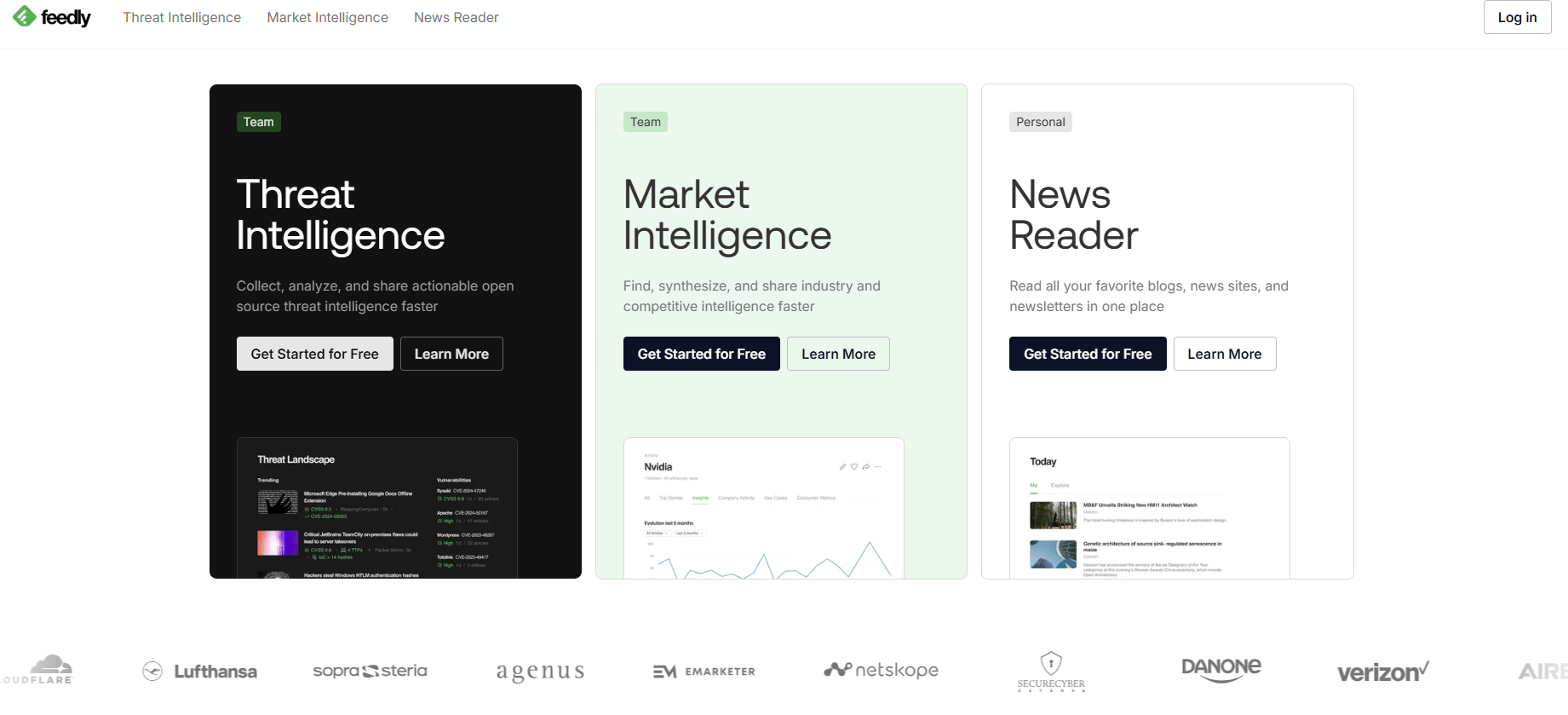
Source: Feedly.com
It’s a great way to cut down on time spent checking multiple websites. Feedly also lets you group your sources into categories, so you can quickly scan updates on specific topics like litigation, privacy law, or tech news whenever you have a free minute.
Key Features
- Custom news feeds: Follow legal blogs, court updates, and industry sources in one place.
- Organized categories: Group content by topic for easier scanning.
- Clean reading interface: View articles in a distraction-free layout.
- Web and mobile access: Check updates from desktop or mobile devices.
- Sharing and saving tools: Send articles to your team or bookmark for later reference.
17. LastPass
LastPass is a secure password manager that helps legal professionals keep their login information safe and organized.
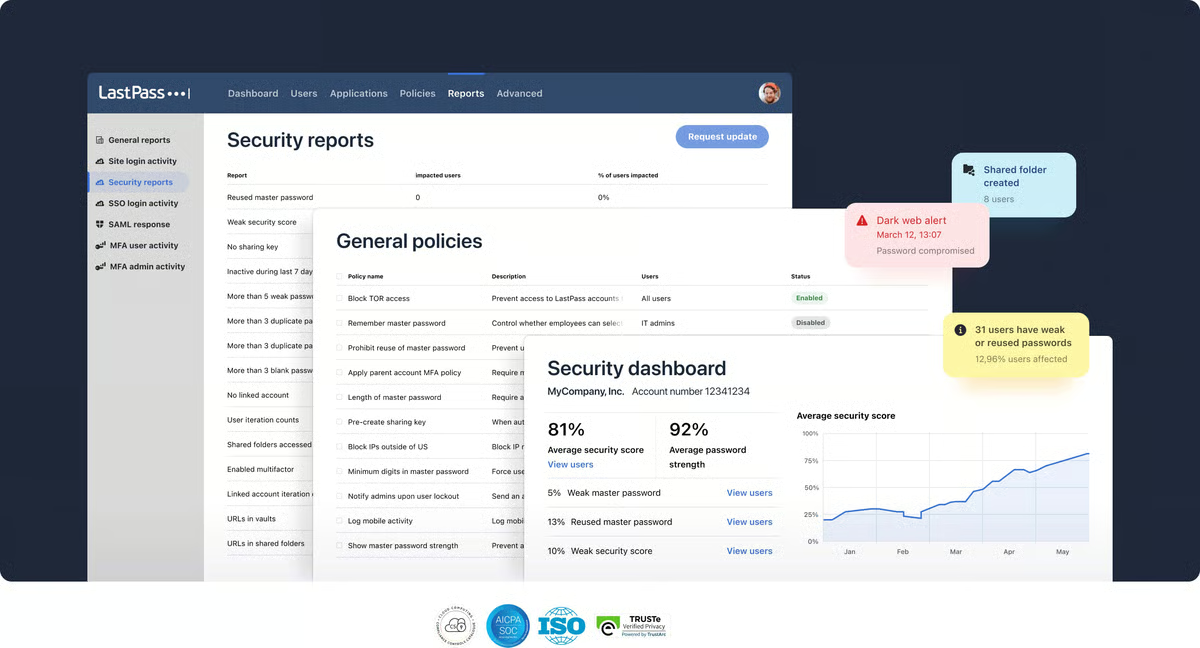
Source: G2
Instead of writing down passwords or reusing the same ones, you can store them all in one secure vault. Just remember one master password, and LastPass handles the rest.
It’s a smart way to protect sensitive client data and save time when jumping between tools.
Key Features
- Secure password vault: Store and autofill login credentials across websites and apps.
- Password generator: Create strong, unique passwords for each account.
- Secure sharing options: Share credentials safely within your team.
- Cross-platform support: Works on browsers, desktop applications, and mobile devices.
18. Calendly
Calendly takes the back-and-forth out of scheduling by letting others book time with you based on your availability. It’s a good app for lawyers managing client meetings, and it’s also a good tool for law students coordinating study groups or interviews.
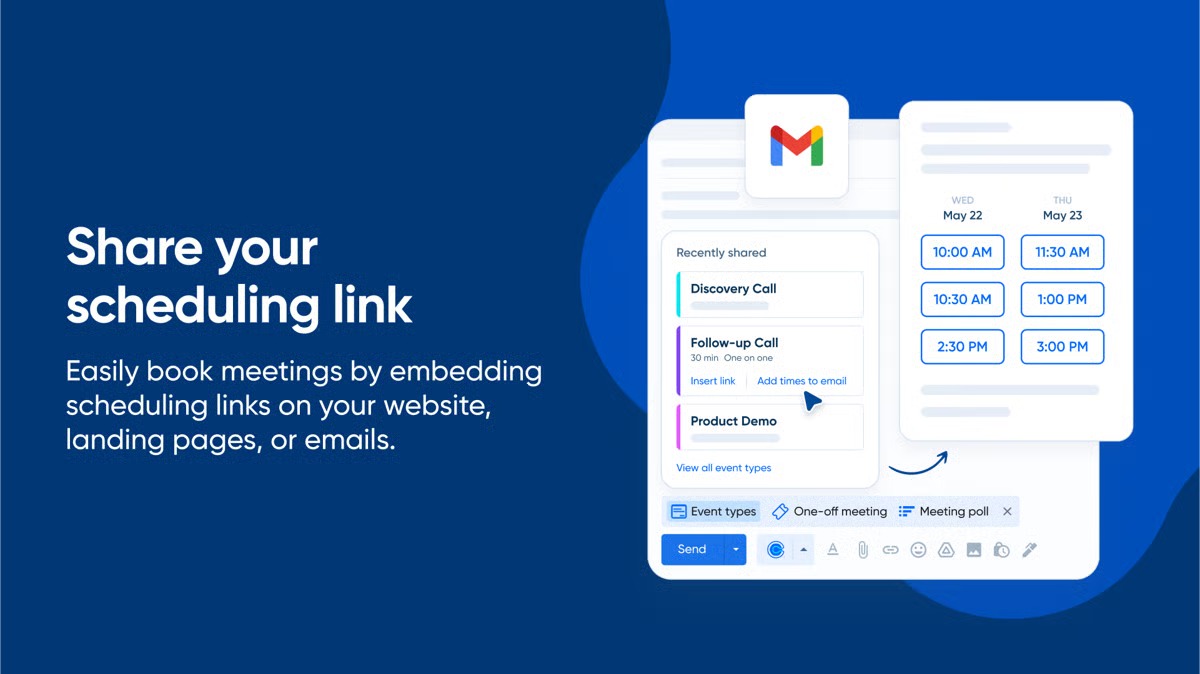
Source: G2
The app works smoothly on desktop, iOS, and Android devices, which makes it easy to manage your schedule from anywhere.
Key Features
- Self-service scheduling: Allow clients and colleagues to book meetings based on your availability.
- Automated reminders: Send calendar invites and email confirmations automatically.
- Calendar integrations: Sync with Google Calendar, Outlook, and Zoom.
- Cross-device access: Manage bookings on desktop, iOS, and Android devices.
19. Asana
Asana is a task and project management app that helps law firms organize work and keep track of who is responsible for what. It allows you to break cases into smaller steps, assign tasks, and monitor deadlines in one shared space.
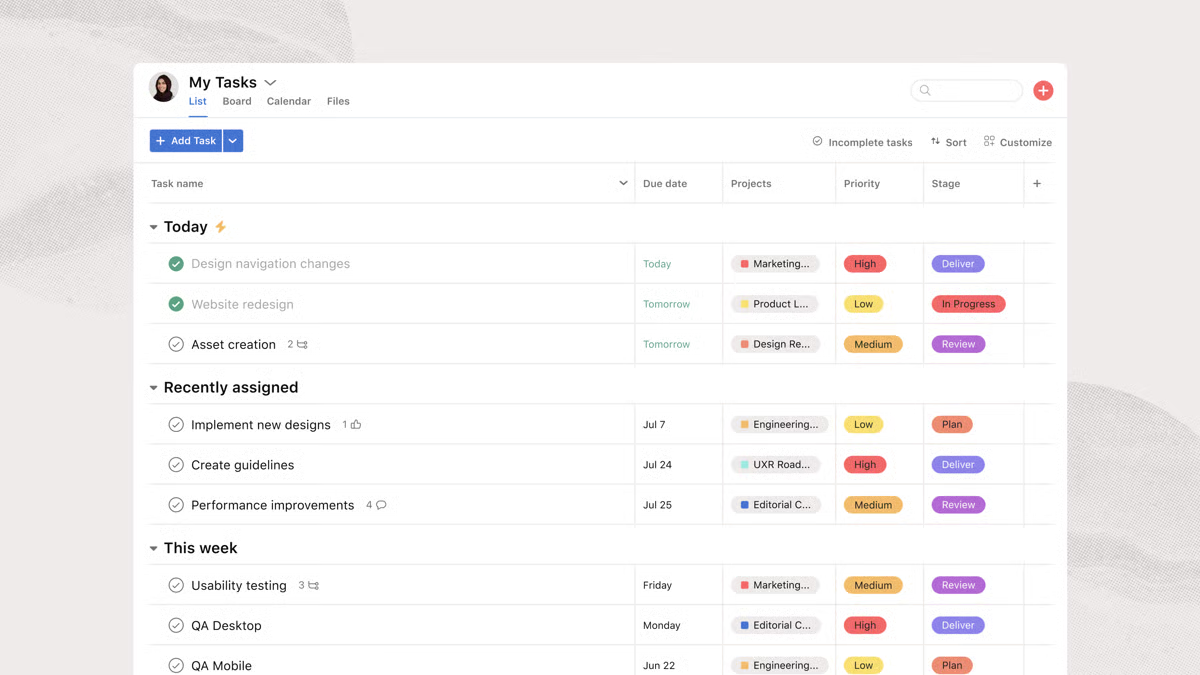
Source: G2
Key Features
- Custom workflows: Create task lists and timelines tailored to each matter.
- Task assignment and deadlines: Assign responsibilities, add notes, and set due dates.
- Multiple project views: Track progress using boards, calendars, or list views.
- Cross-platform access: Stay updated on desktop and mobile devices.
20. ChatGPT
ChatGPT is an AI app that can help with writing, research, brainstorming, and even reviewing legal language.
While it’s not designed specifically for legal professionals, many lawyers use it to speed up routine tasks like drafting emails, rewording documents, or summarizing long content. It can be a handy assistant as long as it’s used with care.
Source: ChatGPT.com
An internet connection is required to use it, and it’s best treated as a support tool, not a replacement for legal judgment.
Key Features
- Content drafting and editing: Generate, rephrase, and summarize written material.
- Question answering: Provide explanations and quick research support.
- Brainstorming assistance: Help outline ideas or refine arguments.
- Web and mobile access: Available through browser and mobile apps.
21. Google Calendar
Google Calendar is one of the favorite apps lawyers rely on to keep deadlines, meetings, and court dates organized in one place. It offers a simple way to schedule appointments, block focused work time, and avoid double-booking.

Source: Indeed.com
Because it connects easily with email and other productivity tools, creating a calendar event often takes just a click. You can also share calendars with colleagues or assistants, which makes coordination smoother inside growing firms.
Key Features
- Quick event creation: Add a calendar event directly from email or within the app.
- Easy scheduling: Schedule appointments with built-in availability visibility.
- Shared calendar access: Share calendars with team members for better coordination.
- Cross-platform support: Use on desktop, mobile, and tablet devices.
Start Automating Your Discovery Documents Today
The point of this article was simple: lawyers don’t need to do everything the hard way.
With the right apps, staying organized, saving time, and keeping your practice running smoothly is actually possible. From note-taking to time tracking to team communication, there’s a tool that fits the way you work.
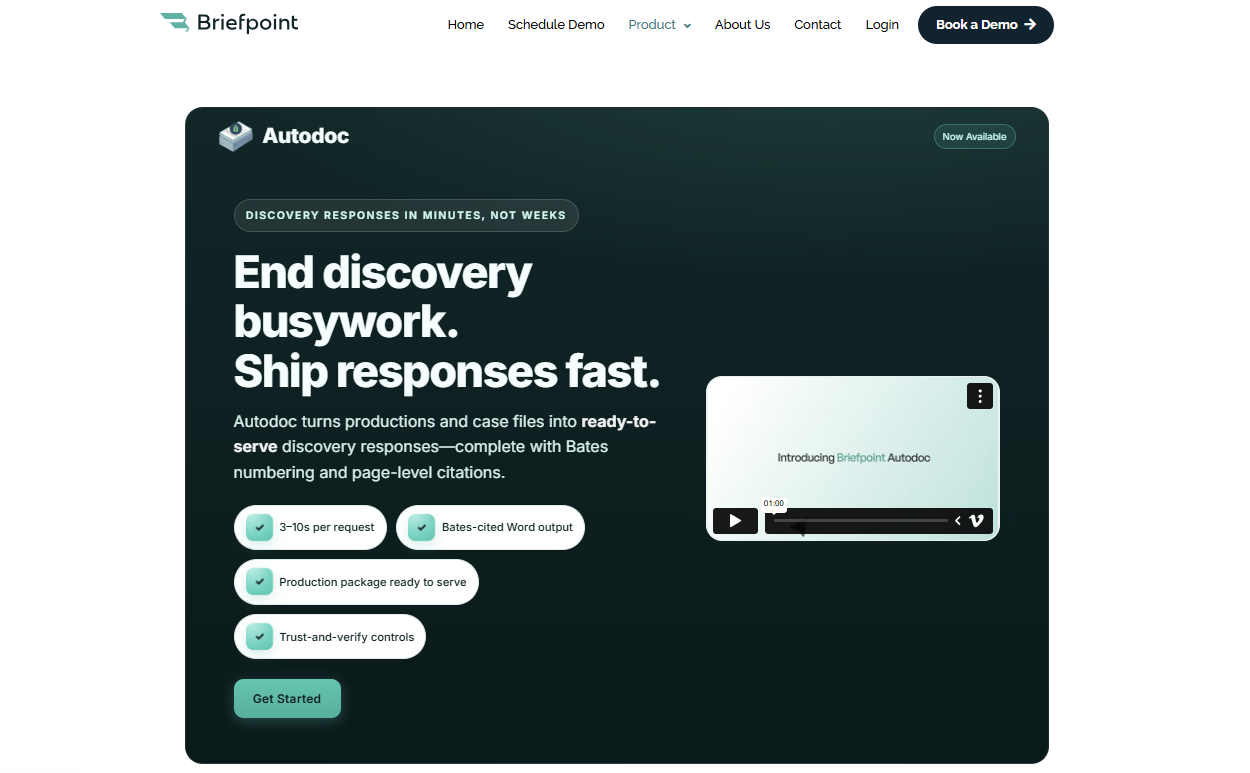
But if there’s one task that still eats up too much of your day, it’s drafting discovery documents.
Briefpoint can make a real difference. It’s built specifically for lawyers who want to cut hours of drafting down to just minutes without sacrificing quality or control.
If you’re ready to spend less time formatting and more time lawyering, give Briefpoint a try.
Overview of Interrogatories in Discovery (2026 Full Guide)

Interrogatories play a key role in legal cases. Their main purpose is to help attorneys gather critical information from the opposing party.
However, drafting them effectively isn’t always straightforward.
Asking the right questions requires a full understanding of the case, careful wording, and a strategic approach. At the same time, legal professionals must balance cooperation with protecting privileged information, all while keeping costs and billable hours in check.
It’s a delicate process, and mistakes can lead to wasted time, incomplete responses, or unnecessary disputes.
We created this guide to break down the essentials of crafting strong interrogatories that drive cases forward. You’ll learn how to gather and share key details while avoiding common pitfalls that complicate litigation.
Understand the Purpose of Your Interrogatories
Before drafting your questions, take a step back and clarify what you’re trying to accomplish. The stronger your strategy, the more useful the responses will be.
Are you gathering facts, identifying legal arguments, or uncovering key documents? Knowing your goals upfront will help you craft more precise and effective interrogatories.
Interrogatories often serve multiple purposes, so it’s important to be strategic in how you frame them. Here are some common objectives:
- Gather factual details: Ask for specifics about the case, such as the parties involved, potential damages, and the events leading up to the dispute. If the party served is a public or private corporation, you may also want details about company policies, employees involved, or internal records.
- Obtain key documents: Request financial records, written witness statements, police reports, or any other discovery documents that could be relevant. This can help clarify the timeline of events and provide supporting evidence.
- Clarify legal arguments: Identify the statutes, case law, or legal theories the other party intends to rely on. This insight can help you anticipate their strategy and prepare counterarguments.
- Identify witnesses: Find out who was present at key moments and whether they can provide testimony. Their statements could shape the direction of the case.
Before you serve interrogatories, make sure each question has a clear purpose. Well-crafted interrogatories improve your chances of getting meaningful responses while keeping the process efficient and focused.
Learn to Respond Effectively to Interrogatories
For the answering party, interrogatory responses are rarely simple. Each answer becomes part of the record, and once it’s served, it can shape depositions, motions, and trial strategy.
That’s why the responding party needs more than surface-level accuracy. You have to fully understand what the propounding party is actually asking and why.
Start with the intent behind the question. Is the party making the request trying to pin down a timeline? Lock in a damages theory? Identify witnesses for later depositions?
Your response should address the question directly without volunteering extra material that expands the scope of the discovery process.
Keep a few principles in mind:
- Rely on documented facts rather than memory or assumptions.
- Answer only what is asked and avoid broad narrative responses.
- Object when appropriate if a request is vague, irrelevant, or unduly burdensome.
- Consider producing business records if they contain the responsive information.
For example, if the propounding party asks you to “describe all communications related to the contract,” that may be overly broad. A targeted discovery objection, combined with reference to identified emails or contract files, can protect your client while still providing a proper response.
Draft Interrogatories Strategically
Drafting interrogatory questions takes planning. In most cases, you’ll send interrogatories early in the discovery process to seek information that shapes depositions, document requests, and case strategy.
Since a party may serve more than one set (subject to applicable rule limits), each interrogatory asks something that should move the case forward.
Keep these principles in mind:
- Ask specific questions: Avoid vague written questions that invite objections. Tailor form interrogatories to your facts so the responding party can clearly determine what is being requested.
- Build in sequence: Structure interrogatory questions so one leads to the next. A logical order makes it harder to dodge key facts and helps you identify gaps that call for additional information.
- Focus on what’s missing: Use interrogatories to seek information not found in produced documents or prior disclosures.
- Stay factual: Don’t draft an interrogatory that asks for legal conclusions. Stick to facts that can be verified and answered separately.
- Watch the rule limits: Federal and state rules often cap how many interrogatories a party may serve. Be deliberate, especially if you anticipate serving more than one set.
Deal With Objections and Motions Effectively
Interrogatories don’t always go smoothly. Even if you follow best practices, objections and motions are common (sometimes as delay tactics). Whether you’re handling a car accident case or a complex corporate dispute, knowing how to push back effectively can keep things moving.
Start by reviewing objections carefully. Are they valid, or is the opposing side just trying to stall? In federal courts, objections must be backed by law, not just broad claims of over-generality.
If their reasoning is weak, push back and demand answers. If necessary, file a motion to compel the opposing party to respond.
If an interrogator asks you to disclose privileged information, especially in cases involving a governmental agency, consider seeking a protective order. Courts may allow you to limit disclosure to protect sensitive details.
When you serve answers, make sure they address all relevant questions while avoiding unnecessary disclosures.
Legal AI tools like Briefpoint can help by identifying baseless objections, drafting responses, and managing legal correspondence efficiently.
Sample Interrogatory Questions
Interrogatory questions vary depending on the type of lawsuit, the court, and the claims at issue.
In personal injury claims, for example, both the plaintiff and defendant use written questions to lock down facts that may later shape admissible evidence in circuit court.
Here are common examples used in civil procedure:
- Identify witnesses: “Identify all persons with knowledge of the incident described in the complaint.” This helps determine who may testify and what evidence might surface later.
- Describe the event: “State in detail how the accident occurred, including date, time, and location.” A clear narrative answer can expose inconsistencies or confirm key facts.
- Explain damages: “Itemize all injuries and medical treatment you claim resulted from the incident.” In personal injury claims, this clarifies the scope of alleged harm.
- Identify documents: “Identify all documents supporting your defenses in this lawsuit.” This connects written responses to potential exhibits.
- Update prior statements: “State whether any prior response is no longer true and explain why.” This preserves accuracy and prevents shifting positions later.
Make Interrogatories Less of a Hassle With Briefpoint
Written interrogatories have a way of expanding. What starts as a standard set can turn into pages of definitions, objections, document mapping, and formatting clean-up. Add a few burdensome interrogatories to the mix, and your week disappears into review and revision.
Briefpoint was designed for that exact reality.
If you’re propounding discovery, you can upload a complaint and generate jurisdiction-ready interrogatories, requests for admission, and requests for production in minutes.
The requests are structured, clearly defined, and formatted correctly from the start, so you’re not fixing numbering or rewriting compound questions at midnight.
If you’re responding, the workflow is just as direct. Upload the written interrogatories, add objections and answers with AI assistance, and export a Word document that’s ready to review and serve.
Autodoc changes the production side of the equation. Drop in your RFPs and case files, and it:
- Finds responsive documents
- Drafts captioned responses with page-level Bates citations
- Packages a production set ready to go
You still control every edit. You still make the legal calls. The repetitive mechanics around discovery simply stop eating 30 to 40 hours per matter.
How to Automate Legal Discovery in 2026 (Using AI)

How to Automate Legal Discovery Responses
Automating legal discovery responses involves choosing appropriate software from the many options available on the market. The solution you select will determine how much you can reduce labor and increase your billable hours.
The following is a step-by-step guide to how the most advanced AI-powered software automates legal discovery responses.
These products balance the need to speed up work against the requirement for legal accuracy and compliance.
1. Analyze the Discovery Request
Discovery automation tools start by reading the request you received from opposing counsel.
Using artificial intelligence, the system scans the document, separates each interrogatory or request, and pulls out the important details.
Then, the software organizes everything into a clean structure to give you a quick overview of the issues in play. This can even support early case assessment, since you can spot patterns, pressure points, or themes right away.
For example, Briefpoint uses machine learning and natural language processing to turn dense discovery requests into simple, organized lists. You can review each item clearly, think through discovery objections, and decide how it connects to your broader strategy or a potential motion.
In short, you get clarity fast. The platform also recognizes formats used in all 50 states, so the structure aligns with local rules from the beginning.
2. Respond
Legal AI tools next use AI to help you respond faster to legal discovery requests. Tools use a variety of templates and libraries to insert language that is legally permissible and in your client’s best interest.
For example, Briefpoint provides two ways to automate this process. The first is to click on relevant responses from the menu on the left-hand side. Selecting an objection will cause that response to appear in the text in reply to the request.
However, you can also get the software to suggest objections for you (and why they apply to the request).
Using this method will highlight anything the solution thinks is relevant, given the input text. Then, you can quickly review them and edit them where appropriate.
Finally, you can use these tools to add a substantive response. This automated piece of text provides additional context for your reply.
Briefpoint also has a built-in feature called Bridge, which automates the process of collecting client responses and integrating them into discovery documents.
Bridge lets you select interrogatories, translate them into easy-to-understand language, and send them to your client with just a few clicks. Once they respond, Bridge will plug their responses into your document.
3. Download And Review
Finally, you will need to download and review the response document. Solutions vary in their usability. Some require using their integrated word-processing software, while others force you to use PDFs.
In contrast, Briefpoint lets you download your document into Microsoft Word, which probably integrates better into your workflow than a separate review platform.
You can see the edited document at any production stage and add or subtract from it whenever you want.
How to Automate Legal Discovery
AI tools can also automate the creation of legal discovery documents, such as requests for admission, requests for production, and interrogatories.
These facilities mean you can automate the initiation aspect of legal discovery work, not just the response.
1. Design Your Document
The first step is to draft your propounding discovery document. Solutions begin by collecting essential information to populate the request.
For instance, Briefpoint asks for information about the case name, request type (request for admission, request for production, or interrogatory), and the responding party.
You can also link it to an existing case or client or a new one.
2. Add Requests
The next step is to add your requests. Document automation software accelerates this process by including pre-built requests grouped by case type and theories of law.
Briefpoint lets you select interrogatories related to “auto torts” with a click and add them to your request.
3. Document Review
The final step is to download and review your newly generated request document. Again, Briefpoint lets you edit it in Word, which is ready to attach to an email or print after the review process.
If you want to learn more about Briefpoint’s process, book your demo today!
The Benefits of Automating Legal Discovery
Automating legal discovery work isn’t just about saving time and money, though it certainly does that.
The real benefits go beyond efficiency. It helps law firms improve accuracy, client relationships, and overall workflow, which will ultimately translate to a better bottom line and more resolved cases for clients.
Here’s a deeper look into how AI legal discovery can transform the way you manage cases.
Reducing Errors in Discovery Responses
One of the biggest advantages of using automation in legal discovery is fewer mistakes. Discovery leaves very little room for error. A missed objection, an incomplete response, or inconsistent language can create real problems for litigation teams.
AI technology helps reduce that risk. At the very least, it reviews large volumes of requests and supporting documents, flags relevant information, and applies structured formatting so nothing gets overlooked.
That consistency matters, especially when you’re juggling multiple cases with tight deadlines and strict compliance requirements.
For example, automation can:
- Flag duplicate or overlapping requests so you don’t respond inconsistently
- Suggest standard objections that align with the type of request served
- Highlight missing responses before the document is finalized
- Keep formatting consistent with court rules and local practice standards
Picture a 30-question discovery set. Manually drafting responses after a long day makes it easy to skip a subpart or copy the wrong objection. On the flip side, an automated system builds from a structured template and checks for gaps to give you a cleaner first draft to review.
Protecting Privileged Information
Handling large volumes of documents manually increases the risk of accidentally revealing privileged information.
Automation tools are designed to offer permissible retorts to help you carefully craft responses while protecting sensitive data.
These tools can highlight or hide privileged information, which helps make sure you comply with legal requirements and maintain the confidentiality of involved parties.
Improving Client Relationships
Discovery can quietly pull you away from your clients. Hours go to reviewing files, organizing responses, and tracking details. That leaves less time for real conversations about what the case means and where it’s heading.
When legal automation handles the repetitive parts, legal teams have more room to focus on the relationship itself. You can spend that time on more important things like walking a client through risks, refining case strategy, or preparing them for a deposition.
Those conversations build confidence and show that you’re thinking ahead and not just reacting to paperwork.
For example:
- Instead of emailing back and forth to clarify interrogatory answers, you review organized responses and discuss strategy in one focused call
- Instead of scrambling to finalize a production, you meet with the client to explain what the other side is likely to do next
- Instead of spending hours formatting objections, you use that time to gain insight into facts that could shape a motion or negotiation
Clients notice quality. They notice when their attorney is present, prepared, and proactive. Automating discovery gives you the space to act as a true partner in the matter, not just the person managing documents.
Shifting Focus to Higher-Value Tasks
When automation handles repetitive steps, legal teams can put their energy somewhere more useful. You spend less time managing documents and more time thinking through strategy, preparing for hearings, or working through negotiations.
In a busy legal practice, focus matters. If your attention is tied up making sure every response is complete and formatted correctly, it’s harder to step back and look at the bigger picture.
Automation clears some of that space. The draft is already structured. The details are organized. Review feels more deliberate.
That shift gives you room to surface meaningful insights and make smarter decisions about how the case should move forward.
Improving Efficiency and Workflow
Discovery often slows down in small, avoidable ways. Someone is waiting for a document map. A draft needs formatting fixes. Bates numbers have to be double-checked. None of it is complex on its own, but together it stretches the timeline.
Automation smooths those pressure points. Requests are organized at the start, responsive documents are matched in context, and drafts come out structured and ready for review. The time that used to go toward coordinating pieces now goes toward reviewing the substance.
Allowing legal teams to move through discovery with a clearer structure makes the work feel more controlled. You can discover gaps or inconsistencies earlier, make adjustments before deadlines tighten, and keep matters progressing without constant course correction.
Overhaul Your Discovery Workflow With Briefpoint
Discovery has a way of taking over your calendar.
One set turns into thousands of pages. Thousands of pages turn into manual review, document mapping, drafting, formatting, Bates numbering, and assembling a production that still needs one more pass before it goes out the door.
Briefpoint was built to cut through that cycle.
With Autodoc, you upload the complaint, RFPs, and production files. The system surfaces responsive documents for each request, generates a Word response with page-level Bates citations, and packages a production set that’s ready to serve.
What used to take up 30–40 hours can move in minutes.
You’re not handing control to a black box. You can see where the system searched, confirm or remove files, tag privileged material, and edit everything in Word before anything leaves your office. The workflow stays familiar. The time drain doesn’t.
If discovery has started to feel like a recurring time sink, it’s worth seeing what a different process looks like.
Schedule a demo and walk through your next set with Briefpoint.
Paralegal Drafting Documents: Roles, Rules, and Real Limits
What Is A Paralegal And What Do They Do?
A paralegal is a legal professional who works under the supervision of a lawyer to support legal tasks. They’re not licensed to practice law, but they’re trained to handle a variety of responsibilities that help law firms, corporations, and government agencies run smoothly.
From legal research to document prep, paralegals are trusted with a big part of the workload. They must follow strict rules and can’t provide legal advice, but they still play a key role in legal services by taking care of the behind-the-scenes work that keeps cases moving forward.
Common Tasks Paralegals Handle
Paralegals juggle a mix of duties that keep legal teams organized and efficient. Here’s what they typically do:
- Draft legal documents like contracts, discovery responses, and pleadings.
- Research laws and case history to help lawyers build their arguments.
- Organize case files and maintain document management systems.
- Handle client communication under supervision, such as scheduling or updates.
- File paperwork with courts and agencies on time.
- Prepare trial materials like summaries, timelines, and exhibit lists.
- Review documents for accuracy and completeness.
Can Paralegals Draft Legal Documents?
Yes, paralegals can draft legal documents, but there are clear boundaries. They’re allowed to prepare documents as long as a licensed attorney supervises and approves the final versions.
This means paralegals can take on much of the initial drafting work, which saves a lot of time. However, they can’t act independently or offer legal advice during the process. Every document they prepare must ultimately be reviewed and signed off by the supervising attorney.
The rules vary slightly depending on the state or country, but the general idea is the same. Paralegals can assist with document preparation, but can’t replace a lawyer’s judgment or authority.
Drafting contracts, pleadings, affidavits, and other legal materials is part of their regular legal workflow, especially in busy law firms. Still, it’s important to remember that clients can’t rely solely on paralegals for legal documents without lawyer involvement.
At the end of the day, lawyers are held responsible for the legal accuracy and quality of all documents that come out of their office, even if a paralegal does the bulk of the work behind the scenes.
What Kind of Documents Can Paralegals Draft?
Paralegals are trained to support lawyers by preparing various legal documents that play a big role in legal proceedings. They often rely on legal research databases to gather accurate information and ensure the documents are complete and well-informed.
Plus, the drafting process involves using templates, reviewing past cases, and double-checking facts to create legally sound documents.
Here are some of the most common types of legal documents paralegals draft:
- Contracts: Employment agreements, service contracts, non-disclosure agreements.
- Pleadings: Complaints, answers, motions, and other court filings.
- Discovery documents: Interrogatories, requests for production, and responses.
- Affidavits and declarations: Written statements sworn to be true under oath.
- Wills and trusts: Basic estate planning documents prepared under lawyer supervision.
- Settlement agreements: Used to resolve disputes before or during legal proceedings.
- Legal correspondence: Letters to clients, opposing counsel, or court personnel.
- Case summaries and timelines: Used to support trial prep and presentations.
What Is The Role of Document Automation?
How often does drafting start with opening an old document, saving it under a new name, and carefully combing through it to make sure nothing from the last matter slipped in?
It’s a common habit, and it works. But it also eats up time and leaves room for small, avoidable mistakes.
Document automation reworks that process.
Many documents in your practice follow a familiar structure. Contracts, pleadings, and even legal briefs tend to rely on the same framework, with the facts changing from case to case.
Automation builds your firm’s legal knowledge directly into structured templates. You input the case-specific details, and the system assembles the draft using approved language and formatting rules.
You still control the final product. What changes is how the first draft comes together. Instead of reconstructing the same document again and again, you start with a version that already reflects your team’s standards.
That shift frees up time for closer review, sharper analysis, and better decision-making. These are the parts of drafting that actually call for your attention.
What Are The Benefits of Legal Document Automation?
Legal document automation turns a task that used to take hours into one that can now be done in minutes.
For paralegals, especially, it means spending less time on repetitive tasks and more time on work that actually needs their input. So, how does this shift affect the way you work?
Here are a few prominent benefits:
Saves Time on Repetitive Tasks
Automation tools take care of the busywork by using pre-built templates and pulling info from sources like forms, legal databases, or past cases.
Instead of typing out the same clauses, headings, and legal terms over and over, you simply enter the case-specific details, and the system handles the rest.
That means you can spend less time on formatting and more time reviewing the final product or conducting legal research when needed. It also makes legal writing faster and less tiring, particularly when working under tight deadlines, ultimately reducing paralegal burnout.
Here’s how it helps:
- Fills in standard legal language automatically
- Pulls client data directly from legal databases
- Reduces time spent rewriting the same documents
- Keeps formatting and structure consistent across drafts
Cuts Down on Errors
Even skilled paralegals run into small drafting mistakes from time to time. When you’re editing line by line, it’s easy to miss a date that wasn’t updated, inconsistent legal terminology, or a section that didn’t carry over correctly.
Those details might look minor, but poorly drafted documents can create real problems, especially when you’re handling complex legal issues.
Document automation helps steady that process. Rather than relying on repeated manual edits, it uses approved templates that already contain the right structure and language. You enter the case information once, and the system places it everywhere it belongs.
Picture a discovery response with the client’s name, case number, and defined terms scattered throughout. Updating each reference manually leaves room for one to slip past you. Automation applies the change across the entire document in one step.
However, that does not replace careful review. The legal profession still depends on attention to detail.
What it does is remove the repetitive mechanics that lead to avoidable errors, so skilled paralegals can focus on things like thorough legal research and making sure the substance of the document holds up.
Keeps Work Organized
Staying organized is one of the biggest challenges in a busy legal practice. When you’re handling several matters at once, it’s not hard for things to get scattered. Unfortunately, these small issues can quickly slow things down or lead to mistakes.
Document automation helps avoid that by keeping everything in one place. Templates, drafts, and final versions are easy to find, clearly labeled, and tied to the right case. You can see who last made edits, what’s been changed, and what still needs review.
Here’s how it helps:
- Keeps documents organized and easy to track
- Connects each draft to the right matter automatically
- Reduces back-and-forth between team members
- Makes sure each document reflects the most up-to-date information
Remember: A great organization goes a long way. By keeping the drafting process clear and structured, automation helps you stay on top of the details and support more successful legal outcomes.
Improves Consistency Across the Board
The legal landscape demands clear, consistent communication. Whether one person or several are involved in drafting, every document needs to match in tone, structure, and formatting.
Document automation helps maintain consistency by using shared templates that apply the same standards across the board.
For example, if two legal assistants draft similar pleadings without legal process automation, one might include case law references while the other skips them. That inconsistency can be confusing or even lead to legal disputes.
Automation keeps everything aligned, which makes it easier to present polished, professional documents every time.
5 Document Automation Best Practices for Paralegals
If you’re a paralegal looking to get the most out of automation tools, there are a few simple habits that can make a big difference:
1. Start With Clean, Approved Templates
One of the most essential skills in legal document drafting is knowing where to start, and that means using the right template. Whether you’re drafting pleadings, contracts, or discovery responses, always begin with a template that’s been reviewed and approved by your legal team.
These templates follow firm-specific formatting, use the correct legal language, and stay in line with procedural rules. Using an outdated or unofficial version can lead to errors that take extra time to fix.
If there’s any doubt, check with a supervising attorney or senior paralegal to make sure you’re working from the most current version.
What approved templates should include:
- Correct court caption and jurisdiction details
- Up-to-date legal terminology and standard clauses
- Clearly marked placeholders for case-specific information
- Consistent formatting for headings, numbering, and spacing
- Required procedural language based on local rules
- Removal of internal notes or outdated references
2. Review Every Output Before It Leaves Your Desk
Document automation software can assemble a draft quickly, but the responsibility for accuracy still sits with you. In legal work, details matter. Formatting must align with court rules, citations must be correct, and the document has to reflect the specific facts of the case.
Before anything moves forward, read the draft closely. Confirm names, dates, defined terms, and headings.
Make sure the structure supports the legal arguments being presented and that nothing feels out of place. Even strong systems can’t fully account for context the way a trained professional can.
Paralegals assist in building the foundation of a document, but part of that role includes spotting inconsistencies and flagging issues early. If a section feels incomplete or a reference doesn’t line up, pause and address it before sending it for review.
3. Don’t Skip the Legal Review
No matter how advanced the software is, an automated draft is never the final version. It still needs a lawyer’s approval before it’s ready to go.
Even if the document looks complete, a supervising attorney needs to confirm that it meets legal standards and serves its purpose. Your role is to make sure the draft is clean, accurate, and easy to review.
This mindset reflects the kind of professionalism that law school teaches and supports your long-term professional development. A careful review can make all the difference in a document’s effectiveness.
4. Stay Updated on the Tools You Use
Legal technology keeps moving. Features get refined, templates improve, and new integrations roll out quietly in the background. In the legal field, those updates can make a noticeable difference in how smoothly your work flows.
It’s easy to keep using a tool the same way you did six months ago. But taking a little time to see what’s new can save you effort later.
Many platforms now connect more closely with other software, like legal research tools, and adapt to shifting legal trends, which means the system may be doing more than you realize.
Briefpoint, for example, regularly adds improvements that support faster drafting and cleaner formatting. We also share short blogs and cheat sheets that walk through ways to use the platform more effectively.
Simple ways to stay current:
- Skim update announcements when they’re released
- Test new drafting or formatting options
- Review short help guides or tips
- Join quick training sessions if your team offers them
5. Use Notes and Comments When Needed
Not every draft will be perfect on the first try, especially when it involves key aspects of a case that require legal interpretation or specialized knowledge.
If you’re unsure about a clause, a date, or how to phrase something specific to the parties involved, don’t guess. Add a clear comment or note for the reviewing attorney.
This kind of communication shows you’re paying attention and thinking through the details. Experienced paralegals know that leaving helpful notes not only speeds up the document review process but also builds trust with attorneys who rely on clean, thoughtful drafts.
Briefpoint Helps Paralegals Be Even More Efficient
Paralegals don’t need another tool that adds steps. They need something that clears bottlenecks.
Briefpoint is built specifically for discovery. It helps you propound and respond to interrogatories, requests for admission, and requests for production in minutes rather than weeks. More than 1,500 law firms use it to cut 30+ hours of drafting time per case.
Uploading a complaint? Briefpoint can generate tailored, objection-aware RFAs, RFPs, and interrogatories based on the allegations.
Responding to discovery? Upload the request, add objections and answers, and export a properly formatted Word document that’s ready for final review and service. It supports all 50 states and federal formatting, with no setup required.
And when production gets heavy, Autodoc takes over the busiest part of the workflow.
Autodoc turns productions and case files into ready-to-serve discovery responses, complete with Bates numbering and page-level citations. Upload your RFPs and production files, let Autodoc identify responsive documents, then download:
- Captioned Word responses with objections and Bates citations
- A Bates-numbered production package ready to serve
- Transparent search controls so you can verify every step
What used to take 30–40 hours can now take minutes.
Want to see it in action? Book a demo.
AI for RFP Responses In 2026 (Detailed)
What Are RFP Responses?
In litigation, RFP responses are your written answers to a request for production.
During discovery, the opposing side sends a list of documents and materials they want you to produce. You respond to each request, stating what will be produced and what objections apply.
A typical set of RFPs can get detailed fast. In a breach of contract case, for example, the other side might request “all communications between the plaintiff and any third party concerning performance of the agreement from January 1, 2022, to present.”
That one request can trigger a search through email accounts, shared drives, chat messages, and archived files.
Your response would clarify what documents are being produced, note any objections to scope or relevance, and state if anything is being withheld. Each answer becomes part of the formal discovery record.
This stage is a critical step in the RFP process. The way you answer questions can narrow disputes or create new ones. So, clear, precise responses help move the discovery process forward and reduce the chances of follow-up fights.
How Does AI Make a Difference?
Drafting RFP responses takes time. Usually, you’re reviewing requests, pulling documents, checking prior language, and making sure every objection and production statement lines up.
AI can help you work through that load in a more structured way. Used correctly, it supports your process without taking control of it.
Here’s where it makes a difference:
- Faster first drafts: AI RFP response software can generate structured responses based on prior filings or templates, which gives you a solid starting point.
- More accurate answers: When trained on your approved language and past responses, AI helps maintain consistency in objections, definitions, and formatting.
- Reduced repetitive drafting: Standard objections and common response language don’t need to be rewritten from scratch every time.
- Higher quality responses: With less time spent on formatting and repetition, you can focus on strategy, clarity, and case-specific nuance.
Take note that AI won’t replace judgment. You still review every response. What it can do is remove some of the mechanical drafting work to give you space to think through the bigger discovery strategy.
Should You Use AI to Respond to RFPs?
You’ve seen how AI can save time. The better question is whether it makes sense for your legal workflow.
If your team handles a steady stream of requests for production, you are likely familiar with how repetitive parts of the process can feel. RFP response automation can handle much of that routine drafting.
There’s also the accuracy piece. AI can help catch errors like inconsistent terminology or missing response language, especially when it’s trained on your prior filings.
Still, not every matter is a good fit. Complex cases with unusual legal issues or sensitive facts demand close attention from start to finish. With that in mind, AI should support your drafting, but not make judgment calls.
For most companies and law firms managing ongoing discovery, the practical benefit is efficiency. You reduce manual work tied to repetitive tasks and gain time to focus on strategy.
Step-by-Step: How to Use AI for RFP Responses
Once you decide AI has a place in your discovery workflow, the next step is using it in a way that supports your existing process.
Here’s a simple step-by-step guide to give you something to base your process on:
1. Build a Structured Response Library
AI can only draft from what you give it. Before you plug anything into an AI platform or RFP software, organize your past responses into a clean, reliable content library.
Start by collecting prior RFP responses, standard objections, recurring definitions, and any formatting your team consistently uses. Then, review everything carefully. Remove outdated language and align terminology. Make sure the material reflects how you currently approach discovery.
Approved content libraries are what make accurate responses possible. If the source material is inconsistent, the output will be too.
This is also where customized prompts come into play. Once your content is organized, you can guide the system to draft in a way that matches your tone and structure.
When set up properly, AI works as a writing partner that builds from language you’ve already vetted rather than guessing at what you meant.
You might want to include:
- Standard discovery objections
- Definitions and general instructions
- Common response language
- Formatting templates
- Prior court-approved responses
- Case-specific variations
2. Select an AI RFP Response Tool
Once your content library is organized, the next step is choosing the right RFP tool.
Not all AI RFP software is built the same, especially in a legal discovery context. You want technology that supports structured drafting, consistent objections, and production-ready formatting.
Look for robust features like document parsing, objection-aware drafting, Word export, and secure data handling. Strong RFP automation should reduce manual formatting and repetitive drafting without taking control away from you.
Briefpoint is one example built specifically for legal discovery. It allows you to propound and respond to requests for production, interrogatories, and requests for admission. Plus, its Autodoc feature can turn large productions into Bates-cited, formatted responses in minutes.
Firms use it to cut response time dramatically while keeping review and verification in their hands. It’s SOC-2 certified, works in all 50 states and federal courts, and doesn’t use your data to train outside models.
When evaluating any AI RFP software, focus on security, accuracy, and how well it fits your existing workflow.
If you want to see how Briefpoint handles RFP automation in practice, book a demo here.
3. Upload and Organize Prior Responses
After choosing your tool, start feeding it the material you already rely on. Upload prior RFP responses, standard objections, formatting templates, and definitions so the system can begin leveraging AI with trusted language.
Good knowledge management makes a real difference here. If your files are scattered or inconsistently labeled, your RFP workflows will feel the same way.
Also, group responses by case type, subject matter, or request category. Keep recurring objections in one place. Separate general instructions from case-specific language.
For example, if you regularly handle personal injury cases, create a section for common medical record objections, time-frame limitations, and ESI language used in those matters. When a similar request comes in, the tool can pull relevant content without digging through unrelated files.
4. Analyze Incoming Requests for Production
Before drafting anything, take time to review the incoming RFP carefully. AI can help by summarizing long sets of RFP questions and highlighting key themes, time frames, and definitions.
Start by identifying what’s actually being asked. Are the requests broad? Do they overlap? Are certain terms undefined or ambiguous? A quick AI-assisted summary can surface patterns that aren’t obvious at first glance.
You can also compare the new requests against past proposals or prior RFP responses in similar cases. That side-by-side review helps you see where standard language applies and where the facts require something more tailored.
For instance, if multiple requests target communications during a specific date range, grouping them early makes collection and drafting more efficient.
5. Generate Initial Draft Responses
Now you’re ready to draft, and this is where generative AI can save serious time. Rather than typing out each response manually, you prompt the system with the specific RFP questions and relevant case details.
Always remember that clear instructions make a difference. If you include the date range, defined terms, and any known objections, most AI models can assemble a solid first draft using your approved language.
You can use it to generate:
- Tailored objections that track the wording of the request
- Production statements in your firm’s standard format
- Definitions and general instructions
- Discovery responses that pull from similar past matters
This draft won’t be the final version, and it shouldn’t be. Human input is still critical. You’ll review for accuracy, confirm the facts, and adjust tone based on your strategy. This brings us to the next step.
6. Review and Refine For Case Strategy
Now you read the draft like opposing counsel would. AI-native platforms can assemble responses quickly, but they don’t understand your litigation posture or the nuances of your client’s facts.
Start with a manual review. Confirm that each objection matches your intended position. Check that production language reflects what you’re actually prepared to turn over. Look closely at defined terms and time frames.
Bring in subject matter experts if the requests touch technical systems, medical records, financial data, or retention policies. That input can prevent overbroad statements or factual mistakes.
As you refine, ask:
- Does this response align with our overall discovery strategy?
- Are we preserving arguments for later motions?
- Is any language broader than necessary?
- Could this answer create avoidable disputes?
- Does the tone reflect how we want to approach opposing counsel?
7. Conduct Final Accuracy and Compliance Check
Before serving your responses, take one last pass focused purely on accuracy and compliance. Even strong AI-generated content can contain small inconsistencies or assumptions that need correction.
This review is less about style and more about protecting your client and your record.
It typically includes:
- Fact verification: Confirm names, dates, defined terms, and references match the case file and the specific client’s information.
- Production alignment: Double-check that every production statement reflects what is actually being produced and nothing more.
- Objection consistency: Make sure objections are applied uniformly and don’t conflict with one another.
- Confidentiality review: Confirm that customer data, medical information, or sensitive business materials are properly designated and handled.
- Formatting and jurisdiction rules: Verify captions, numbering, and formatting comply with local court requirements.
This final step can also surface valuable insights about gaps in your process or language that need updating in your templates.
Proposal teams and litigation teams alike benefit from this kind of structured closeout. It’s the last safeguard before the responses leave your hands.
Best AI Tools for RFP Responses
There isn’t one single type of legal AI tool for RFP work. What makes sense for your team depends on how often you handle discovery, how complex your matters are, and how sensitive the data is.
Some tools you can choose from include, but are not limited to:
- Dedicated RFP automation software: These platforms focus on RFPs and security questionnaires. They usually include a searchable knowledge base, version control, collaboration tools, and intelligent automation that pulls approved language into structured drafts.
- Litigation-focused drafting platforms: These tools are designed specifically for legal discovery. They help draft and respond to RFPs, interrogatories, and RFAs using structured templates and objection-aware language.
- Enterprise knowledge management systems: Larger firms often use internal systems to store and organize past responses. These tools strengthen version control and make it easier for multiple contributors to work from the same approved content.
- General public AI models: Public AI models and other inventive AI tools can draft quickly, but they require close supervision when handling confidential material.
Manage More RFPs With Briefpoint
Responding to requests for production is detailed work. Every objection has to line up. Every production statement has to reflect what’s actually being turned over. Formatting, captions, Bates numbers, deadlines — none of it can be off.
Briefpoint was built with that reality in mind.
Discovery is a good example. It’s deadline-driven, detail-heavy, and often repeated across matters.
Briefpoint helps you propound and respond to RFPs, interrogatories, and RFAs in a structured, objection-aware format that reflects how discovery actually works.
With Autodoc, you can upload your complaint, the RFPs, and your production files, then generate formatted, Bates-cited responses in minutes. You still review everything, and you still control the strategy. The platform handles the heavy drafting and organization.
For firms that manage consistent discovery volume, those time savings can make a difference in your litigation process. It allows you to take on more RFPs without stretching your team or compromising quality, and that consistency becomes a clear competitive advantage over time.
Where to Start to Streamline Legal Process Flows
1. Client Intake and Matter Opening
The way a matter opens often determines how steady the rest of the work feels. When client information comes in clearly and lands exactly where it needs to go, legal teams can move forward without second-guessing the basics.
A streamlined legal intake process keeps things simple. For example, information gets collected once, stored in one place, and routed to the right people automatically.
At the same time, conflict checks run in the background, and sensitive information stays protected inside secure systems rather than floating around in inboxes.
In other words, you spend less time repeating administrative steps and more time preparing for the next phase of the case.
Self-service intake options can also make a noticeable difference. Structured forms guide clients to provide the right details upfront, which reduces clarification emails and follow-up calls. That way, your team starts with a complete picture rather than piecing it together later.
To tighten up this stage, focus on:
- Standardized digital intake forms
- Automated conflict checks
- Centralized client data capture
- Secure document upload tools
- Matter opening templates
- Clear internal handoff steps
Look closely at how a new file moves from first contact to active matter. Once you identify bottlenecks and remove repetitive tasks, intake begins to feel more deliberate and controlled.
2. Discovery Document Drafting
Discovery drafting tends to take up more space on your calendar than you expect.
Deadlines arrive quickly, and a large portion of the effort goes into structuring responses rather than analyzing the legal requests themselves. Turnaround times start to feel tight, even though much of the work follows a familiar pattern.
In contrast, a smoother process begins with structure. Legal technology can organize incoming requests, generate a formatted draft, and apply your preferred response style from the start.
Legal AI tools handle repetitive tasks such as inserting case details and aligning responses with document productions. That approach ensures consistency in tone and objections without taking control away from you.
Your role stays focused on strategy, judgment, and refinement, while the system manages the framework around it.
A streamlined drafting workflow often includes:
- Standardized discovery response templates that ensure consistency
- Automated case data integration to reduce repetitive tasks
- Production mapping tools that connect documents to answers
- Built-in citation formatting for organized references
- Centralized review systems that limit internal bottlenecks
Briefpoint applies AI tools directly to discovery drafting. It turns productions and case files into Bates-cited responses in minutes, which helps protect valuable time and tighten turnaround times.
Learn more about how Briefpoint works.
3. Document Review and Internal Approvals
Most documents pass through several layers before they’re finalized. For instance, a motion to compel might need associate edits, partner review, and client sign-off. Or a contract review may involve legal, finance, and operations.
Without a clear structure, that flow slows down and creates bottlenecks that have little to do with the substance of the legal work.
As request volume increases and different matter types move at once, informal review habits start to strain operational efficiency. Manual tasks such as emailing drafts back and forth or confirming who approved what can quietly drain hours from the week.
Plus, strong version control removes guesswork. Defined reviewer roles clarify who comments, who revises, and who gives final approval.
The right tools help streamline collaboration while keeping accountability intact. A centralized platform lets you see where a document sits in the approval chain.
High-priority filings move forward without chasing updates. Contract review cycles become easier to track, which helps increase productivity and save time.
Focus on tightening:
- Centralized document storage
- Clear approval sequences
- Built-in version control
- Assigned reviewer roles
- Real-time status tracking
4. Court Filing and Deadline Management
Court filings run on fixed timelines, and those timelines rarely bend. Motions, responses, discovery cutoffs, and hearing dates all sit on the calendar with real consequences attached.
Legal professionals know the substance of what needs to be filed. The pressure usually comes from tracking dates, confirming requirements, and making sure nothing gets overlooked.
Manual work often creeps in here. Someone calculates a response deadline, enters it into a separate calendar, and then sends reminder emails. Status updates travel through inbox threads.
If one date changes, the ripple effect requires more adjustments. That process adds risk and drains time from higher-value legal operations.
A structured matter management system keeps deadlines tied directly to the case file. Filing dates can be calculated based on court rules and automatically reflected in shared calendars.
When a motion is filed, the system updates the matter timeline and triggers follow-up reminders. You see the full picture without hunting for information.
For example, if a court reschedules a hearing, updated deadlines can flow through the matter automatically. Compliance becomes easier to track because each filing and related date lives in one place.
5. Billing and Time Tracking
Legal billing and time tracking sit at the center of your firm’s revenue. The work can feel repetitive and time-consuming, yet accuracy here directly affects cash flow and client trust. A missed entry or vague description reduces clarity and can create friction with business users reviewing invoices.
Much of the strain comes from manual data entry, reconstructing your week from memory, or translating legal work into billing language at the end of the month. Those habits open the door to human error and lost revenue.
Legal workflow automation helps shift this dynamic. For example, time can be captured as work happens rather than after the fact. Task codes link directly to matters. Pre-set billing descriptions keep language consistent across teams and other departments involved in review.
Automating repetitive tasks in this stage supports greater value for both your firm and your clients.
To tighten billing operations, focus on:
- Real-time time capture tools
- Standardized billing narratives
- Automated invoice generation
- Integrated approval workflows
- Clear visibility into outstanding time entries
Streamlining Tips for General Legal Workflows
We’ve only covered a few processes so far, yet most legal departments handle far more.
In-house legal teams manage contract approvals, regulatory requirements, internal investigations, policy updates, vendor agreements, and complex matters that stretch over months. The good news is that the same streamlining principles apply across different legal workflows.
Start by stepping back and looking at the full path of a task. Where does it begin, who touches it, and where does it pause? Patterns usually appear quickly.
Here are practical ways to tighten general legal workflows:
- Map the workflow visually: Outline each step from intake to completion so you can spot delays and unclear ownership.
- Automate tasks that repeat: Use legal workflow automation to handle approvals, reminders, and status changes without constant follow-up.
- Strengthen document management: Centralized storage with version control reduces human error and keeps teams aligned on the current draft.
- Use AI-powered tools for oversight: Predictive insights can flag risk trends in contracts and highlight pressure points in workload distribution.
- Create clear reporting dashboards: Shared visibility into progress helps leadership monitor timelines and resource allocation.
Pro tip: Small adjustments in high-volume areas often bring meaningful gains in clarity, speed, and control.
Why Legal Leaders Rely on Briefpoint for Discovery
You can tighten intake. You can clean up approvals. You can organize billing. All of that helps.
Still, ask most legal teams what drains the most energy, and discovery usually rises to the top. The volume of request types alone demands focus. Then comes legal drafting.
For many firms, discovery quietly eats 30+ hours per case. That time rarely goes toward legal strategy. It goes toward formatting, mapping documents, and building responses from the ground up.
Legal professionals notice this pattern quickly because it affects workload, staffing, and turnaround expectations.
Briefpoint was built specifically for this stage of litigation. It uses AI to generate structured, Bates-cited discovery responses directly from your productions.
The drafting process feels lighter because the foundation is already in place. Your team still reviews and refines, yet they are no longer rebuilding every response from scratch.
If discovery has become the most tedious part of your litigation workflow, it’s worth seeing what a different process looks like.
How to Find the Best Legal Practice Management Software
What Is Legal Practice Management Software?
Legal practice management software is the system law firms use to keep everyday work from drifting into a tangle of tabs, emails, and half-updated spreadsheets.
Basically, it brings matters, tasks, calendars, documents, time tracking, and billing together, so you can see what’s happening without hopping between tools all day.
Think about how a normal week actually unfolds. A new matter lands on your desk, deadlines start to take shape, and clients want updates along the way. Without a central system, the work spreads out fast, living in inboxes, shared folders, and personal notes.
On the other hand, law practice management software pulls everything back into one place to keep tasks assigned, timelines visible, and documents tied to the matter they support.
For law firms, this creates a steadier way to run the practice day to day. Legal professionals know what needs attention at first glance, partners have a clearer view of workload and progress, and law firm management feels more controlled and less reactive.
Still, how much a firm relies on the software varies. Some teams use it mainly to stay organized and bill accurately, while others build most of their workflow around it.
Either way, legal practice management software makes legal work easier to follow, manage, and move forward with fewer interruptions.
Why Law Firms Adopt Legal Practice Management Software
Most law firms turn to legal practice management software when the work behind the work starts taking over. Not the legal analysis or client conversations, but the coordination that fills the gaps in between.
Legal software introduces structure into everyday processes that shape law firm operations.
Common reasons firms make the switch include:
- Spending less time on administrative tasks: Repetitive admin tasks tend to live in too many places. Practice management software pulls those routine tasks together, so less time goes into tracking things down and more time stays focused on work.
- Knowing what’s happening without chasing updates: Matters, deadlines, and assignments stay visible in one system. That makes it easier to see progress, catch issues early, and keep legal operations moving.
- Improving law firm efficiency in practical ways: When responsibilities are clear, and information is easy to find, work flows more smoothly.
- Protecting time practicing law: Legal professionals get back hours that would otherwise go to menial tasks like organizing, coordinating, or checking status.
- Supporting the firm’s productivity day to day: Work stays organized, teams stay aligned, and the firm can handle more without adding unnecessary pressure.
What Legal Practice Management Software Handles Day-to-Day
On a normal workday, legal practice management software quietly supports dozens of small but important actions that keep matters moving. These include, but are definitely not limited to:
Matter and Case Organization
Matter and case organization is often where things start to feel easier. When new clients come in, you set up a matter once, and everything related to it stays connected as the work unfolds.
Client details, documents, notes, and deadlines live in the same place, which makes case management feel far less scattered once activity ramps up.
As a case moves forward, you don’t have to piece together the story from emails or old folders. You open the matter and see where things stand, what’s already been handled, and what still needs attention.
For firms managing several cases at different stages, good case management software takes a lot of pressure off your memory.
Task Management
Legal task management covers the small steps that quietly decide how smoothly a case moves forward. In a law office, those steps add up fast, and tracking them manually often creates a lot of friction.
But with tasks linked directly to active matters, you don’t have to maintain separate lists or remember who was supposed to do what. The work stays visible in context, which makes it easier to pick up where things left off and keep progress steady.
Examples of tasks you can manage include:
- Drafting pleadings, motions, or contracts
- Reviewing legal documents and adding comments
- Preparing filings and related materials
- Coordinating internal reviews or sign-offs
- Scheduling calls, meetings, and court dates
Calendar Management
Calendar management within legal practice management software refers to how law firms schedule, track, and coordinate deadlines, hearings, meetings, and internal milestones in one connected system.
Dates are tied directly to matters, so the calendar reflects real case activity rather than a generic list of events.
When you manage cases this way, the calendar becomes part of daily business operations. A filing deadline sits alongside the tasks and documents it depends on, and a court date connects back to the matter it affects.
For example, if a hearing moves, the updated date stays linked to the case. This makes it easier to adjust related work without missing a step.
Client Information and Communication
Most client issues don’t come from legal strategy. They come from missed context, delayed responses, or digging through old emails to figure out what was already said. When communication and client details live in different places, even simple updates take more effort than they should.
In contrast, practice management software keeps client information and conversations tied to the matter to make sure you always have the full picture before responding. That shows up in a few practical ways:
- Client details in one place: Contact information, matter history, and notes stay connected, which makes it easier to respond with context.
- Conversation history that’s easy to reference: Emails, calls, and updates are logged alongside the matter to make sure that nothing gets lost between handoffs.
- Access through a secure client portal: A secure client portal lets clients share documents and view updates without relying on long email threads.
- Clearer, more consistent team or law firm communication: When information is easy to find, responses come faster and feel more intentional, which supports stronger client relationships and higher client satisfaction.
Document Storage and Version Control
Document storage and version control shape how documents move through your workday. With these in place, files stay connected to the matter, and that’s what keeps document handling grounded in the work rather than scattered across folders.
Legal document management works best when documents stay connected to case files as work progresses. You can move from document drafting to review without jumping between folders, and earlier versions remain available if you need to look back.
At the same time, the most recent version stays easy to spot, which keeps work moving at the right pace.
You’ll usually see this play out through:
- Centralized case files: Everything related to a matter stays in one place, such as a legal document management software platform, which makes documents easier to find and revisit.
- Built-in version tracking: Changes are captured automatically, so edits don’t turn into confusion.
- Simple document sharing: Files can be shared with the right people without losing structure.
- Support for document automation: Automated drafts drop into the same system to keep legal drafting consistent.
Time Tracking and Billing
Time tracking and billing inside legal practice management software work differently from generic tracking or basic bookkeeping tools.
General accounting tools are built for broad business use. They can log time and send invoices, but they don’t understand how legal work actually happens or how closely billing ties to matters, clients, and trust rules.
On the flip side, legal billing software keeps billable hours connected to the work itself. Time entries link back to matters and tasks, which makes accurate billing easier and reduces cleanup at the end of the month.
In other words, legal billing feels less like a separate chore and more like a natural part of the workflow. That connection also supports trust accounting, something most generic tools don’t handle well without workarounds.
You’ll typically see support for:
- Billable hours tied to matters
- Time capture during daily work
- Matter-based invoices
- Trust accounting support
- Payment tracking
- Client portals to pay invoices
- Integration with accounting software
Handled this way, billing becomes clearer for clients and more predictable for the firm. Accurate invoices go out faster, cash flow improves, and less time gets lost reconciling numbers after the fact.
Key Features to Look For in Legal Practice Management Software
What actually makes legal practice management software worth using every day?
The answer usually has less to do with flashy extras and more to do with how naturally the software fits into your workflow. The best legal software supports how your team already works and quietly removes friction along the way.
Here are the features that tend to matter most:
- Matter management that feels intuitive: Matters should be easy to create, track, and revisit, with tasks, deadlines, and documents staying connected as work progresses.
- Client communication tools that stay organized: Communication logs, messaging, or portals help keep conversations tied to the right matter, which makes follow-ups clearer and more consistent.
- Cloud-based system access: A cloud solution lets you access documents, calendars, and matters from wherever you’re working, which keeps work moving outside the office.
- Easy access to documents: You should be able to find, edit, and share files quickly while keeping them connected to the correct matter.
- Task automation for repeat work: Task automation helps handle routine steps like assignments, reminders, or status updates.
- Legal AI used in practical ways: Legal AI can support drafting, review, or organization when it fits naturally into the workflow.
How to Choose the Right Legal Practice Management Software For Your Team
Now that you know the key features to look for and what legal practice management software can handle, the next step is figuring out which option actually fits your team. Keep in mind that the right choice should support how you already work while leaving room to grow.
Make sure to consider these factors:
Team Size and Structure
Think about how your team actually works on a daily basis. A solo attorney or small firm attorney doesn’t need the same level of structure as a firm where several people touch the same matter throughout the week.
As the team grows, keeping everyone aligned gets harder to manage casually. Mid-sized firms often reach a point where visibility and coordination really matter, especially when work is moving between attorneys, paralegals, and support staff.
If your firm handles tens of thousands of documents or files each year, having in-house legal software that supports shared access and clear ownership can make day-to-day work feel far more manageable.
Practice Area Needs
The type of work your firm handles should shape what you look for in software. Different practice areas come with different rhythms, timelines, and expectations, and those details matter once the system is in daily use.
For example, a litigation-focused team may care more about deadlines, filings, and document volume, while a transactional practice may focus on drafting, reviews, and approvals. The software should match how your firm’s cases actually move, not force everything into the same mold.
Daily Workflow Fit
Daily workflow fit becomes obvious after a few real workdays. Some systems feel clunky the moment things get busy, while others quietly keep pace.
The right workflow management setup reflects how work actually moves through the firm. Tasks surface when they’re needed, documents stay tied to the work in progress, and updates don’t require extra tracking.
Essential features support that rhythm, which cuts down on manual work and helps streamline operations in a way that feels natural to how the law firm operates.
Ease of Adoption
Ease of adoption comes down to how quickly people stop thinking about the software. If it takes constant reminders or workarounds to get through basic tasks, the tool never really settles in.
Usually, the best systems feel familiar early on. Creating a matter, assigning work, or checking status should feel obvious.
When people can pick it up naturally, usage spreads on its own, and the software becomes part of the routine rather than something people tolerate.
Integration with Existing Tools
Good integration capabilities weigh more than people expect. Most law firms already rely on other software for accounting, email, legal document creation, or payments, and replacing everything at once usually isn’t realistic.
Not every platform aims to be an all-in-one solution, and that’s not always a drawback. What matters is how well it connects with the tools you already use.
A practice management system should work alongside other software, sharing data smoothly so information doesn’t get stuck in silos.
Data Security and Compliance
Law firms handle sensitive information every day, and protecting a firm’s data is part of protecting the client relationship itself.
Practice management software should be built with safeguards that reflect that responsibility. Features like data encryption help keep information protected while it’s stored and while it moves between users.
For example, when documents are shared internally or accessed remotely, encryption and access controls reduce exposure and keep activity limited to the right people.
Strong security practices also support compliance requirements, which becomes more important as more work shifts into cloud-based systems.
Pricing and Long-Term Value
Both pricing and long-term value deserve attention because practice management software tends to stay in place for years and not just months. The real cost shows up over time through how well the system supports daily work as the firm grows.
Some tools look affordable at first, but charge extra for core features, storage, or user access later on. Others scale more predictably as needs change.
With that in mind, looking beyond the sticker price helps you understand what you’re actually paying for and whether the software continues to earn its place as workflows expand and expectations increase.
Find a Better Way to Manage Legal Work Day to Day
When you boil down everything we’ve talked about, the key takeaway is that legal practice management software should make your work feel easier to manage.
When the right system is in place, matters stay organized, communication feels clearer, and the busywork that eats up time starts to fade into the background. You spend less energy keeping things straight and more energy moving work forward.
For litigation teams, especially, that support needs to reflect real-world demands. Briefpoint is built around the parts of the process that tend to slow teams down the most, written discovery and document-heavy workflows.
Tools like Autodoc turn productions and case files into draft discovery responses with Bates citations already handled, while built-in legal document automation reduces repetitive drafting and cleanup. Those features work alongside your existing process rather than forcing a new one.
If you’re looking for software that respects how legal work actually gets done and meaningfully reduces manual effort, it’s worth seeing it in action.
Book a demo with Briefpoint and see how it fits into your day-to-day workflow.
A Guide to eDiscovery for Law Firms In 2026
What Is eDiscovery?
eDiscovery, or electronic discovery, is how legal teams manage digital information during the discovery process.
Emails, shared documents, chat messages, cloud files, and even data pulled from apps all come into play. If the information lives on a screen, eDiscovery is usually part of the conversation.
Traditional discovery looked very different. Paper files, boxes of records, and manual review were the norm. That setup made sense when evidence almost always stayed physical.
Now, most case-related information is digital, and trying to handle it the old way quickly becomes messy and time-consuming. The eDiscovery process grew out of that shift to give legal teams a clearer path for handling digital material from start to finish.
At a high level, the eDiscovery process includes:
- Identifying digital data tied to a matter
- Preserving relevant information
- Collecting files from different systems
- Reviewing materials for relevance and privilege
- Producing responsive documents
In other words, the purpose remains familiar. eDiscovery helps legal teams manage digital evidence in a way that supports the broader discovery process, but without turning every case into a manual sorting exercise.
Common Problems in Manual Discovery Processes
Manual discovery is familiar to most legal professionals, but it often creates friction once a matter starts moving. As legal proceedings rely more on digital files, manual processes can feel harder to keep under control than expected.
Here are some common issues that come up:
- Digital files end up scattered: Emails, shared drives, and local folders all hold pieces of the record, which makes it difficult to see what’s been collected, reviewed, or produced.
- Discovery costs increase over time: Manual review takes longer, and those hours add up. Discovery costs often grow as the case progresses, sometimes without a clear way to track such expenses.
- Limited visibility into the work: Teams often rely on spreadsheets or informal updates to track progress, which makes it easier for steps to be missed or repeated.
- Inconsistent review decisions: Without shared tools or legal workflows, relevance and privilege calls can vary between reviewers, leading to additional review work later.
- Greater risk of mistakes: Manual handling increases the chance that files are overlooked or productions are incomplete, which can create problems during legal proceedings.
- Difficulty with cost recovery: When time and effort aren’t clearly documented, cost recovery for discovery work becomes more difficult.
How Law Firms Handle eDiscovery Today
Most law firms rely on a mix of tools, people, and outside help to get discovery done. The setup varies by case size, budget, and internal resources, but a few common patterns show up again and again:
In-House Review Teams
In-house review teams are made up of attorneys, paralegals, and support staff within legal firms who handle document review as part of their regular workload. These teams review electronic documents tied to active matters, flag relevance, assess privilege, and prepare materials for production.
Because they already understand the case strategy and client context, reviewing documents often feels more integrated with the rest of the litigation work.
Compared with external teams, in-house reviewers offer tighter control and faster feedback loops. Questions get answered quickly, and adjustments happen without formal handoffs.
The tradeoff usually shows up in capacity. When data volumes spike or deadlines tighten, internal teams can get stretched thin, especially if document review competes with other responsibilities.
On the other hand, external review teams bring scale and dedicated focus, which can help with large productions. Still, in-house teams tend to work best for ongoing matters, targeted review sets, or cases where familiarity with the facts matters as much as speed.
Outside eDiscovery Vendors
Outside eDiscovery vendors are specialized third-party providers that support law firms with parts of the e-discovery process, such as data processing, document review, production prep, and analytics.
These vendors bring scale, dedicated teams, and tools that many firms can’t justify owning in-house, especially on big cases where the volume of electronic documents and complexity can overwhelm internal resources.
It may be comforting to know that the market for outsourced legal services is growing fast. The global legal process outsourcing space was valued at USD 23.45 billion in 2024, which shows strong growth as firms look to manage cost and workflow pressures.
Some benefits of working with vendors include:
- Expanded capacity for large document review sets
- Access to expert e-discovery teams and tools
- Faster data processing and defensibility tracking
- Flexible resourcing tied to case needs
- Reduced pressure on internal staff
Outsourcing can be especially appealing when deadlines tighten or when cases involve massive volumes of digital data.
Hybrid Discovery Models
Hybrid discovery models are what many firms land on once they’ve lived through both extremes.
You keep some discovery work in-house, and you bring in outside help when volume or timing makes that necessary. It’s less a formal system and more a flexible way to handle electronically stored information without overwhelming your own team.
Typically, internal attorneys stay close to the case. They decide what counts as relevant documents, handle privilege calls, and make judgment-heavy decisions.
Outside resources step in for data processing, large review sets, or technical tasks that benefit from scale and specialized legal technology.
The appeal is control without burnout. You stay connected to the substance of the matter while letting an eDiscovery solution handle the heavy lifting.
Plus, as cases grow or shrink, the model adjusts with you to make it easier to manage shifting discovery demands without constantly reworking your setup.
Cloud-Based Platforms
Cloud solutions have become the default for how most legal teams handle discovery today. These systems let you collect documents, review electronic data, and manage production from one shared environment.
Teams can log in from anywhere, collaborate in real time, and move between matters without juggling multiple platforms.
Non-cloud systems still exist, but they’re far less common now unless a law firm or legal team is holding onto truly archaic practices.
Those setups usually depend on on-prem servers, manual transfers, and limited access, which slows everything down once data volume increases or deadlines tighten.
Cloud tools remove much of that friction. They scale as matters grow, support modern data sources, and keep everyone working from the same version of the data. And for most teams, that shift has made discovery feel more manageable and far less fragile.
Manual Workarounds and Legacy Tools
Even now, some discovery work still relies on manual workarounds and legacy tools, usually layered on top of newer systems.
These approaches often develop over time as teams try to keep moving without fully rethinking their setup. But while they may feel familiar, they tend to add friction and risk when assembling evidence or trying to stay aligned with legal standards.
Common examples include:
- Tracking discovery status in spreadsheets shared by email
- Manually renaming and organizing electronic files in folders
- Printing electronic data to review alongside paper documents
- Copying text between documents to build responses
- Relying on local drives or outdated servers for storage
These methods can work in small bursts, but they don’t scale well. As data grows and deadlines tighten, the lack of integrated technological solutions becomes more noticeable.
Client and Court Expectations
Clients want to feel confident that relevant data is handled carefully and that costs stay predictable. They often ask practical questions. How much data needs review? How long will it take to collect data? Why does one phase of the review process cost more than another?
Meanwhile, courts bring a different kind of pressure. Deadlines are firm, production formats matter, and decisions around scope or privilege may need to be explained later.
In addition, judges expect teams to understand their own process and show that reasonable steps were taken to narrow data and produce documents correctly.
For example, a client may get frustrated if the review drags on longer than expected, while a court may question why certain materials were included or excluded. Those expectations push legal teams to stay organized, deliberate, and ready to explain their choices at every stage.
Time and Budget Constraints
Time and budget constraints sit at the center of almost every discovery decision. When review takes longer than expected, or costs climb without warning, pressure builds quickly from both clients and the court.
That’s why many firms spend time evaluating their eDiscovery platform early. The right software can reduce manual work, help teams move through review faster, and keep eDiscovery costs more predictable.
Some firms rely on free trials to test how a tool handles real data before committing, especially when budgets are tight and mistakes are expensive.
Without the right software in place, teams often compensate with extra hours or rushed decisions. As time goes on, that approach becomes harder to sustain. Investing in tools that match workload and timelines can make discovery feel less reactive and far more controlled.
How eDiscovery Fits Into a Litigation Strategy
Discovery often influences a case earlier than people expect. The choices made during eDiscovery can affect leverage, timing, and how arguments take shape, especially in these areas:
Early Case Insights and Leverage
Early discovery work can quietly change how a case feels from the inside. Once you start reviewing documents with a clear purpose, things tend to click faster. You see how events actually unfolded, who was involved, and where the story holds together or falls apart.
For example, a small batch of emails might confirm a timeline everyone assumed was shaky, or expose decision-making that the other side would rather not explain.
Early review can also surface potentially privileged documents or show that a large portion of the data is irrelevant or redundant information that doesn’t deserve more time.
Those insights shape real conversations. Some clients simply refuse to keep pushing once the risks are obvious. Others gain confidence when the evidence lines up in their favor.
Early clarity helps teams:
- Focus on the right custodians early
- Cut back on unnecessary reviews
- Spot weak spots before positions lock in
- Shape negotiation strategy sooner
Discovery’s Role in Motion Practice
Motion practice refers to the written requests lawyers file with the court asking for a ruling. These filings often deal with discovery disputes, procedural issues, or efforts to narrow the case, and they usually come with tight deadlines.
Discovery feeds directly into that work. When discovery is handled manually, pulling support for a motion can feel scattered.
Teams end up hunting for documents, double-checking versions, and stitching together citations while the clock keeps ticking. The pressure can make the process feel rushed rather than deliberate.
With eDiscovery, the transition feels smoother. Documents have already been reviewed, organized, and tied to specific issues, so the focus stays on the argument itself.
When a motion needs to be filed, you’re working from a record you already understand. That familiarity helps arguments land more cleanly and keeps motion practice grounded in the facts.
Using Discovery to Shape Settlement Strategy
eDiscovery often influences settlement discussions earlier than expected. Once documents are reviewed and organized, the case becomes clearer. The evidence starts telling a story, and that story matters when deciding how far to push or when to open negotiations.
For example, early document review might uncover emails that undercut a key argument or expose gaps in the other side’s claims.
In other situations, the record may strongly support your client’s position, which changes how firmly you hold your ground. eDiscovery tools make these signals easier to spot because documents are searchable, grouped, and tied to specific issues.
That visibility changes the tone of settlement talks. Parties adjust their expectations once the evidence is hard to ignore. Negotiations become more concrete, focused on what the documents show rather than assumptions or pressure tactics.
With a clearer record in hand, teams can make settlement decisions with more confidence and fewer unknowns.
Common eDiscovery Tools for Law Firms
Most law firms don’t rely on one tool to handle electronic discovery. Discovery work touches a lot of moving parts, so firms usually combine several tools depending on the case, the data involved, and how the team prefers to work.
Here are the types of tools law firms commonly use:
- Case assessment tools: Give you an early look at data volume and timelines, which helps shape case strategy before discovery requests expand.
- Data collection tools: Gather files from email, document storage, and other systems while keeping file details intact.
- Processing and review platforms: Prepare documents for review and apply smart filtering so teams are not wading through unnecessary material.
- Search and analytics tools: Use search filters and data analytics to surface patterns and narrow large data sets more quickly.
- Redaction and privacy tools: Handle data redaction to protect personally identifiable information and other sensitive content.
- Production and access tools: Support document delivery, permissions, and data security, often within cloud-based eDiscovery software.
The right eDiscovery technology depends on how your firm handles discovery day to day and how much control you want at each stage.
How Briefpoint Makes eDiscovery Work Without the Drag
eDiscovery has a way of taking over a case if you let it. Files can pile up, timelines can stretch, and hours can disappear into work that feels necessary but never strategic.
Most legal practice teams feel that tension, particularly as digital discovery keeps expanding.
Briefpoint is an AI-powered tool that steps in as a practical answer to that problem. It focuses on written discovery, where a lot of time quietly gets burned.
Meanwhile, Autodoc turns production files into Word-ready discovery responses with Bates citations in minutes.
Many firms see 30+ hours saved per case, which creates real cost savings without asking attorneys to give up control or change how they review work.
Is discovery taking more time than it should? Book a demo with Briefpoint today!
How to Automate Legal Workflows One Process at a Time
What Is Legal Workflow Automation?
Legal workflow automation is a broad concept, and it can mean different things depending on who you ask.
For some teams, it focuses on document creation. For others, it shows up in task routing, approvals, or deadline tracking. The common thread is using legal technology to handle work that follows a predictable pattern.
At a basic level, legal workflow automation uses automated workflows to handle work that follows the same pattern over and over.
Repetitive tasks like drafting standard documents, moving discovery requests through review, assigning internal follow-ups, or pulling matter details stop requiring the same manual steps each time.
For law firms and in-house teams, this changes how legal operations run day to day. Legal professionals still review the work and make judgment calls, but they spend less time on menial tasks like moving files, copying language, or tracking status updates.
Legal workflow automation is not tied to one tool or feature. It’s a practical way to organize legal work so the predictable parts move faster, while people stay focused on the decisions that actually need legal experience.
Legal Tasks That Are Best to Automate First
If you’re getting started with legal workflow automation, the smartest move is to focus on work that already follows a clear pattern. These are the tasks that show up often, take time, and rarely need to be reinvented:
Discovery Drafting and Response Preparation
Discovery drafting is often the first place legal teams feel the drag of manual processes. Requests come in, documents pile up, and hours disappear into copying language, tracking citations, and double-checking references. The work is familiar, but the effort adds up fast.
This is why discovery drafting tends to be the first win for document automation. The structure rarely changes. What changes are the facts, the productions, and the references tied to each request.
Automation handles those routine tasks so you are not rebuilding the same response from scratch every time.
Tools like Briefpoint are designed specifically for this stage of litigation. Briefpoint uses your productions and case materials to generate documents that are already mapped to discovery requests, complete with citations and formatting aligned to how discovery actually gets served.
Common discovery tasks that benefit from automation include:
- Drafting responses to interrogatories, requests for production, and requests for admission
- Pulling facts and references directly from productions
- Applying consistent language to objections and responses
- Reducing repetitive manual edits across documents
When discovery drafting moves faster, everything downstream feels lighter. To see how this works in practice, learn more about Briefpoint and how it supports automated discovery workflows.
Intake Forms and Matter Setup
Intake and matter setup often feel routine, but they shape how smoothly everything runs later.
Details come in through emails, calls, or shared docs, then someone has to gather it all, enter it again, and make sure nothing was missed. That back-and-forth adds friction before the real legal work even starts.
Legal automation turns intake into a clean starting point. A legal intake form collects the right information upfront and feeds it directly into your systems. Client intake data, matter details, and key dates land where they belong without extra handling.
In turn, legal departments get a clearer picture of the work ahead from the start, and fewer follow-ups slow things down.
Picture a new matter opening with all the basics already filled in, tasks assigned automatically, and the right people looped in right away. That same flow works for contract reviews, investigations, or ongoing advisory work. The process stays consistent, even as the work itself changes.
Standard Legal Document Drafting
Thanks to modern legal tech, you don’t need to reinvent routine documents. Most standard drafts rely on the same clauses, the same structure, and the same information, and automation can take care of those repetitive details.
Artificial intelligence can handle document handling without turning your work into a black box. You enter the details once, the system generates the draft, and you step in to review and adjust.
So, the focus shifts away from tedious tasks and back to legal judgment, which is where your time actually matters.
Documents that are commonly automated include:
- Engagement letters
- NDAs
- Fee agreements
- Settlement agreements
- Employment agreements
- Demand letters
- Basic contracts and amendments
Automating this kind of administrative work helps cut repetition, reduce rework, and enhance productivity without changing how you prefer to work.
Internal Reviews and Approvals
Automated review and approval workflows route documents through the right reviewers in a defined order, with each step tracked automatically. Once a document enters review, the system controls who sees it next and what needs to happen before it moves forward.
Legal tech keeps comments, approvals, and versions connected to the same document, so reviewers always work from the current draft.
Manual review still happens, but the surrounding coordination runs quietly in the background. Plus, review status stays visible without extra messages or check-ins.
A contract update, for example, can move from legal review to compliance sign-off and then to final approval without anyone managing the handoffs. The workflow holds the sequence together while reviewers focus on substance rather than logistics.
Deadline Tracking and Reminders
Automated deadline tracking keeps dates tied to the work itself and not scattered across calendars or notes. Tasks, filings, and reviews carry their own due dates, and those dates move as the workflow progresses.
For one, reminders can trigger based on the schedule you set, which helps keep things on track without constant manual check-ins.
This approach works well when multiple workflows run at the same time and timelines overlap. You can see what’s coming up, what’s approaching fast, and how tasks line up without piecing it together yourself.
With task management built into the workflow, deadlines stay visible and connected from start to finish. In turn, this reduces the chances of missed deadlines while keeping the day organized.
Status Updates and Task Assignments
Status updates and task assignments can update automatically as work moves through a workflow. Progress reflects what has already happened, without requiring separate tracking or manual updates.
This keeps legal processes easier to follow when work overlaps or changes direction. Information stays current as matters develop, which reduces the need for administrative tasks tied to monitoring and reporting.
In other words, workflow efficiency improves simply because the system reflects the work as it unfolds.
Types of Legal Workflow Automation Tools
There isn’t really a single product called a “legal workflow automation tool.” In practice, legal workflows get automated through a mix of tools that handle different parts of the work. Each one covers a piece of the process, and together they shape how work moves through a legal team.
Here are the main categories you’ll see most often:
- Legal practice management software: Handles matter tracking, task management, deadlines, and high-level organization for day-to-day legal work.
- Document generation tools: Support document automation by turning structured inputs into drafts, which reduces manual legal drafting and repetitive edits.
- Case management systems: Keep matter information, timelines, communications, and filings connected in one place throughout a case.
- Document management platforms: Store, organize, and version legal documents so files stay searchable and current as work evolves.
- Document review tools: Assist with reviewing large volumes of documents, flagging patterns, and managing review workflows.
- Legal research tools: Help legal professionals find relevant authority and reference materials more efficiently during active matters.
- Legal workflow automation software: Connects tasks, documents, and reviews into structured workflows that move work forward automatically.
How to Automate Legal Workflows
Now that you’ve seen which legal tasks tend to automate well, the next move is turning one of those tasks into a workflow your team can actually use.
Keep it simple at first, then build from there as the process starts to feel familiar:
Step 1: Pick One Workflow With Clear Steps
Pick something you already know well. If you can explain the steps without thinking too hard, that’s a good place to start. Early legal process automation works best when the process feels familiar.
Discovery response drafting is a solid example. Requests arrive, productions get reviewed, responses take shape, citations get added, and the draft goes through review before it’s served.
The details change, but the flow stays the same.
Step 2: Write Down the Exact Inputs You Need
Before automating anything, get specific about the information the workflow depends on. Walk through the entire process and note what needs to be available at each stage. This keeps the setup practical and avoids gaps later.
Typical inputs include:
- Client or matter details
- Key dates and deadlines
- Document or request types
- Source files or productions
- Review or routing preferences
Remember: Clear inputs matter even more when workflows support broader strategic initiatives.
Step 3: Standardize Templates and Rules
Automation relies on consistency. Templates and rules define how documents look, how decisions get made, and how work moves from one step to the next.
This often includes:
- Document templates and formatting
- Standard response language
- Review and approval sequences
- File naming and organization rules
Step 4: Choose the Tools That Fit Your Process
Now it comes down to picking tools that actually make sense for how you work. You’re not looking for the most impressive feature list. You’re looking for something that fits into your day without getting in the way.
The right tools take care of time-consuming tasks that quietly eat up countless hours, while everything else stays familiar. If a tool feels like it’s fighting your process, it probably will. When it fits naturally, you notice it less, and that’s usually a good sign for long-term use and optimal performance.
Step 5: Build the Workflow and Test It on Real Matters
Once the pieces are in place, it’s time to build the workflow and see how it holds up in real work.
Start with existing workflows rather than hypothetical ones. Real matters reveal gaps and edge cases much faster than test data ever will.
As you test, keep the focus on how the workflow supports the people using it. Team members should understand what the workflow does, what it does not do, and where they step in.
Keep in mind that proper training matters here, even if the workflow feels simple on paper.
Testing usually includes:
- Running the workflow on a small number of live matters
- Watching where manual steps still show up
- Adjusting rules, templates, or inputs as needed
- Gathering feedback from each team member involved
The goal is not perfection. A workable setup can significantly reduce repetitive work, enhance efficiency, and leave more room for strategic work as the workflow settles into daily use.
Step 6: Add Review Checks and Approval Points
Automation still needs human eyes at the right moments. Review checks and approval points give you natural pause spots before work moves forward, especially when client information or sensitive details are involved.
A discovery response, for example, might be drafted automatically, but wait for attorney review before it’s finalized.
A contract can move through its workflow but stop for approval before it goes out the door. Those moments matter, and building them in helps with error reduction without breaking the flow.
Most teams rely on existing systems for these checks, which keeps the process familiar. Reviews happen in the same way each time, ensuring consistency while leaving room for judgment when it counts.
Step 7: Connect Systems and Reduce Double Entry
You shouldn’t have to enter the same information three different times just to keep work moving. When systems are connected, details flow naturally from one step to the next, and seamless integration starts to feel like common sense.
Information from intake can carry through to matter records, documents, and follow-on tasks without being retyped. That helps drive efficiency and reduces human error when things change.
It also makes it easier to ensure compliance, since the same data stays consistent everywhere it’s used.
Step 8: Roll It Out, Track Results, and Refine
Once the workflow is working, it’s time to roll it out more broadly and see how it performs in day-to-day use. Start with one practice area or team before expanding further, especially if the workflow touches multiple roles.
As it runs, pay attention to how it’s actually used:
- Where people pause or work around the workflow
- Which steps save time and which still feel manual
- How the workflow fits into existing routines
- Feedback from team members using it daily
For law firms and corporate legal departments, this stage helps surface real impact. Over time, small adjustments can improve fit, reduce friction, and bring down operational costs without reworking the entire process.
Why Discovery Drafting Is the Smartest Place to Start
Legal workflow automation works best when it starts with work that already follows a clear pattern.
Discovery drafting fits that description better than almost anything else. The steps are predictable, the volume is high, and the time cost is hard to ignore. So, automating that part of the workflow creates immediate relief without changing how you practice law.
Discovery responses don’t need reinvention. They need speed, consistency, and accuracy. When drafting, citations, and formatting stop consuming hours, the rest of the workflow opens up naturally.
From there, it becomes easier to automate intake, reviews, deadlines, and handoffs using the same approach.
Briefpoint was built with this exact starting point in mind. It focuses on discovery drafting first, giving legal teams a practical way to begin automation without overhauling everything at once.